20 Bedroom Tiles Floor Ideas to Transform Your Space with Style and Durability
You’ll find ideas that match any style and budget, whether you want a cozy, classic, or modern bedroom floor. I’ll help you weigh durable choices, visual effects, and comfort so you can pick tiles that truly fit your space and lifestyle.
As you explore options from matte porcelain and wood-look ceramics to bold patterns and subtle neutrals, I’ll point out design directions and practical benefits to make decision-making easier.
20 Bedroom Tiles Floor Ideas
Let me guide you through textures, finishes, and patterns so you can visualize how each tile type will feel underfoot and look in your room.
1. Porcelain tiles with matte finish
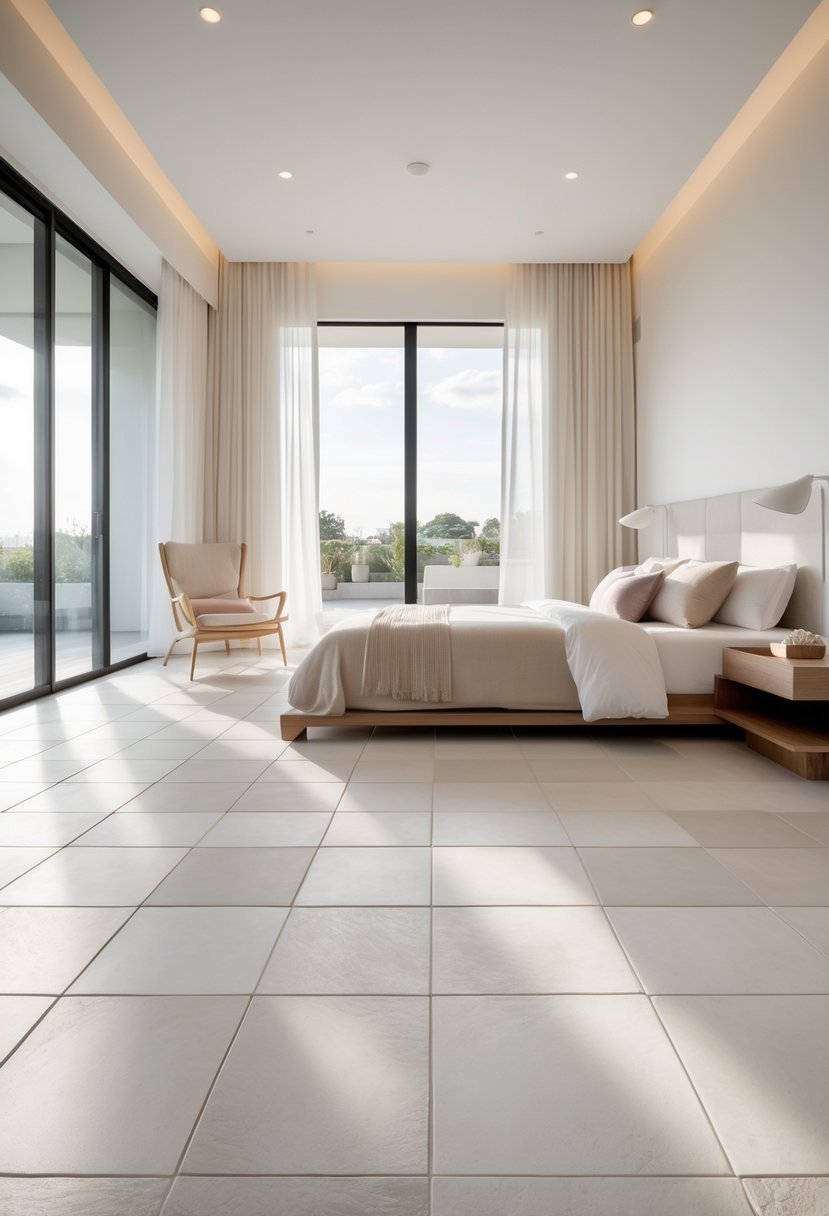
I choose matte porcelain for its understated, modern look that resists glare and hides footprints.
The texture adds subtle depth and warmth to a bedroom while staying easy to clean and highly durable.
I often recommend neutral tones—soft greys, warm taupes, or washed bianco—to match varied decor styles.
Larger formats like 12×24 reduce grout lines for a calmer, more seamless floor.
2. Wood-look ceramic tiles
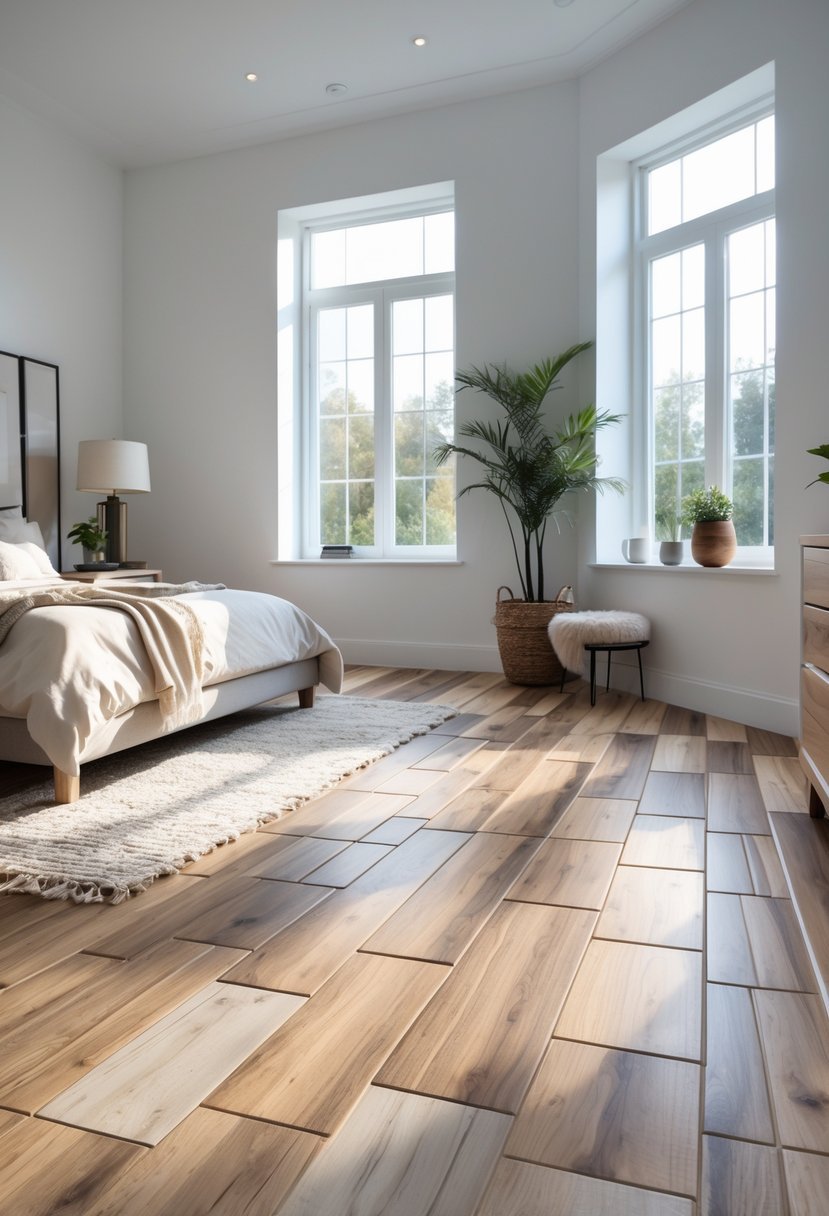
I recommend wood-look ceramic tiles when I want hardwood aesthetics without the maintenance. They mimic grain and plank sizes while resisting moisture and scratches.
I choose them for bedrooms that need durability and easy cleaning. Porcelain and ceramic options give me a range of tones from pale oak to deep walnut.
I often pair these tiles with warm rugs to soften the feel. The result feels cozy yet practical, and it suits both modern and traditional schemes.
3. Hexagonal patterned tiles
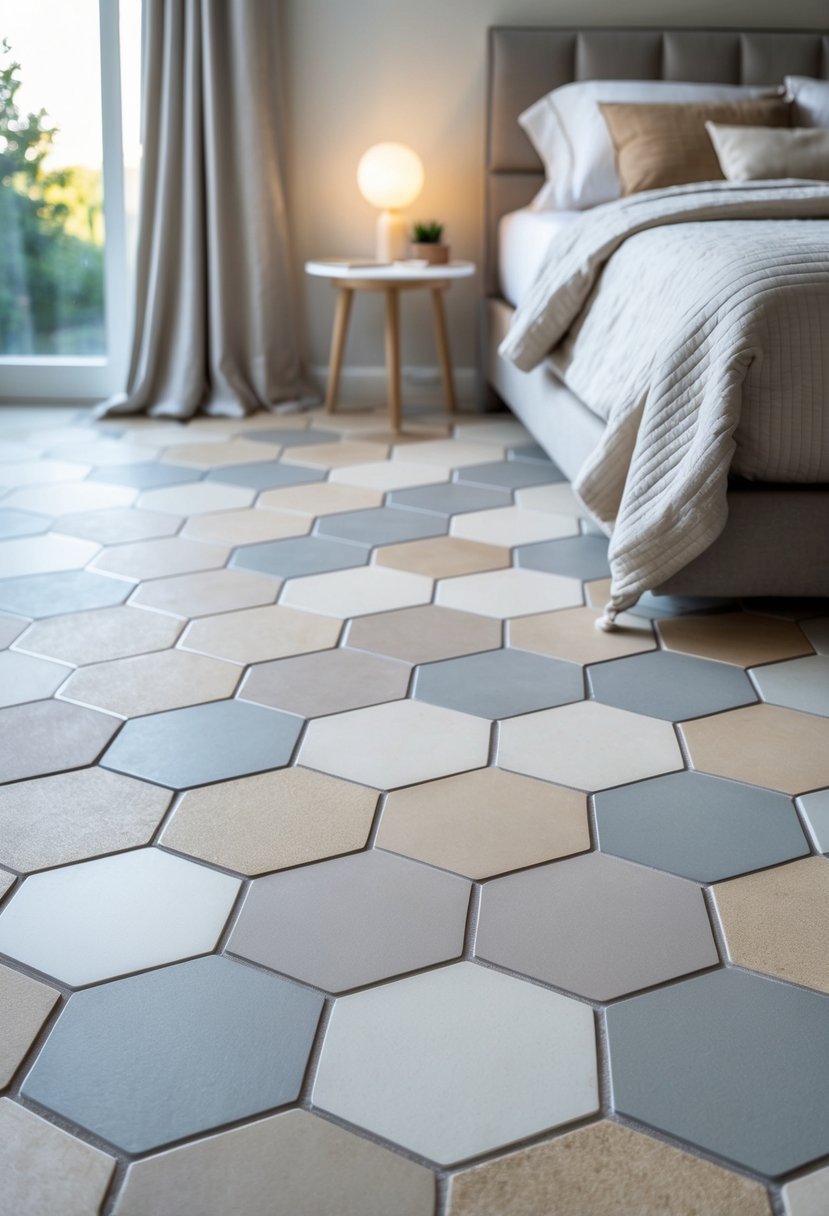
I like hexagonal tiles for bedrooms because their geometry adds visual interest without overwhelming the space.
Their repeating six-sided pattern can make a room feel larger, especially when I choose larger tiles or a light grout.
I use hex tiles to bridge modern and traditional styles; they pair well with wood and soft textiles.
I often select neutral tones for a calm base and add a single accent color to create subtle focal points.
4. Large-format marble tiles
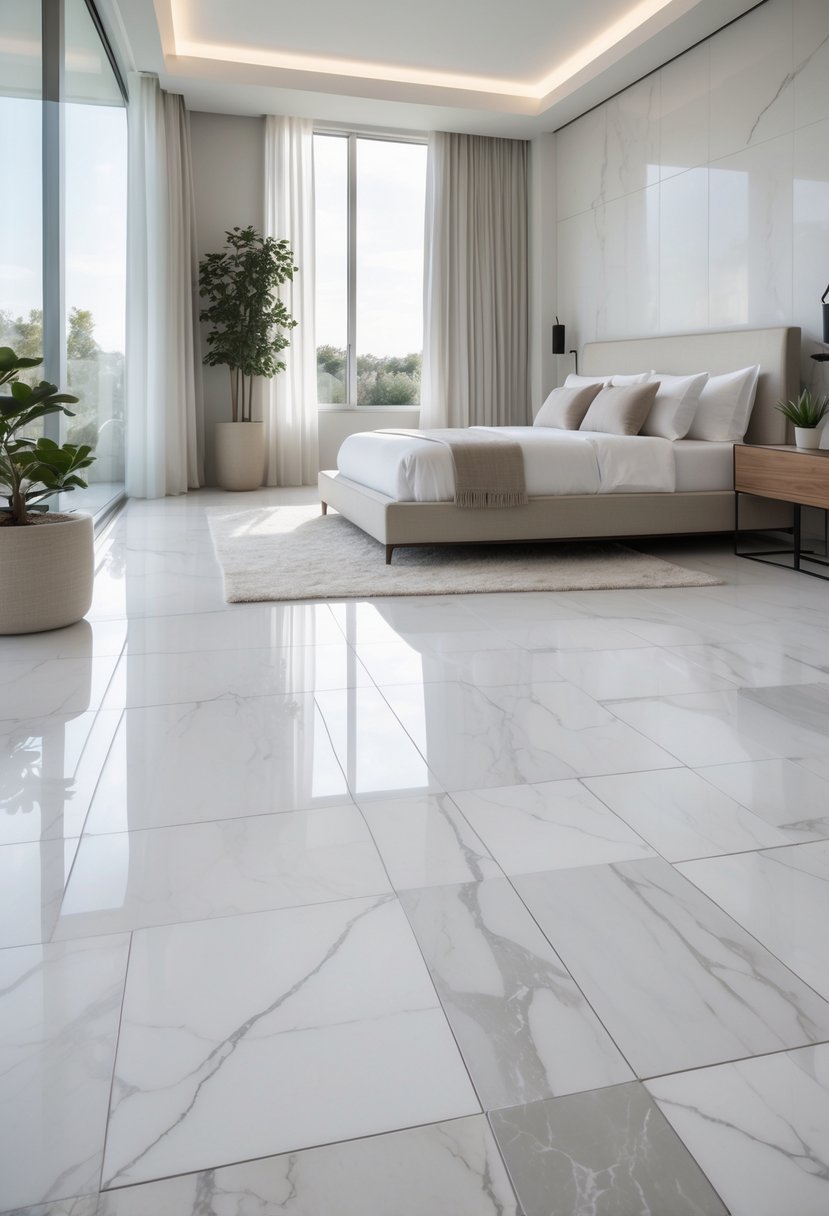
I choose large-format marble tiles for their clean, continuous look that reduces grout lines and visually enlarges a bedroom.
I prefer neutral marbles—white Carrara or soft beige—for a calm foundation that complements varied decor.
Note that large slabs require careful subfloor prep and professional fitting to avoid lippage and ensure long-term performance.
I often pair matte finishes with textured rugs to balance slipperiness and add warmth underfoot.
5. Terracotta style tiles
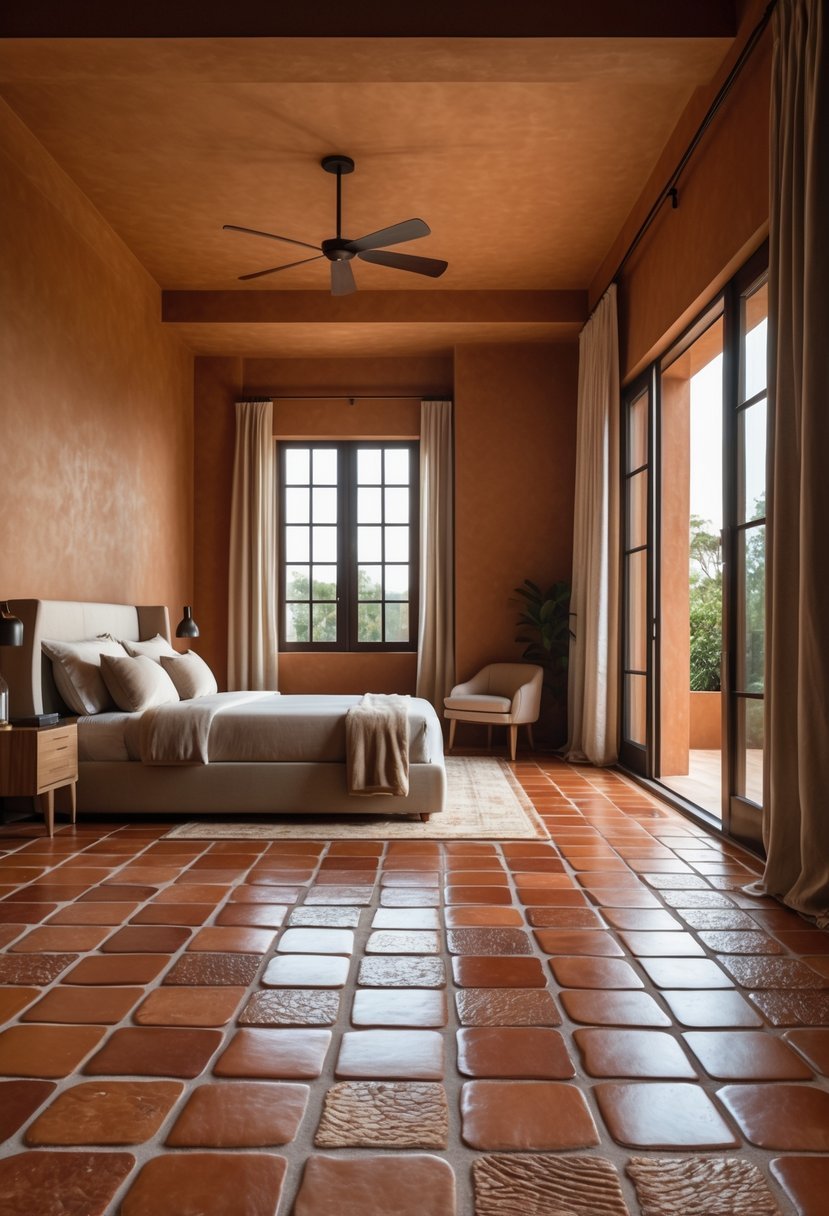
I favor terracotta tiles for bedrooms when I want warmth and natural texture underfoot.
Their earthy reds and oranges create a cozy backdrop that pairs well with neutral linens and wooden furniture.
I mix different tile sizes and finishes to add subtle interest without overwhelming the room.
When properly sealed, terracotta performs well and stays low-maintenance in a bedroom setting.
6. Glossy subway tiles
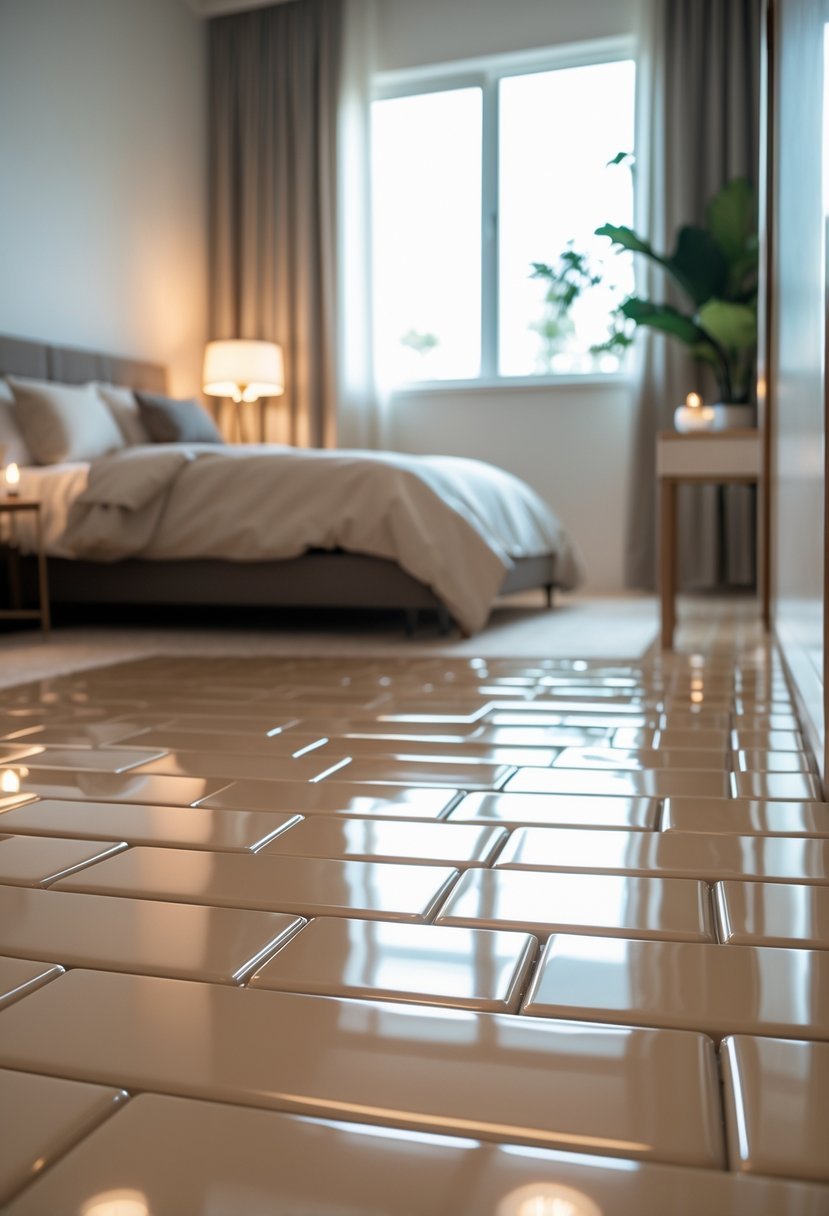
I choose glossy subway tiles when I want a sleek, reflective floor that brightens a bedroom without busy patterning. Their rectangular shape creates clean lines and reads modern or classic depending on grout color.
I use darker grout to ground the room or light grout to keep the look airy. Glossy finishes show footprints more easily, so I plan for regular cleaning and decide accordingly.
7. Textured stone tiles
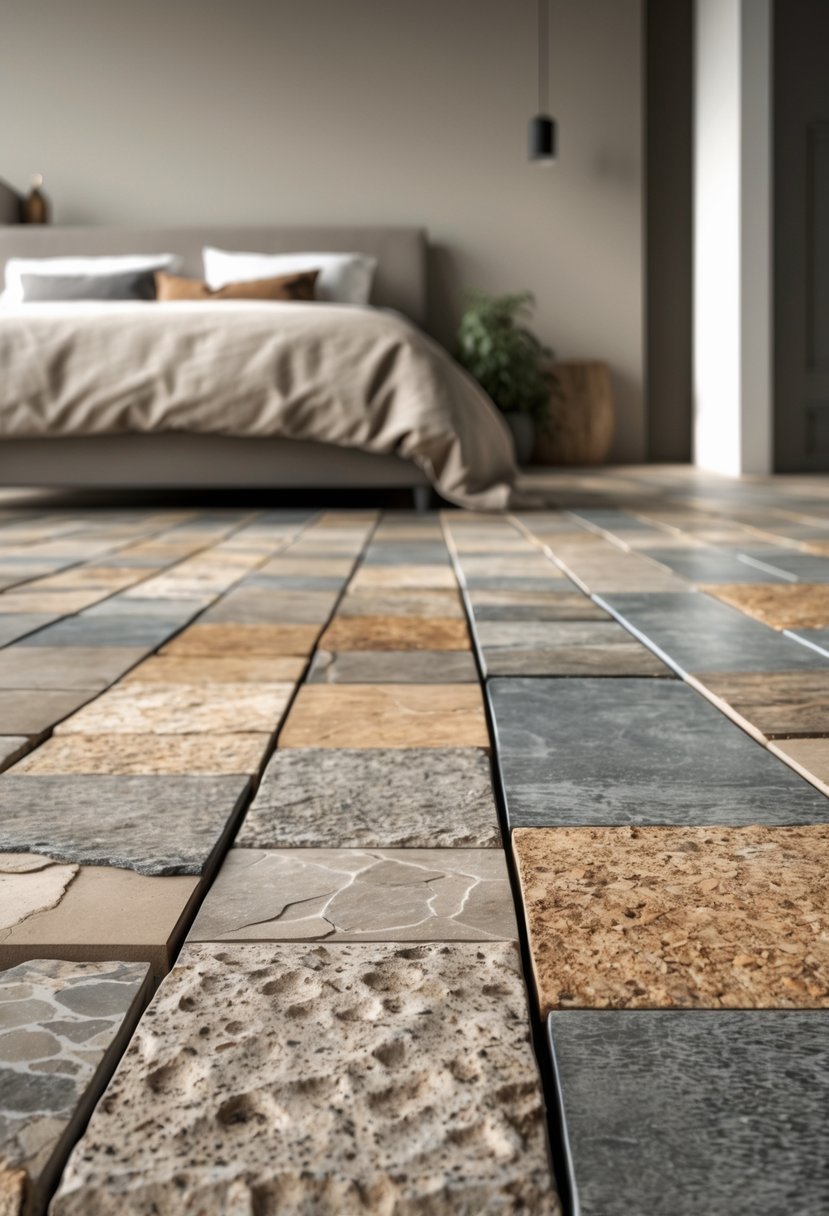
I choose textured stone tiles when I want a natural, tactile floor that reads as both durable and refined.
Their irregular surfaces add visual depth and reduce slipperiness, which feels safer in a bedroom with bare feet.
I seal and maintain them regularly to protect against stains and moisture.
Pairing them with warm textiles and simple furniture keeps the room balanced and inviting.
8. Geometric mosaic tiles
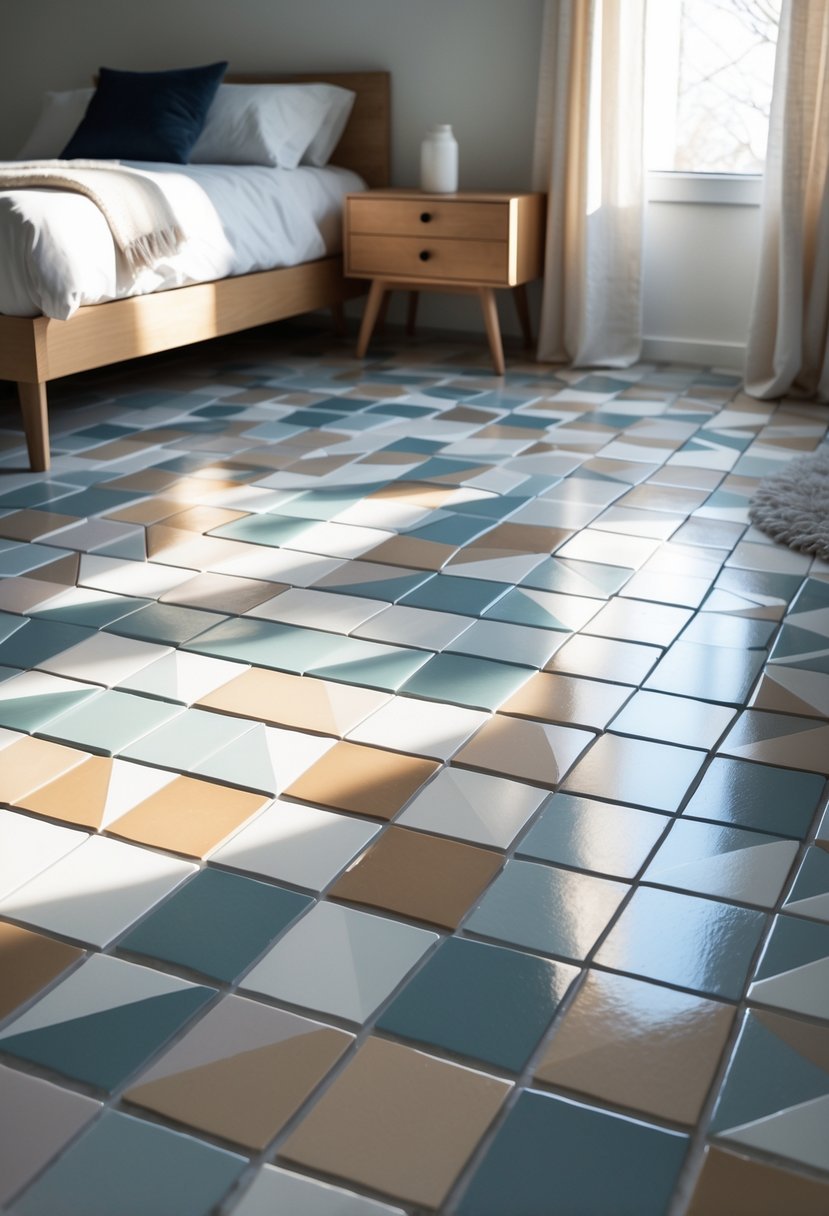
I like geometric mosaics for bedrooms because they add structure without feeling heavy. Small shapes create visual interest and guide the eye across the room.
I recommend using a muted palette to keep patterns elegant and calming. A single bold accent color can bring personality without overwhelming the space.
I often pair mosaics with plain walls and simple textiles to balance the look. They work well as a focal floor area or a subtle all-over pattern.
9. Light gray ceramic tiles
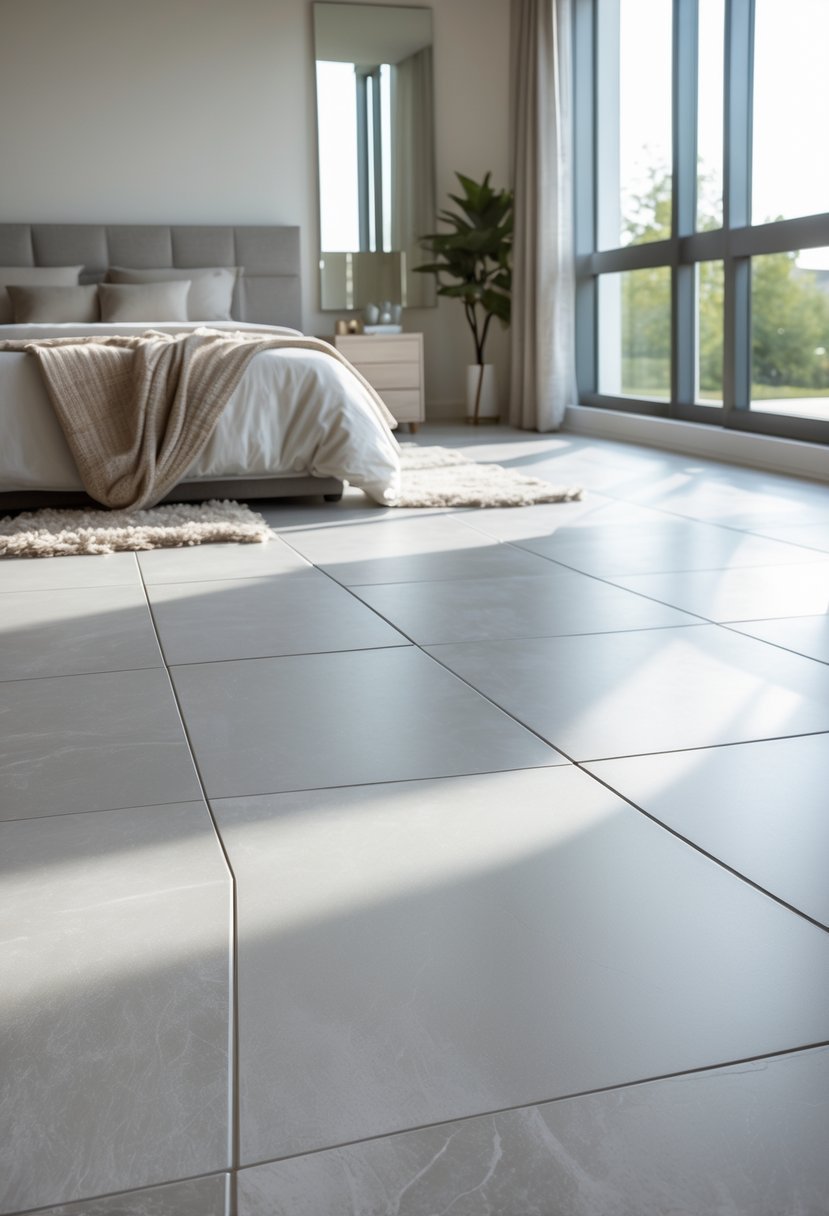
I choose light gray ceramic tiles for bedrooms when I want a calm, neutral base that still feels modern.
They reflect light well, making small rooms seem larger without feeling stark.
I pair them with warm textiles and wood to keep the space inviting.
Their low maintenance and durability suit busy households and long-term designs.
10. Warm beige porcelain tiles
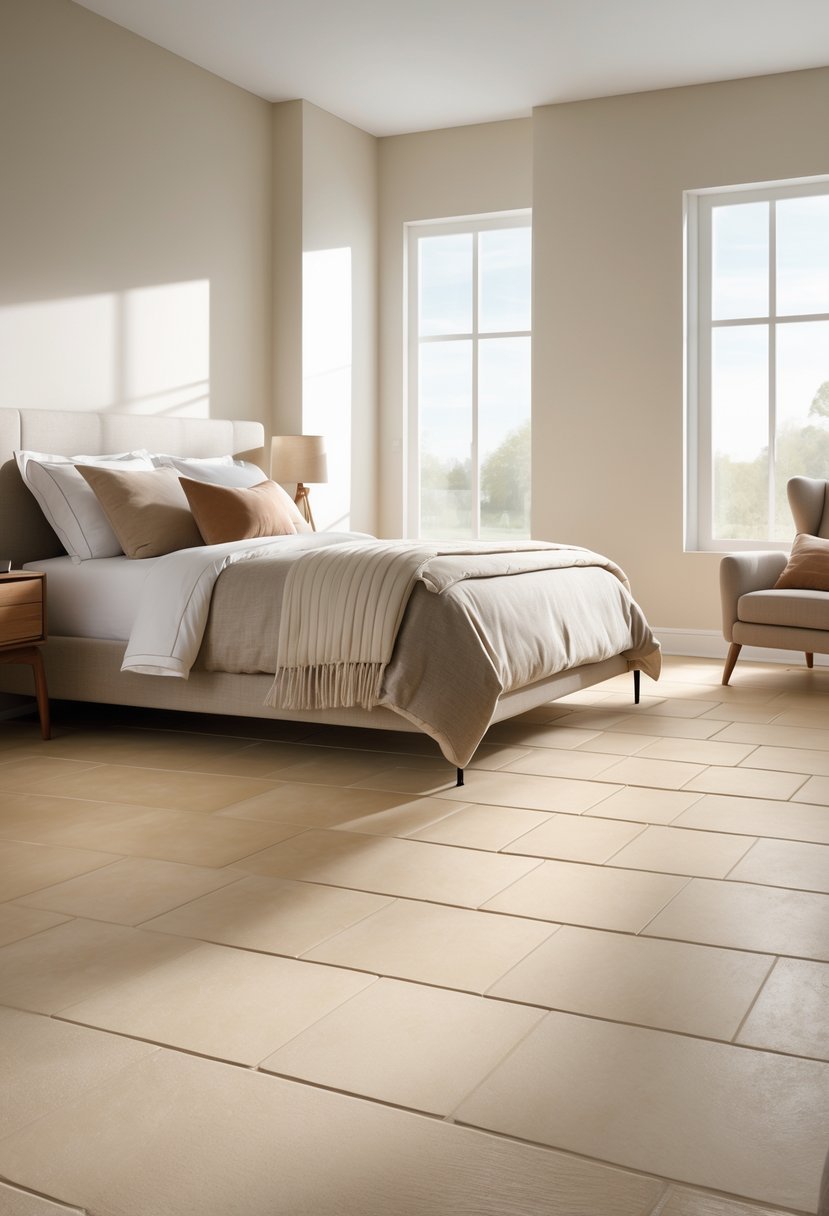
I choose warm beige porcelain tiles when I want a neutral, inviting base that adapts to many styles. They mimic natural stone while offering durability and low maintenance for high-traffic bedrooms.
I pair them with soft textiles and wood accents to keep the room cozy without darkening the space. Their subtle variation hides wear and creates a timeless backdrop for changing decor.
11. Slate-effect floor tiles
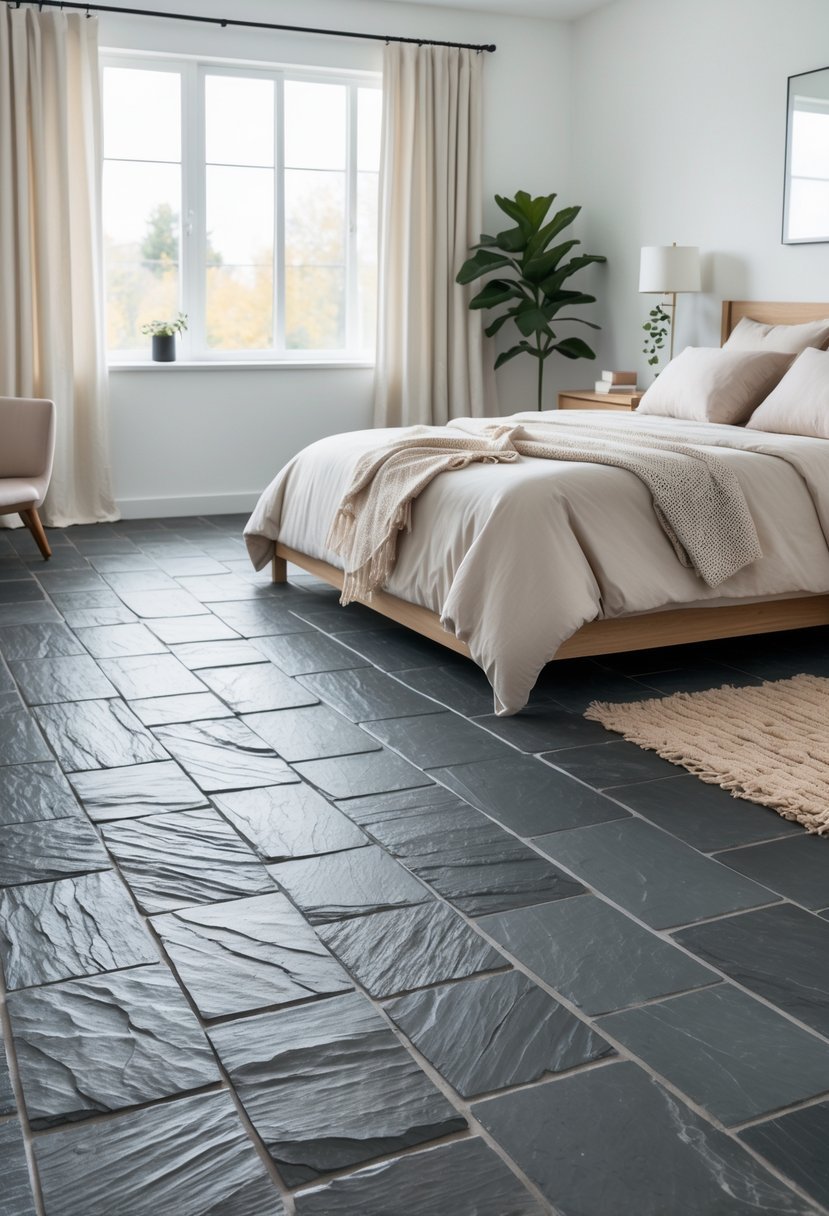
I choose slate-effect tiles when I want natural texture without the maintenance of real stone.
They mimic slate’s layered look and come in matte or slightly riven finishes that add grip and depth.
I use larger formats for a contemporary feel and smaller tiles for a rustic touch.
Colors range from charcoal to warm gray, letting me pair them with pale linens or bold accent walls.
12. Herringbone patterned tiles
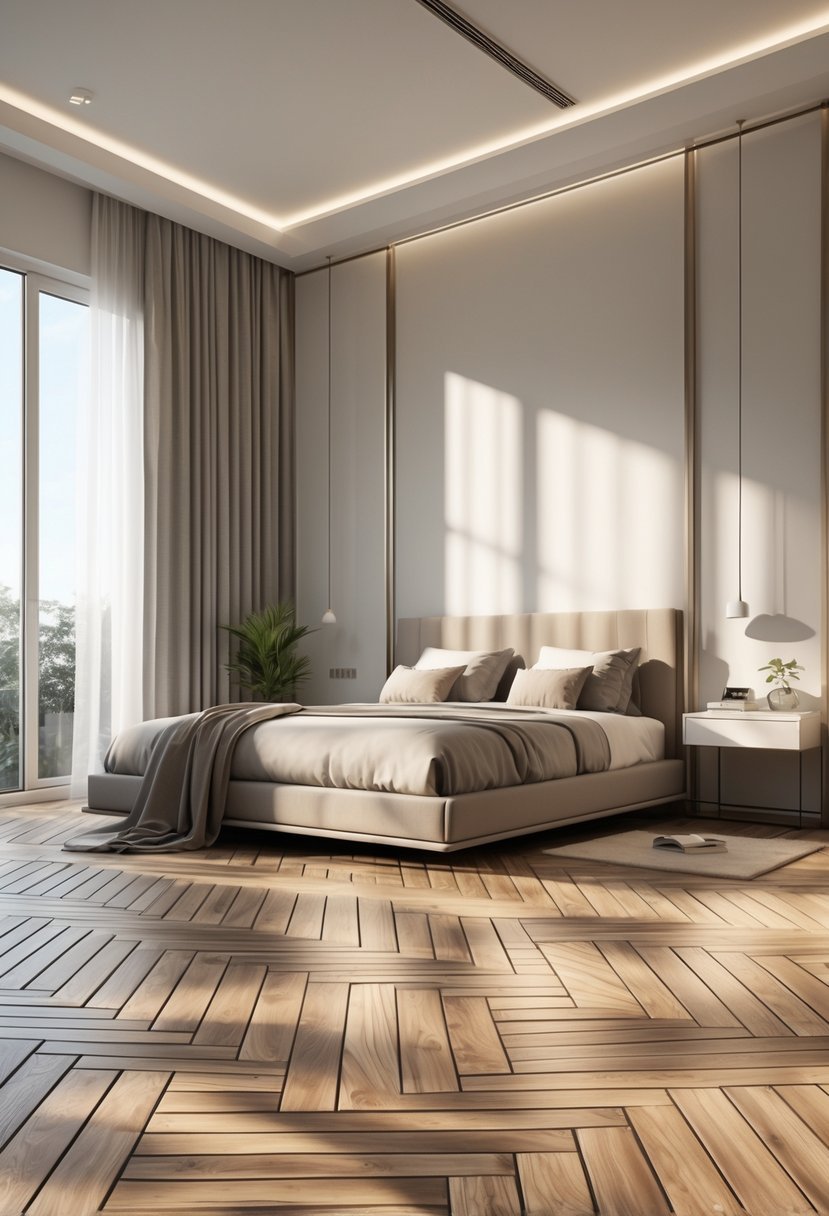
I choose herringbone patterned tiles when I want movement and subtle drama without loud color.
The zigzag layout adds texture and makes narrow rooms feel longer, especially with elongated rectangular tiles.
I pair neutral herringbone tiles with warm rugs to keep the bedroom cozy.
For a bolder look, I contrast dark grout or mix two complementary tile tones to highlight the pattern.
13. Vintage encaustic tiles
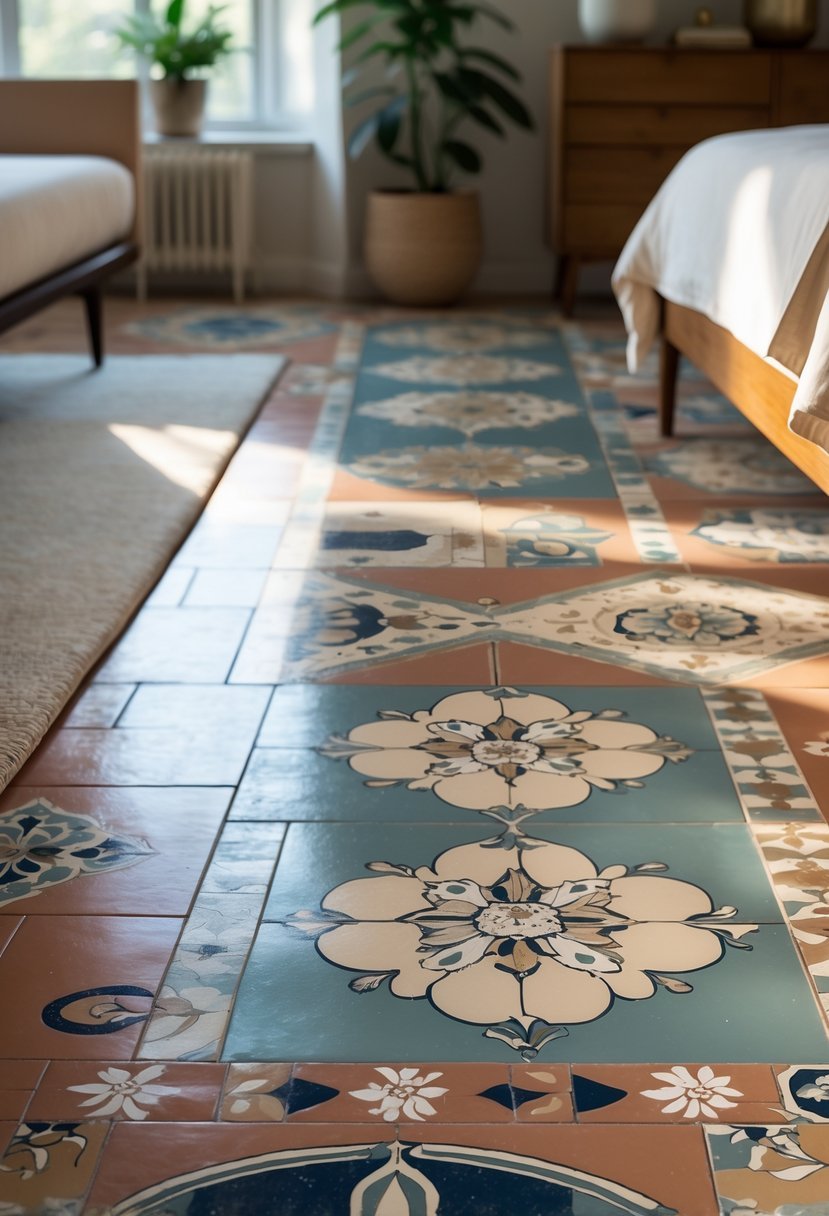
I favor vintage encaustic tiles for bedrooms when I want pattern and history underfoot.
Their geometric and floral motifs add character without overwhelming a room, and they work well as a focal field or a framed rug.
I use encaustic tiles to anchor simple furnishings and neutral walls, balancing busy floors with calm decor.
They require some care and proper sealing, but I find the visual payoff and durable cement construction worth the effort.
14. Wood-grain porcelain tiles
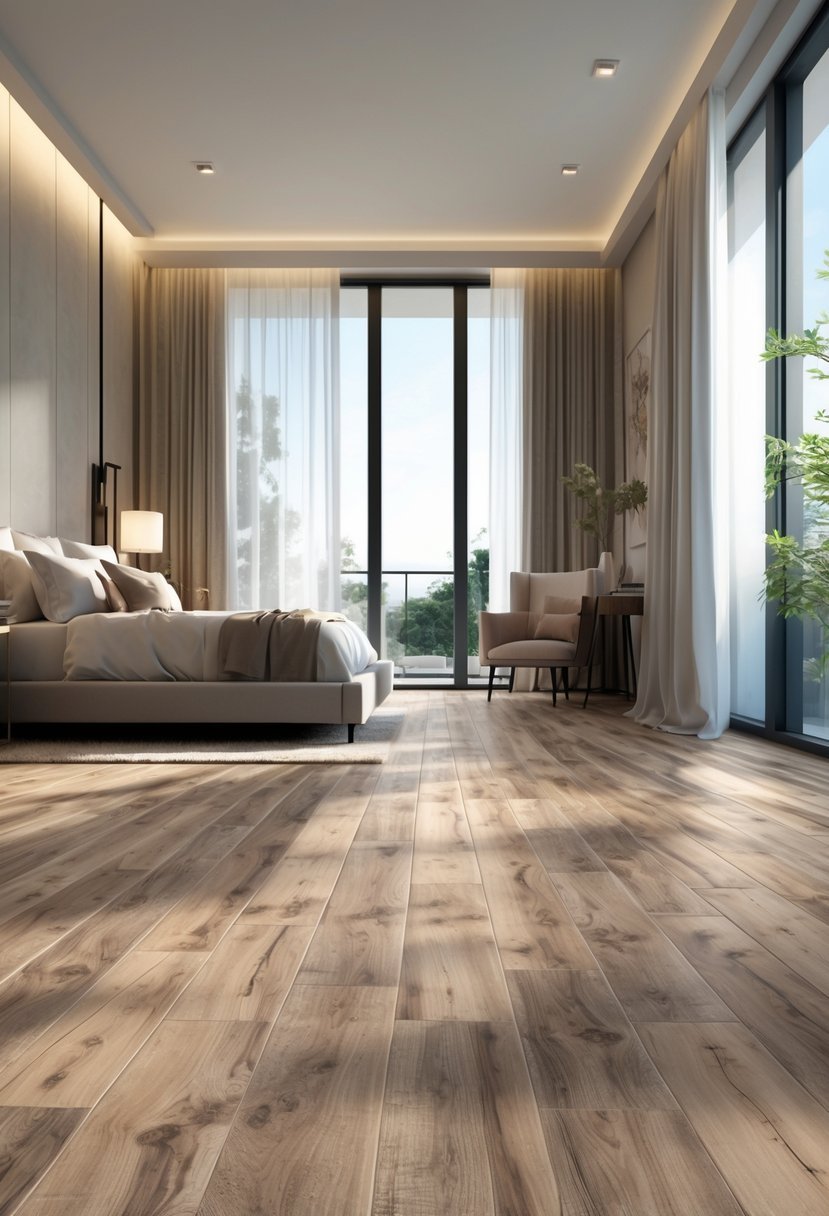
I choose wood-grain porcelain when I want hardwood aesthetics with low maintenance.
The porcelain replicates grain, knots, and plank sizes while resisting moisture and scratches.
I can use these tiles throughout the bedroom, even in adjoining bathrooms or closets.
They come in varied colors and installation patterns, so I match tone and layout to my decor.
15. Polished concrete-look tiles
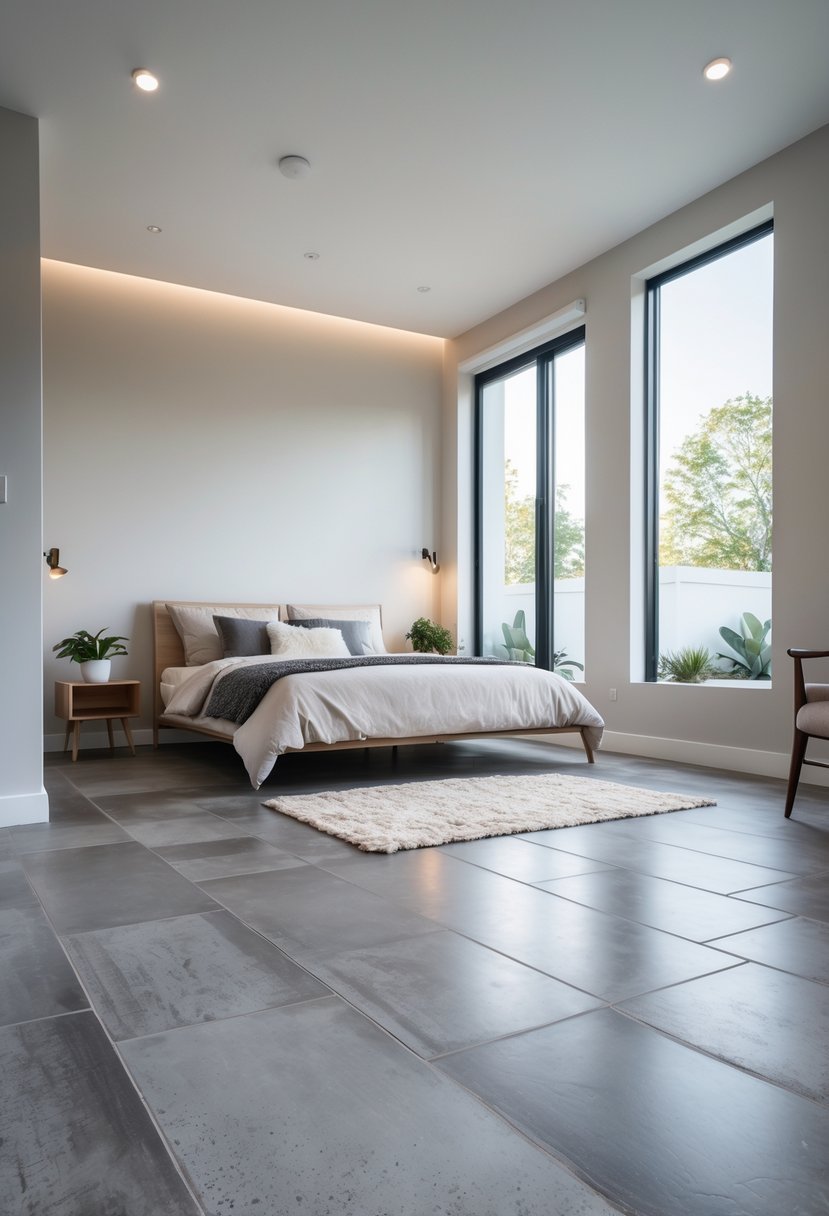
I choose polished concrete-look tiles when I want a sleek, low-maintenance floor that reads modern without the coldness of real concrete.
They offer consistent color and finish, resist stains, and install faster than poured concrete.
I mix them with warm textiles and wood furniture to soften the room and add tactile contrast. Their subtle sheen reflects light, helping smaller bedrooms feel more open without adding glare.
16. Natural travertine tiles
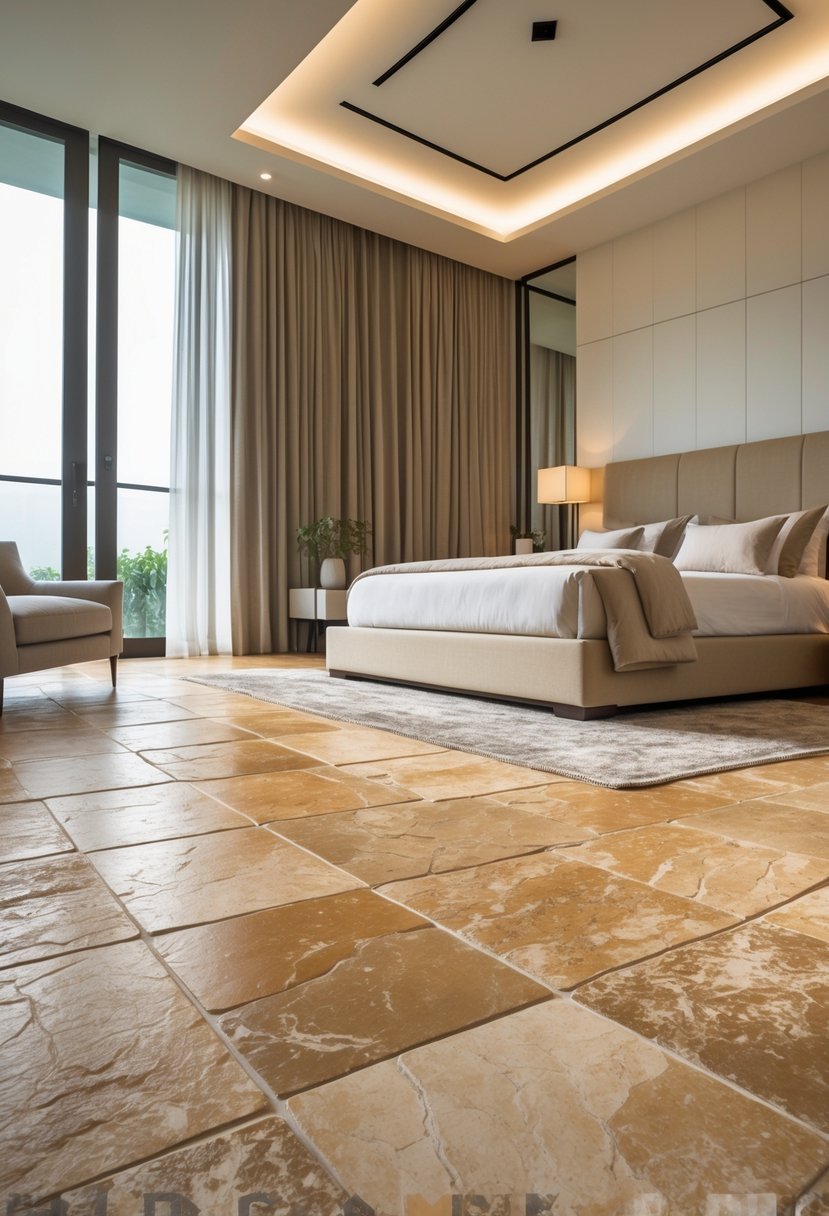
I choose natural travertine for its warm, earthy tones and subtle veining that add quiet elegance to a bedroom.
The stone feels cool underfoot and performs well in both modern and rustic schemes.
I layer rugs for comfort and to protect the surface in high-traffic areas.
With regular sealing and simple maintenance, travertine keeps its character for years.
17. Bold black and white tiles
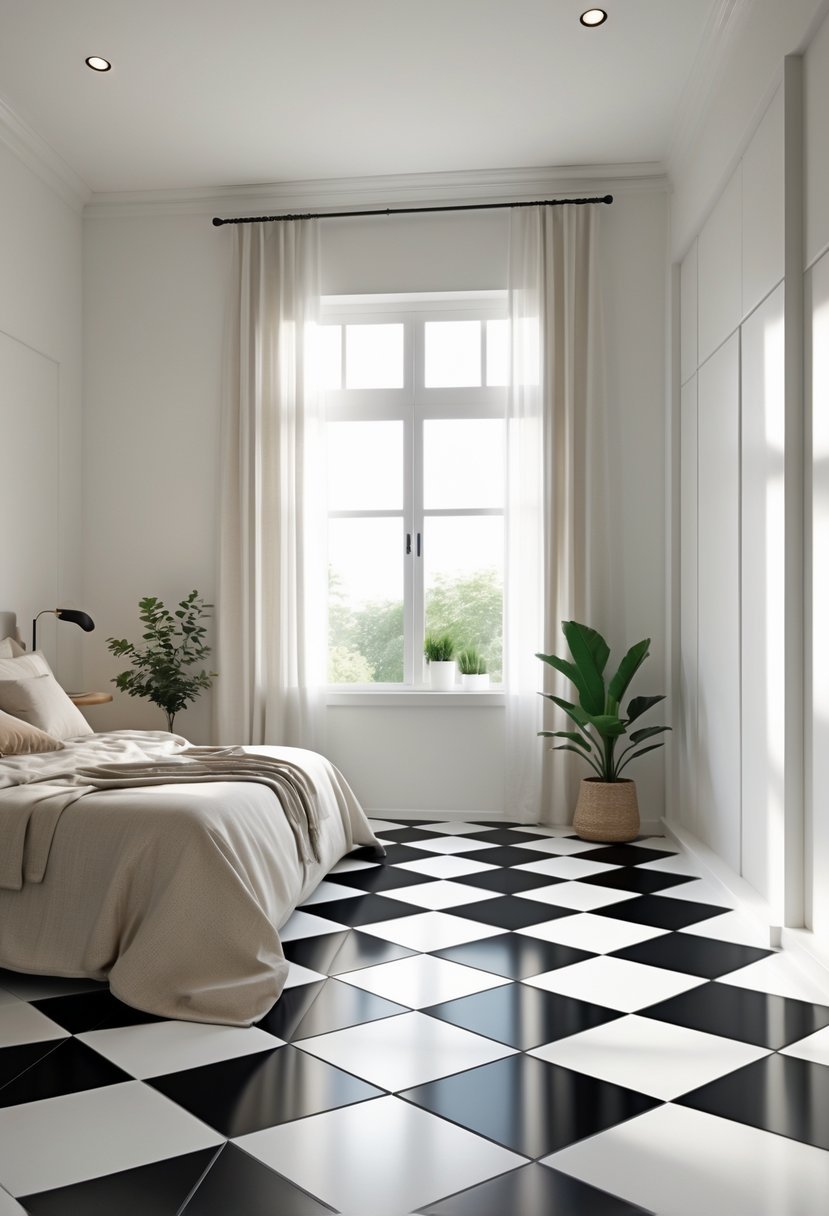
I favor bold black and white tiles for bedrooms when I want a strong graphic base that still feels timeless.
Checkerboard, large-scale squares, or diamond patterns give the room instant structure without adding visual clutter.
I pair high-contrast floors with simple, neutral furnishings to keep the focus on the pattern.
A few warm textures—wood, woven rugs, or soft linen—soften the contrast and make the space feel lived-in.
18. Distressed wood-look tiles
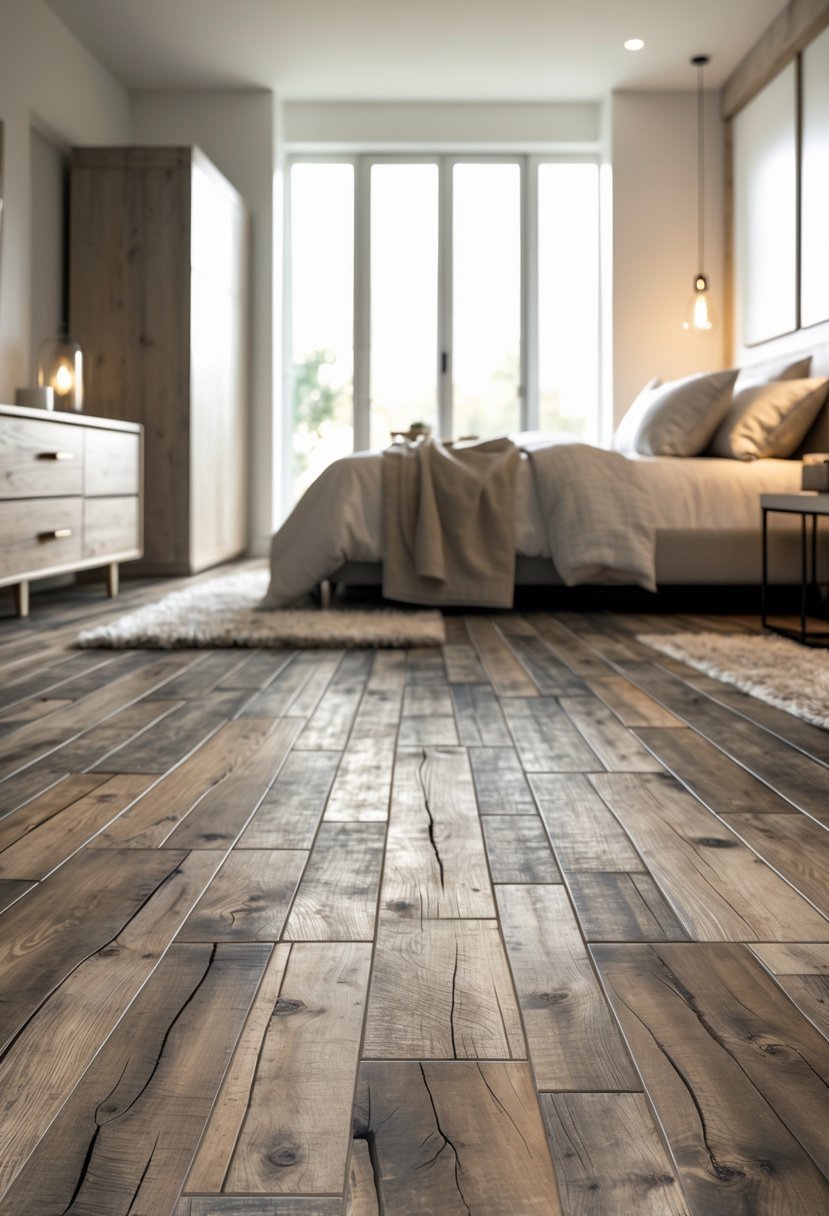
I choose distressed wood-look tiles when I want the warmth of wood with easier maintenance. They mimic aged planks with knots, worn edges, and subtle color variation to add character without the upkeep of real wood.
I pair them with neutral bedding and layered textures to highlight their rustic appeal. Large formats or staggered layouts can make a small bedroom feel longer and more cohesive.
19. Pastel colored ceramic tiles
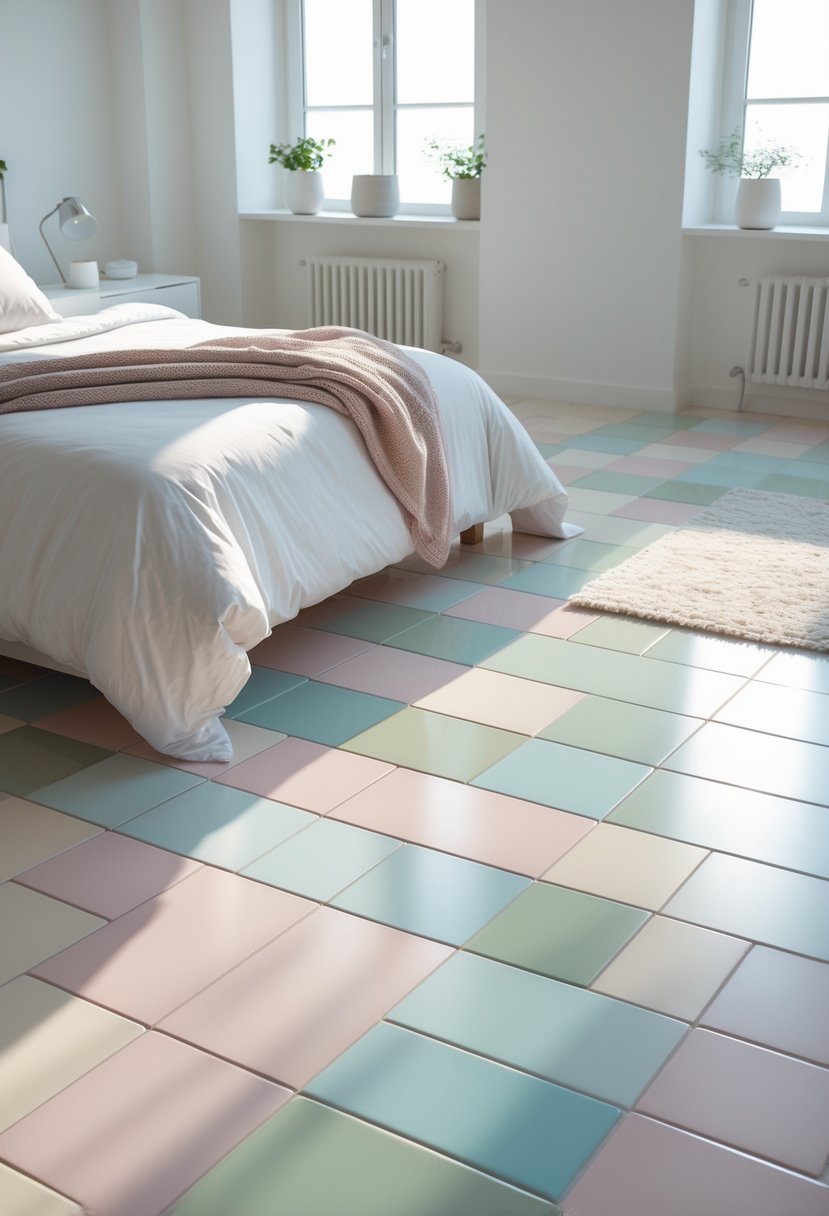
I choose pastel ceramic tiles when I want a bedroom that feels light and calm without being bland.
Their low saturation and high luminosity create a soft backdrop that still reads as stylish and intentional.
I pair mint, blush, or powder blue tiles with warm woods or matte brass for subtle contrast. They work well in both matte and glossy finishes, and I use patterns sparingly to keep the look tranquil.
20. Metallic finish tiles
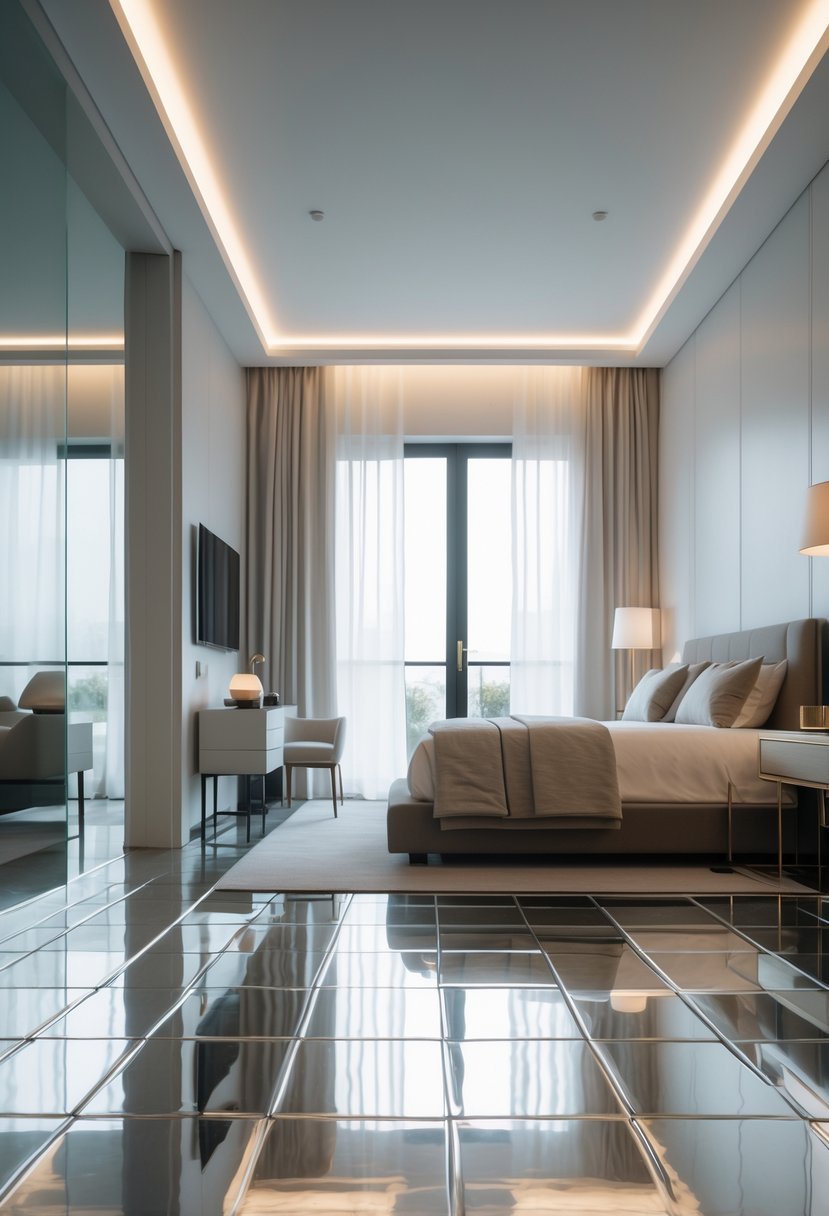
I often recommend metallic finish tiles when you want subtle sheen without overpowering the room. They reflect light to add depth and a modern edge, especially in small or low-lit bedrooms.
I use them sparingly — a feature area or border works best. Paired with matte surfaces they balance shine and texture for a sophisticated, contemporary look.
Achieving Stylish and Durable Bedroom Tile Floors
Start With Comfort and Daily Use
When I work on bedroom tiles floor ideas, I first think about how the room is used every day. Bedrooms need durability but also softness in how they feel and look.
I prefer matte or lightly textured tiles because they feel safer under bare feet and do not show dust or marks easily. This choice helps the room feel calm rather than glossy or cold.
Choose the Right Tile Size and Layout
Tile size makes a big difference in how a bedroom feels. I use large format tiles when I want a seamless and open look, especially in smaller rooms. Fewer grout lines create visual calm.
For narrow bedrooms, I choose layouts like herringbone or staggered planks to guide the eye and make the room feel longer.
Focus on Color and Light Balance
I always consider natural and artificial light before selecting tile color. Light gray beige and soft stone tones help brighten the room and reflect light gently.
Dark tiles can work beautifully too, but I balance them with light walls and soft furnishings so the space does not feel heavy.
Add Warmth With Layering
Since tile floors are firm, I rely on layering to add comfort. I place area rugs near the bed, use fabric headboards, and bring in curtains and throws.
This combination keeps the bedroom warm and inviting while letting the tile floor stay practical and durable.
Test Before Final Installation
Before committing, I place tile samples directly in the bedroom. I check how they look in morning and evening light and how they feel underfoot.
This step helps me avoid surprises and ensures the final result matches my vision.
FAQs
Final Thoughts on Bedroom Tile Flooring
Choosing the right bedroom tile floor allows me to combine style, comfort, and durability in one smart design decision. With thoughtful material selection, proper layout, and soft styling layers, tile floors can feel just as cozy as they are practical while supporting many design styles over time.

I am Mindy Medford, a home décor, paint, and design specialist with over a decade of hands-on experience transforming ordinary spaces into cozy, personality-packed havens. Since 2013, I have been helping homeowners discover the art of beautiful yet practical design. I share my love for color, texture, and layout—making stylish interiors & exteriors feel achievable for everyone. Whether it’s picking the perfect paint shade or reimagining a small space, I’m here to guide and inspire.