15 Japandi House Exterior Designs Showcasing Minimalist Elegance and Functionality
Japandi style merges the calm simplicity of Japanese design with the warmth and functionality of Scandinavian architecture. I find this blend creates a balanced exterior aesthetic that is modern and inviting without feeling overdone.
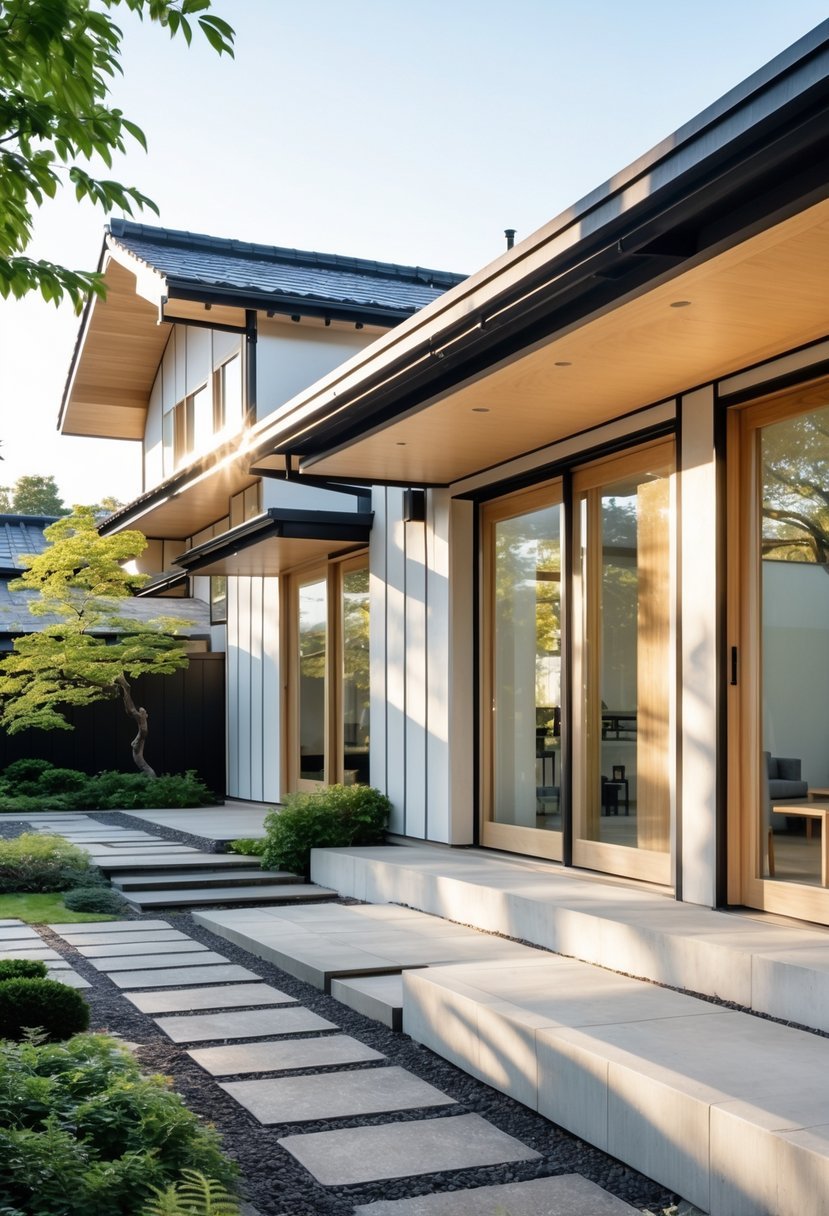
Natural materials, clean lines, and minimalist details work together to create peaceful, timeless looks. Japandi style focuses on harmony between the house and its surroundings, emphasizing both beauty and practicality.
15 Japandi House Exterior Ideas
1. Large Windows for Natural Light

I use expansive glazing to bring in abundant natural light. Large glass panels create a strong connection between indoors and outdoors.
This approach maintains simplicity and enhances warmth and openness.
2. Wood Facades Add Warmth
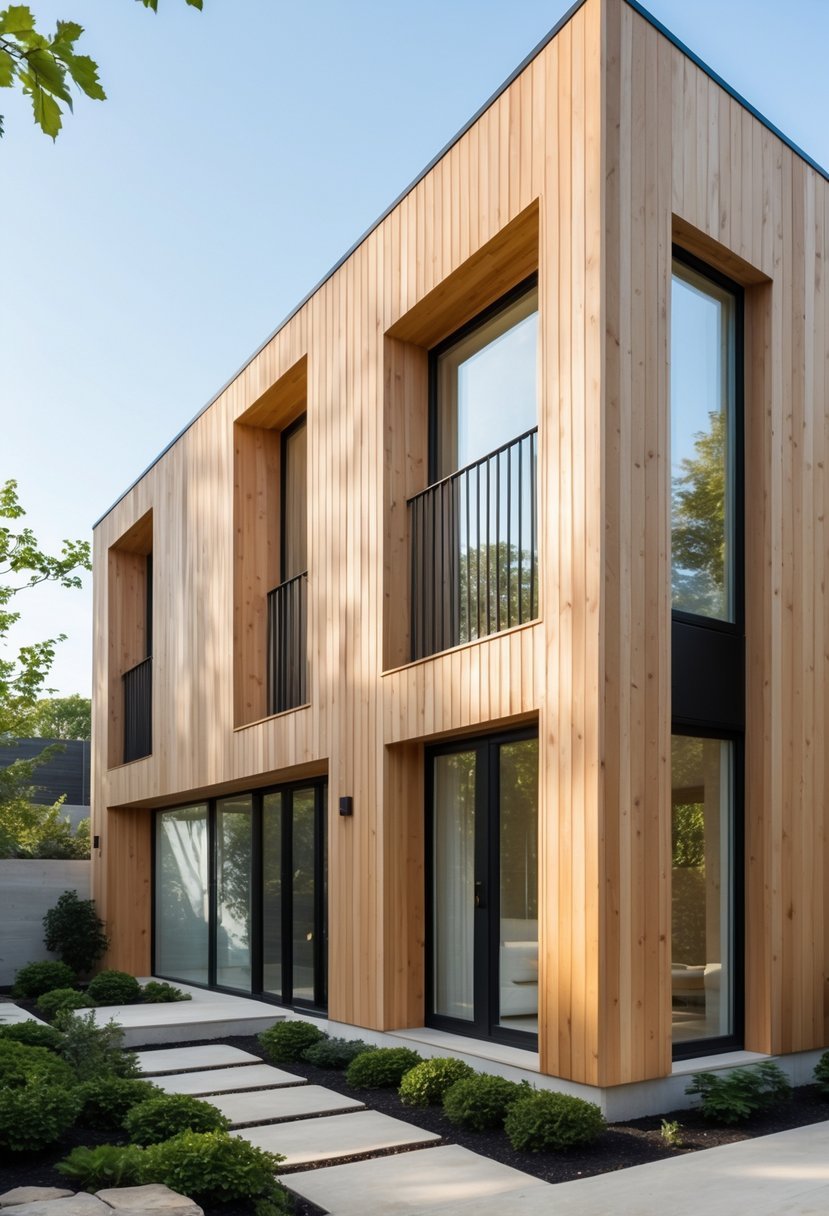
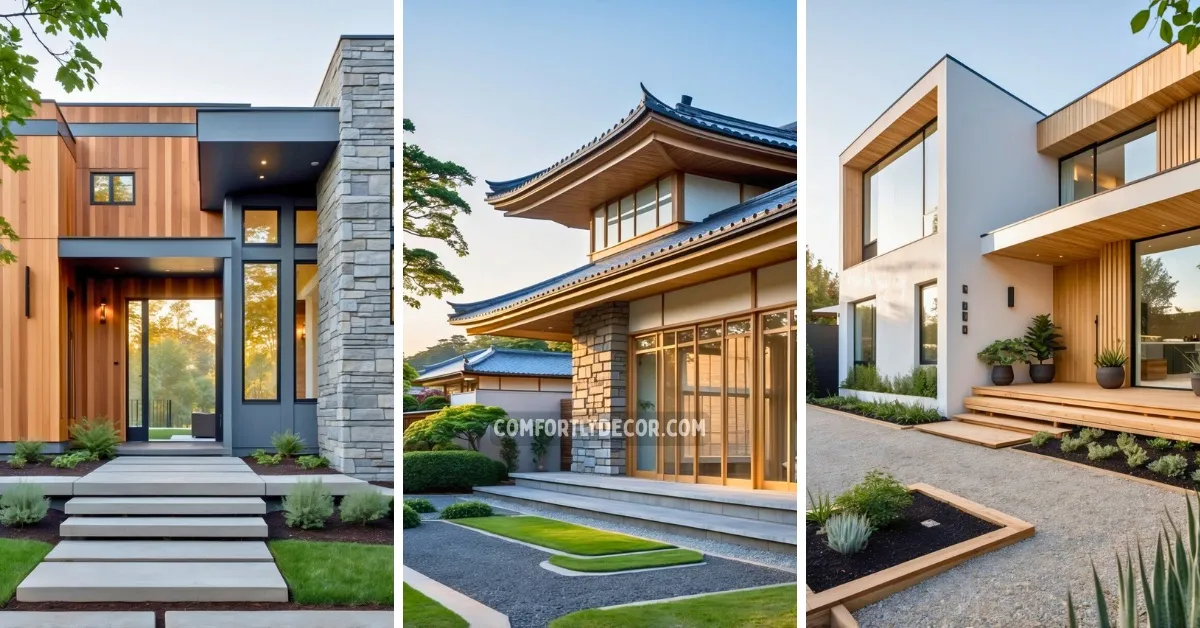
Natural wood facades are essential to Japandi exteriors. They bring warmth and texture that balance the minimalist design.
Wood softens clean lines while connecting the home to nature. The wood grain adds subtle visual interest.
Combining wood with neutral tones creates a welcoming, grounded look.
3. Layered Japanese Roofs
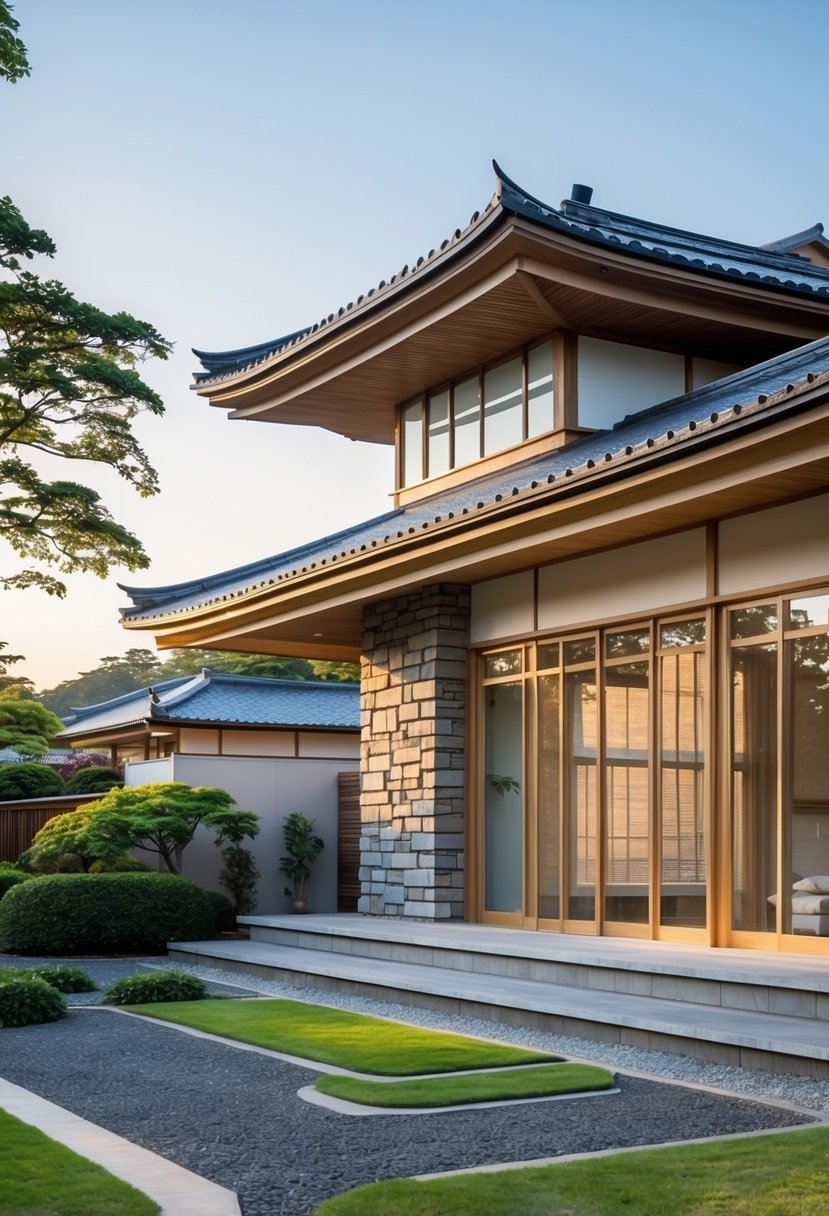
Layered roofing draws from traditional Japanese architecture. These roofs often feature multiple tiers, creating depth and subtle shadowing.
This design adds texture without overwhelming simplicity. Layered roofs help blend natural materials with clean lines and enhance the house’s connection to its surroundings.
4. Stone Cladding for Earthy Accents
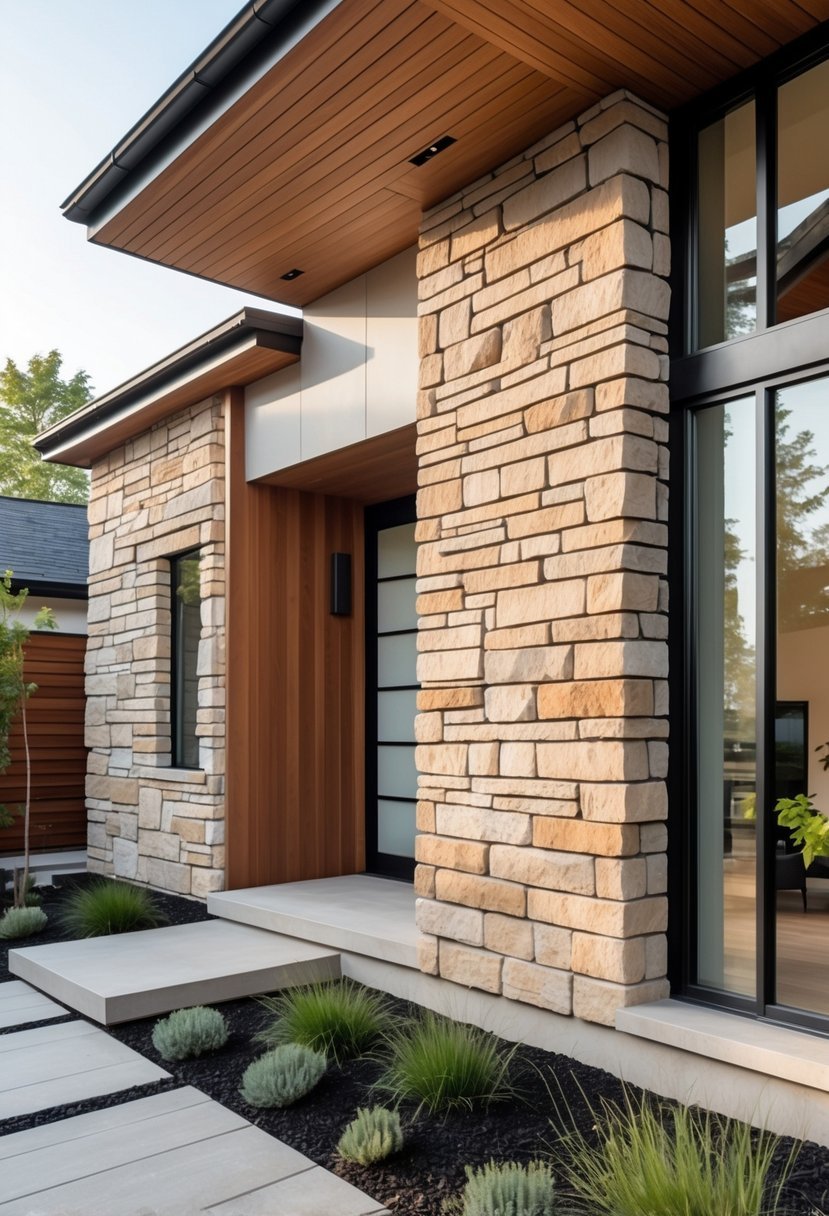
I use stone cladding to bring texture and durability to the exterior. Stone adds a grounded, natural feel that fits well with Japandi’s minimalist style.
Stone works well near entrances or on lower walls, contrasting with wood or stucco above. It enhances visual interest and weather resistance.
5. Multi-Level Decks Link Indoors Outdoors
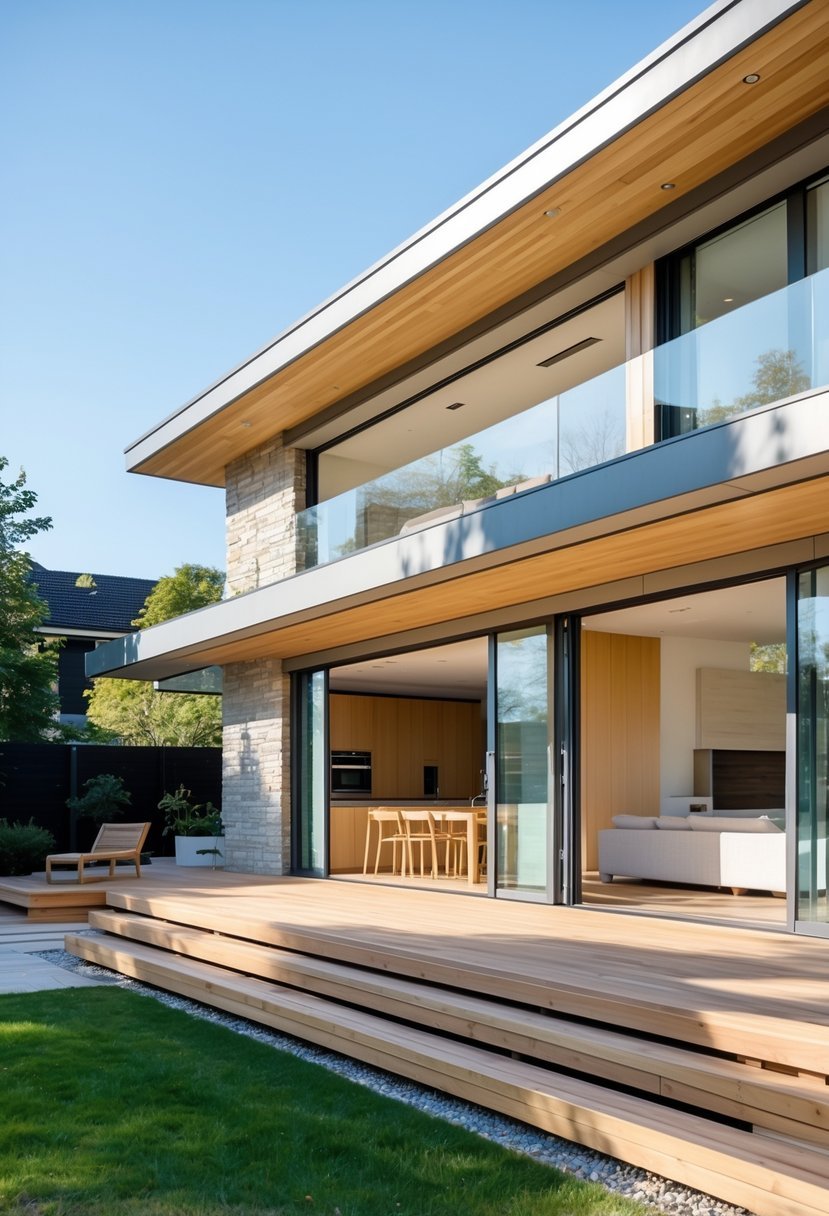
Multi-level decks are essential in Japandi design. They create smooth transitions from inside living spaces to the outdoors.
These decks often step down gradually, following the terrain. Using natural materials like wood keeps the deck feeling warm and fits with Japandi’s blend of simplicity and function.
6. Dark trims for contrast

I use dark accent trims to add a modern edge to Japandi exteriors. The deep tones create a striking contrast against lighter walls.
These trims often appear around windows, doors, and roof edges. They highlight architectural details and maintain the balance between natural warmth and sleek design.
7. Zen Garden Integration
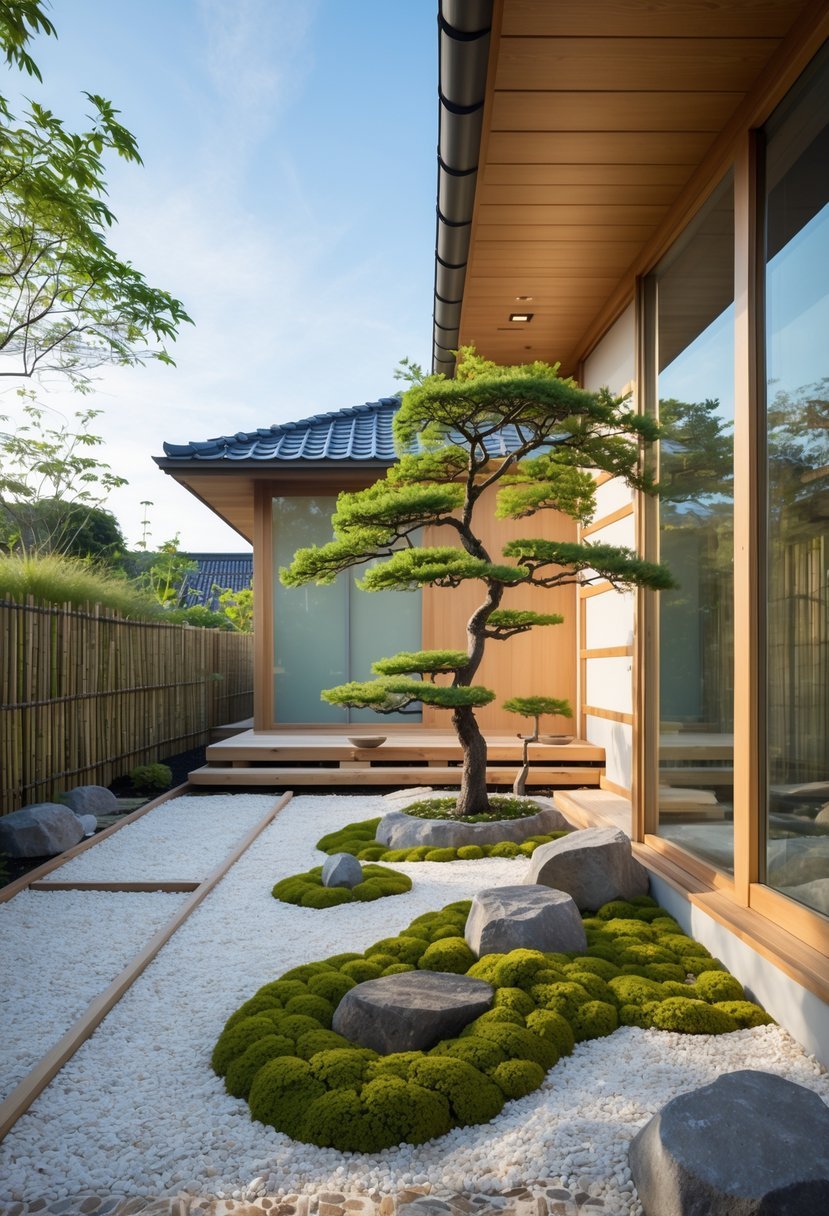
I incorporate Zen gardens to create calm outdoor spaces that blend with the home’s surroundings. Simple elements like raked gravel, stones, and minimal plants emphasize balance and tranquility.
These gardens often include pathways and water features. This integration helps connect indoor and outdoor living areas.
8. Seamless Indoor-Outdoor Flow
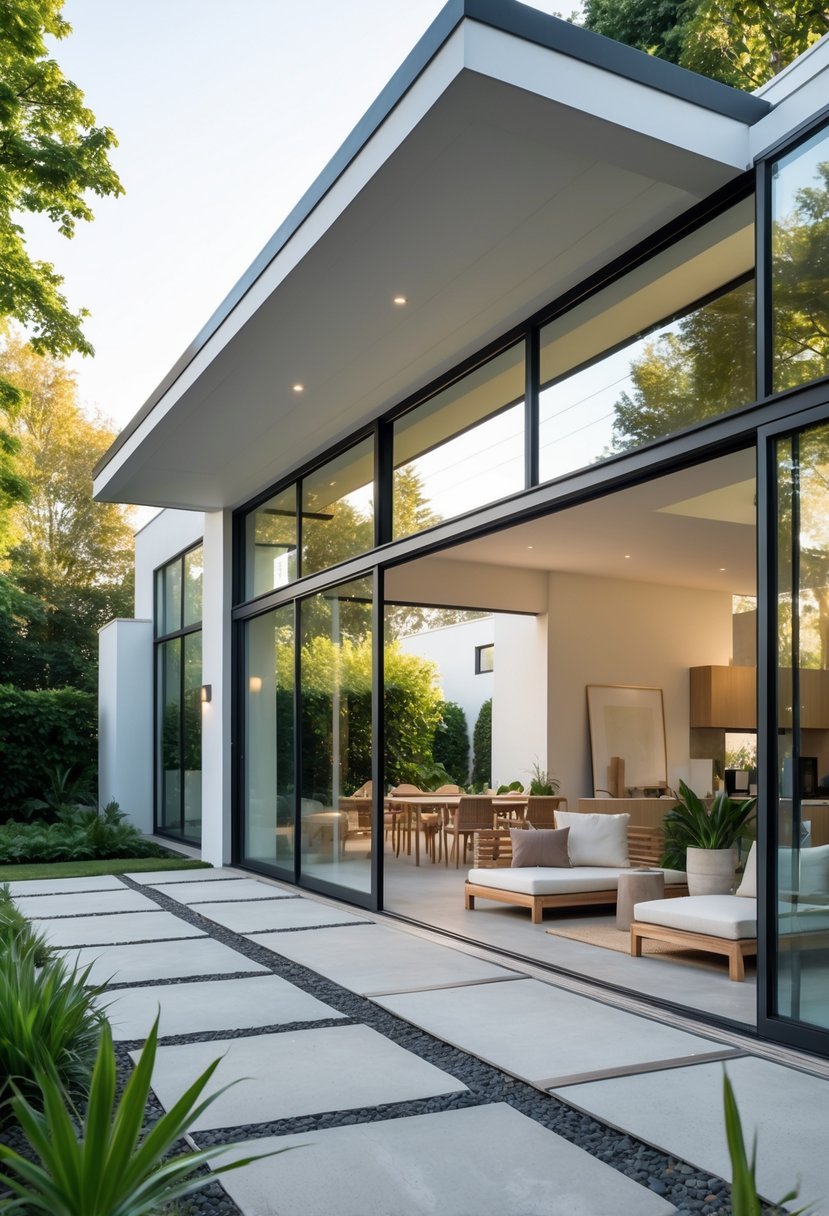
I prioritize large sliding glass doors to blur the line between inside and outside. This creates a smooth transition and extends living space naturally.
Using continuous flooring materials connects the interior with outdoor areas. Wide windows frame natural views and invite the outdoors in.
9. Raked Gravel Minimalism
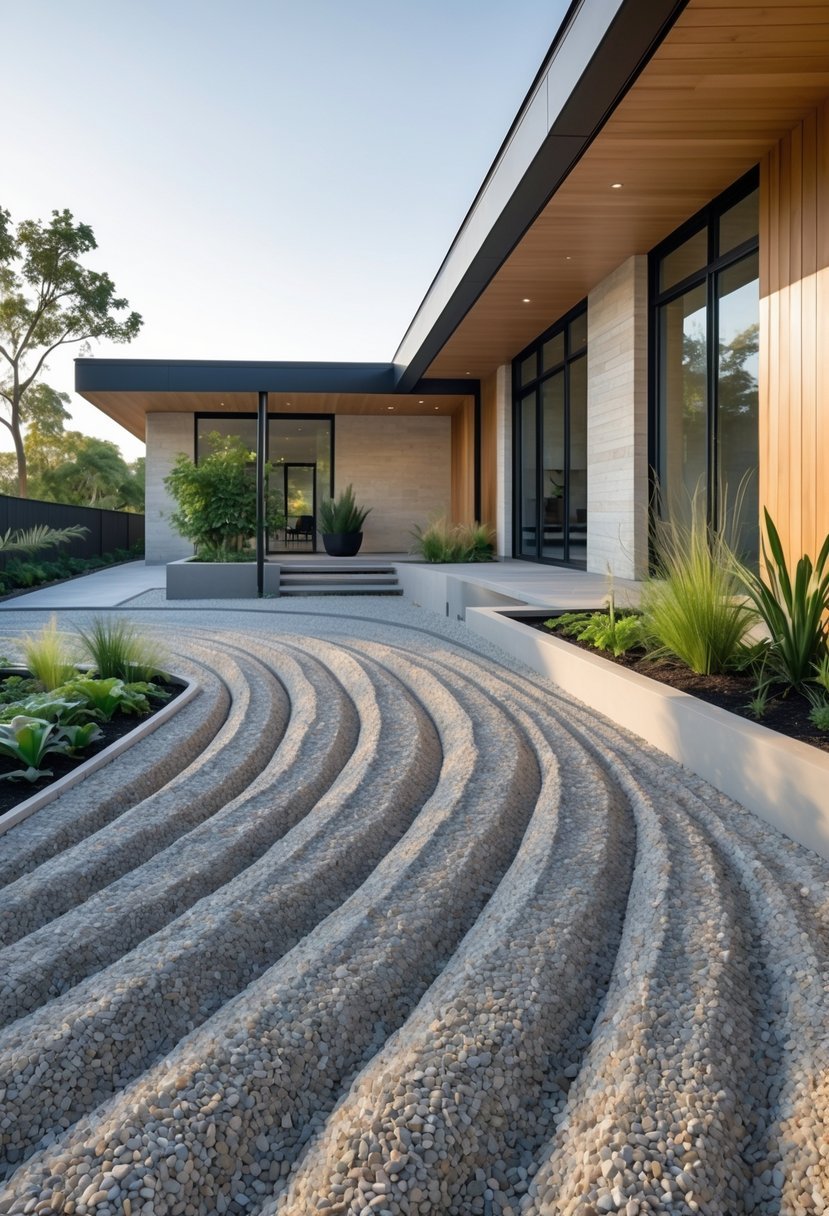
Raked gravel landscaping adds subtle texture to Japandi exteriors. Carefully patterned gravel creates a calm, orderly surface that aligns with minimalist design principles.
Light-colored gravel, often arranged in simple patterns, provides visual interest without overwhelming nearby wood and stone.
10. Wood, Stone, and Metal Mix
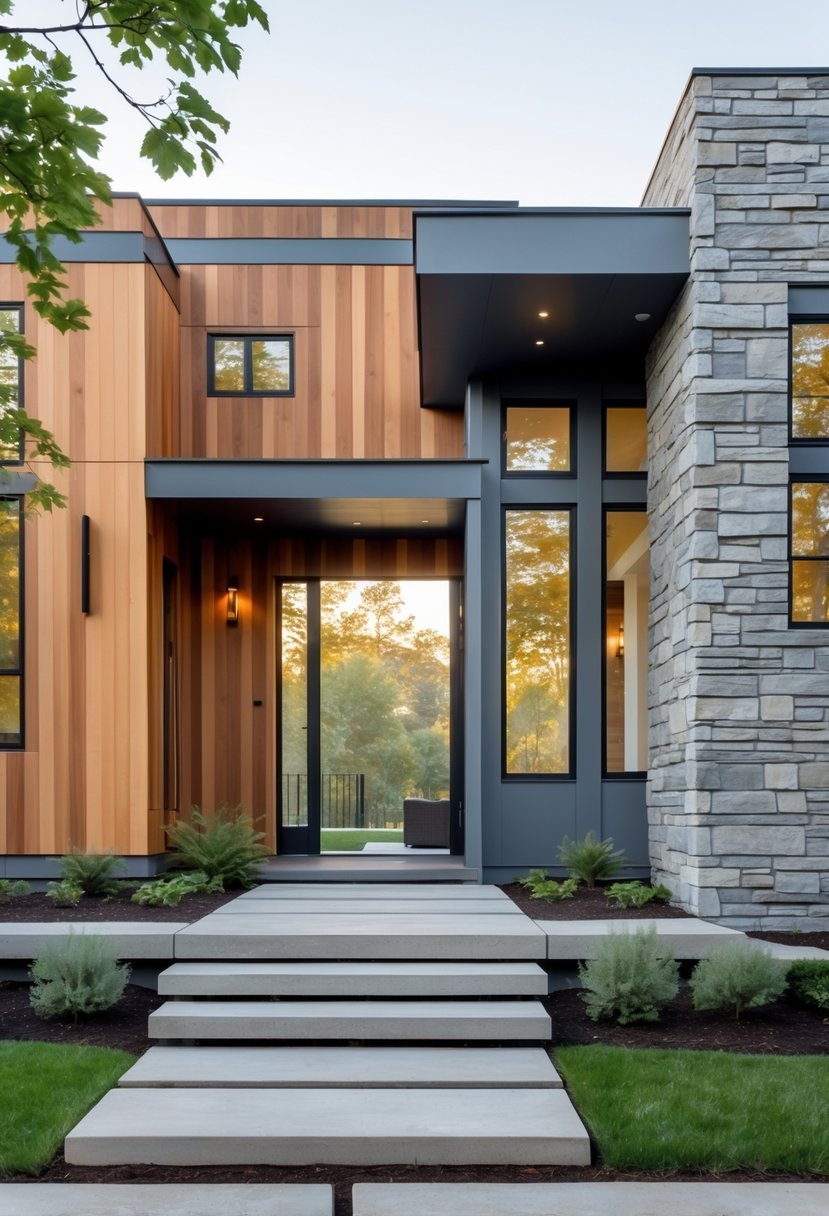
Combining wood, stone, and metal adds depth to a Japandi exterior. Each material offers a distinct texture that balances warmth and sleekness.
Wood brings natural warmth, stone adds solidity, and metal introduces modern contrast. Using muted tones keeps the blend harmonious and refined.
11. Simple Clean Straight Lines

I focus on clean, straight lines to keep the design simple and uncluttered. This approach creates a calm, organized look that defines Japandi style.
Sharp, minimal lines allow natural materials and textures to stand out.
12. Neutral Earth Tone Palette
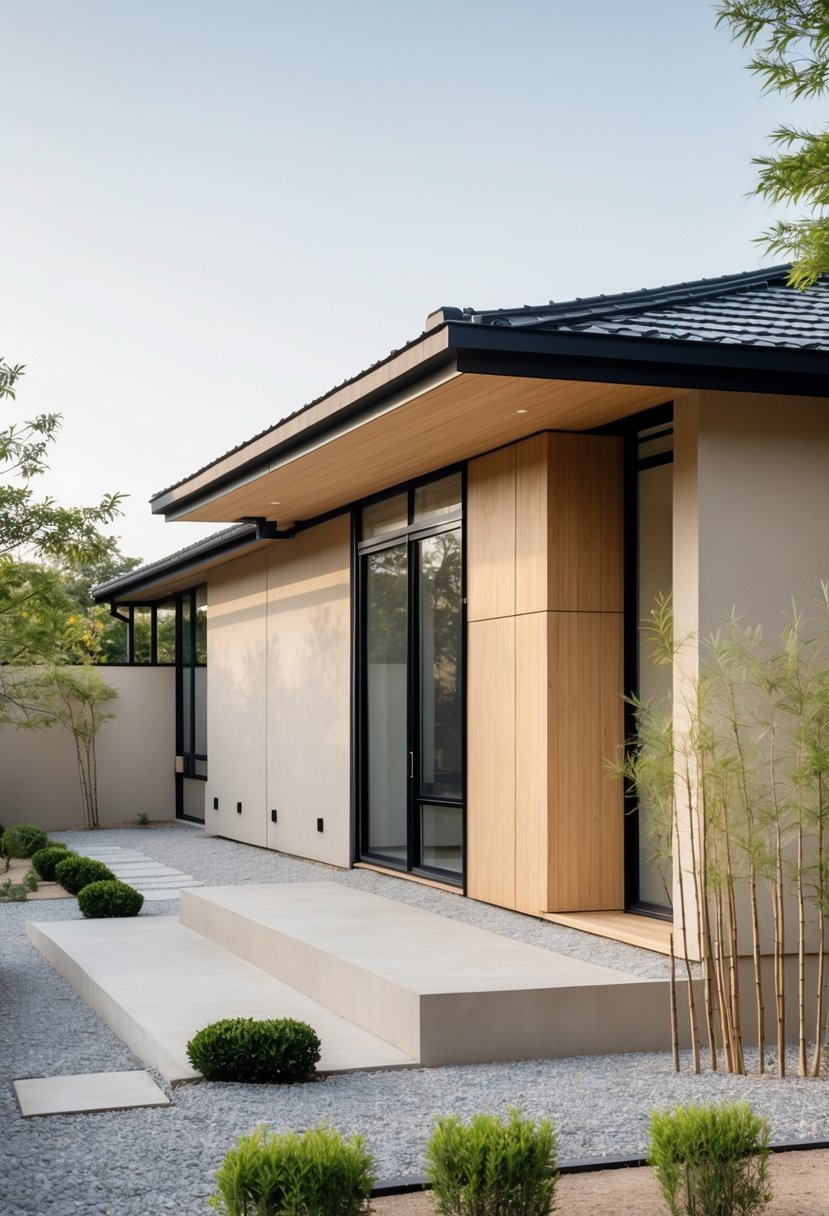
I favor neutral earth tones for Japandi exteriors because they create a calm, natural look. Soft whites, warm grays, and muted beiges blend well with wooden and stone elements.
These colors help the home blend with its surroundings while maintaining modern appeal. They set a versatile background for various textures.
13. Scandinavian Minimalist Touch

Scandinavian design brings sleek simplicity to Japandi exteriors. Clean lines and uncluttered forms create a calm, organized look.
Natural wood finishes and subtle, cozy elements add warmth. Dark metal or black accents add contrast.
14. Black and Wood Contrast
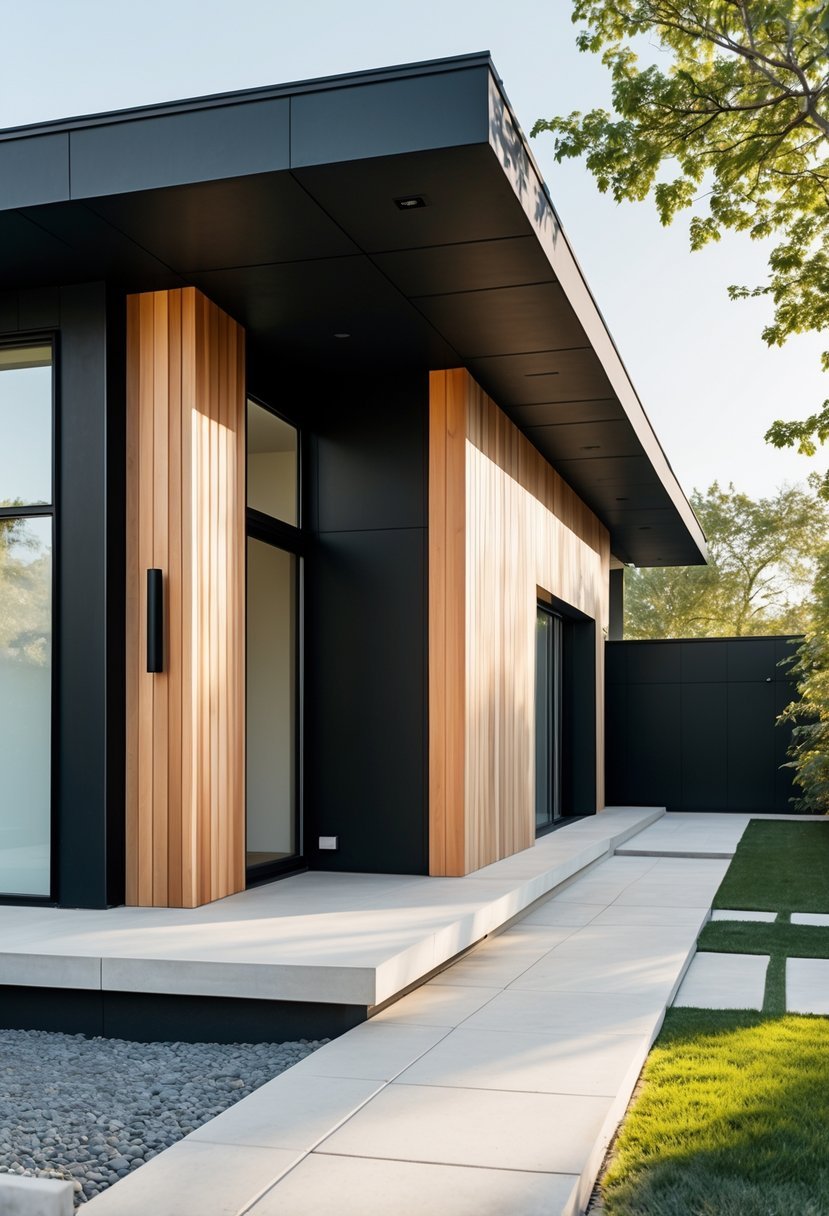
Black and natural wood create an effective pairing for Japandi exteriors. The dark backdrop highlights the wood’s warmth.
This contrast creates a calm yet bold look, blending sophistication with comfort. The combination adds depth while keeping the overall style clean and functional.
15. Soft Finishes on Natural Materials
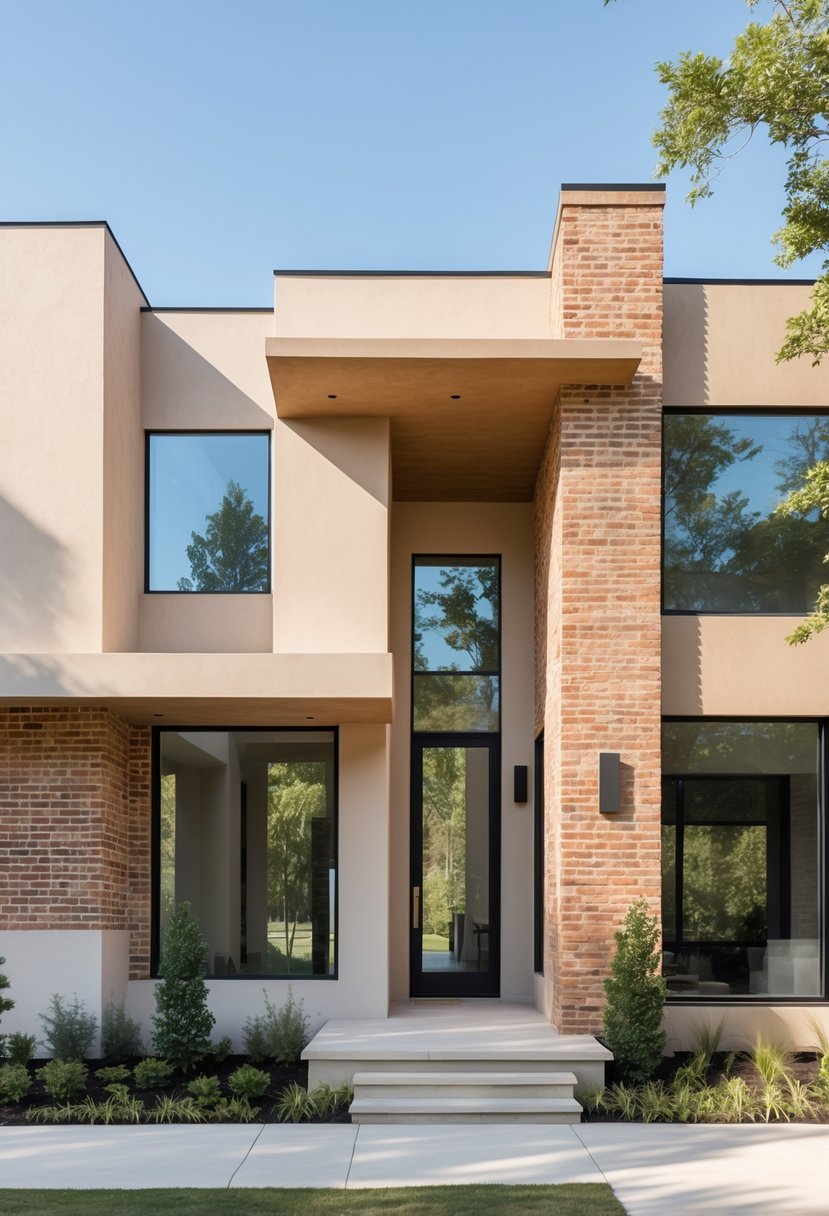
Soft finishes on materials like stucco and brick bring warmth to Japandi exteriors. These textures add subtle depth without overpowering the minimalist design.
Smooth, earthy plaster or microcement can enhance natural materials. This approach maintains simplicity and highlights the raw beauty of brick and stone.
These finishes blend well with neutral color palettes. The result is a harmonious and inviting exterior.
How to Create a Japandi House Exterior
Japandi exteriors rely on balance, simplicity, and a deep connection to nature. Use this quick step-by-step guide to design an exterior that feels calm, modern, and grounded:
Step 1: Prioritize Natural Materials
Use wood, stone, bamboo, soft stucco, and textured finishes. Keep surfaces simple and matte, avoiding glossy or overly decorative elements.
Step 2: Choose a Soft Neutral Palette
Select muted earth tones, such as warm beige, charcoal, soft white, taupe, ash gray, and natural wood tones. These colors harmonize with nature and enhance the minimalist look.
Step 3: Embrace Clean Lines
Keep facades streamlined. Straight lines and minimal detailing let the materials and surroundings speak for themselves.
Step 4: Blend Indoor and Outdoor Spaces
Use sliding doors, extended decks, and continuous flooring to merge interior and exterior living. Consider low steps, courtyards, or integrated gardens.
Step 5: Add Subtle Contrast with Dark Accents
Use dark trim, black metals, or charcoal frames to create definition. This contrast highlights warm wood tones without overpowering them.
FAQs
Designing a Harmonious Japandi House Exterior
A successful Japandi house exterior is simple, earthy, and deeply connected to its surroundings. By combining natural textures, soft color palettes, clean architectural lines, and understated contrast, you can create a space that feels peaceful yet modern. This style celebrates balance—offering warmth, function, and refined minimalism that stands the test of time.

I am Mindy Medford, a home décor, paint, and design specialist with over a decade of hands-on experience transforming ordinary spaces into cozy, personality-packed havens. Since 2013, I have been helping homeowners discover the art of beautiful yet practical design. I share my love for color, texture, and layout—making stylish interiors & exteriors feel achievable for everyone. Whether it’s picking the perfect paint shade or reimagining a small space, I’m here to guide and inspire.