How to Make Sage Green Paint
I used to spend hours staring at paint chips in the hardware store. Every single one looked wrong. One was too minty and the next one looked like baby vomit. It is a struggle I know all too well. Finding the perfect sage green paint feels impossible because store bought versions often lack that earthy and organic depth. I decided to stop searching and start mixing my own custom shades at home.
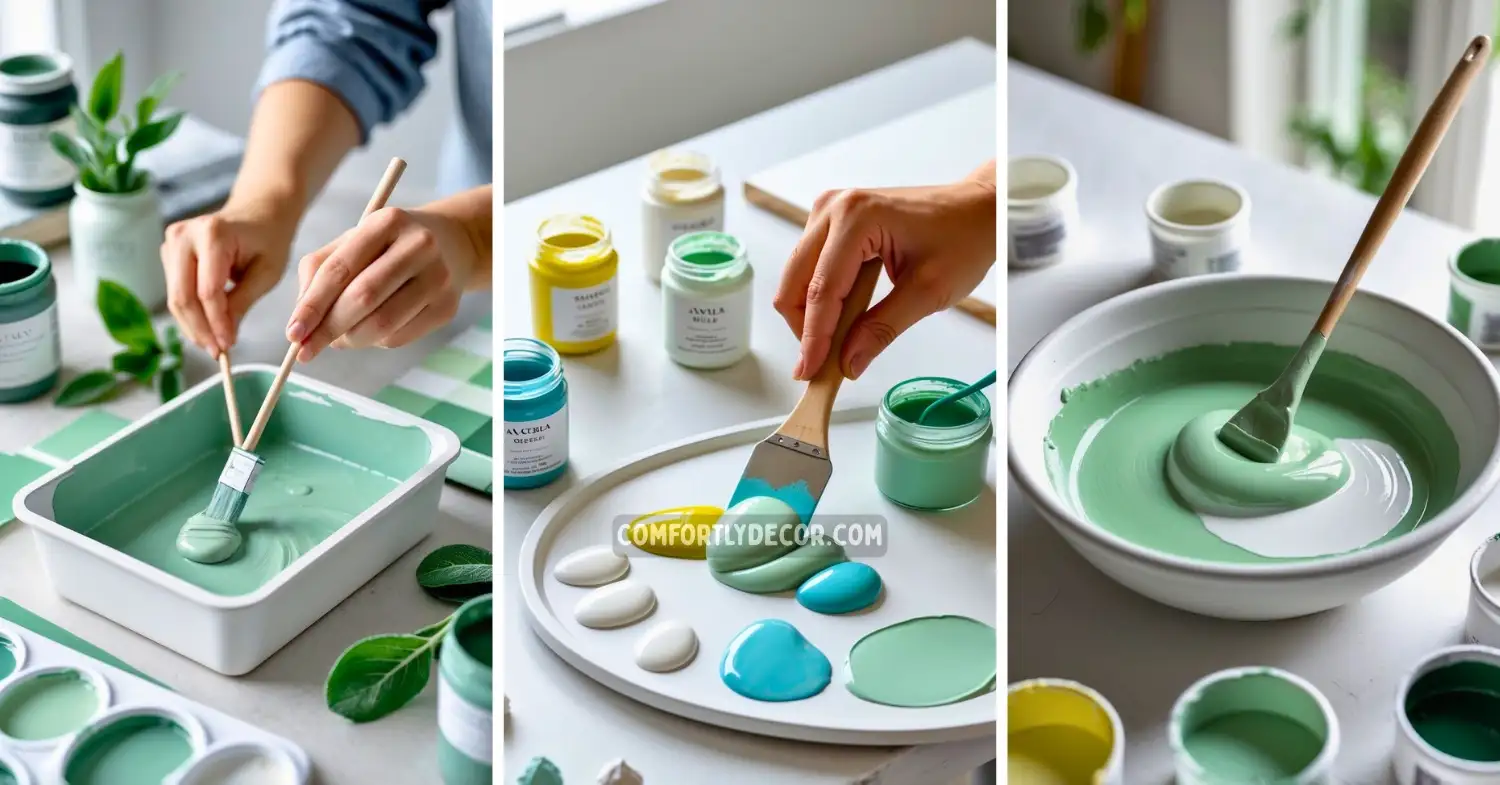
The process is surprisingly simple once I understand the basics of color theory. Sage green is essentially a yellow green that has been muted or grayed down. I love having total control over the warmth and depth of the wall color. I can make it moodier for a bedroom or lighter for a kitchen. I am going to share exactly how I mix the perfect sage green paint from scratch using basic acrylics or wall paint.
Why I Make My Own Paint Colors
I believe that mixing paint gives me a level of customization that premixed cans cannot offer. Premixed colors often look flat or artificial on the wall. When I mix my own colors I can adjust the undertones to match the lighting in my specific room. This is a huge advantage.
It also saves me money. I do not have to buy five different sample pots to find the right shade. I just buy the primary colors and white then I mix them until I am happy. It is a fun experiment that makes me feel like a true artist. Plus I get to brag to my friends that I made the color myself. FYI that is always a fun conversation starter at dinner parties.
The Supplies I Recommend
I keep my setup simple. I grab these essential items before I start mixing.
- Cadmium Yellow or a similar warm yellow paint
- Ultramarine Blue or a standard primary blue
- Titanium White to lighten the mix and add body
- Mars Black or a basic black for deepening values
- A palette knife or a stir stick for blending
- A mixing palette or a plastic plate
- A sketchbook or scrap paper for testing the color
I avoid using cheap craft paints if I plan to paint a wall. High quality artist acrylics or house paint bases work best for durability and coverage.
Understanding the Color Theory Basics
Sage green is a tertiary color. It sits somewhere between green and gray. To get there I need to understand what makes a color muted. Pure green is vibrant and loud. It screams for attention. Sage green whispers.
I achieve this whisper effect by desaturating the green. I do this by adding gray or by adding the complementary color which is red. I find that the gray method is easier for beginners so I will focus on that method here. Adding gray brings the chroma down and makes the color feel grounded and sophisticated.
My Favorite Sage Green Recipe
I follow a specific ratio that works almost every time. It serves as a great starting point. I tweak it later but this gets me eighty percent of the way there.
The Golden Ratio I Use
- 2 Parts Yellow
- 1 Part Blue
- 3 Parts Gray
I make my own gray by mixing white and black separately before adding it to the green. This gives me more control.
The Process I Follow
I break this down into manageable steps to ensure I do not waste paint. I mix small batches first to test the ratios.
Step 1: Creating the Base Green
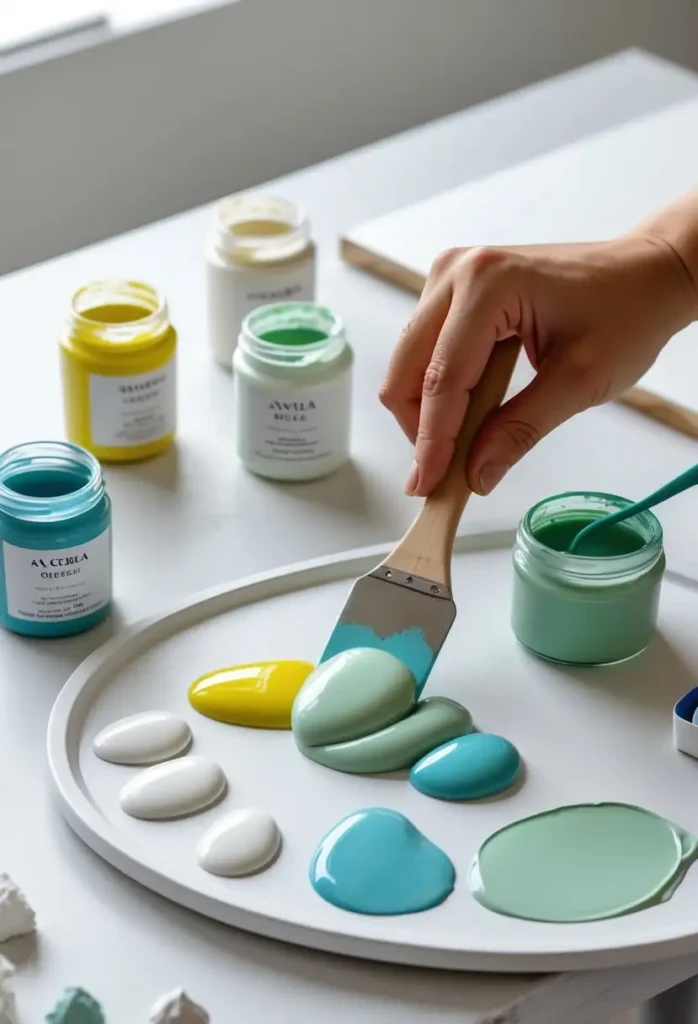
I start by mixing my yellow and blue paint together. I use two parts yellow to one part blue. I want a grassy and warm green here.
If I use equal parts it often turns out too turquoise or teal which is not what I want for sage. I mix these thoroughly until no streaks remain. The result should look like a classic grass green.
Step 2: Mixing the Gray
I grab a clean spot on my palette. I mix three parts white with a tiny dot of black. I am very careful with black paint because it is incredibly strong.
I add the black slowly until I have a medium gray. I aim for a gray that matches the lightness or darkness I want my final sage to be. If I want a pale sage I make a very light gray.
Step 3: Combining the Colors
This is where the magic happens. I slowly add my gray mixture into my green mixture. I do not dump it all in at once. I add a little bit and stir. Then I add a little more.
I watch the vibrant green turn into a soft and muted hue. I stop when I reach a color that reminds me of dried sage leaves.
Step 4: Adjusting the Undertones
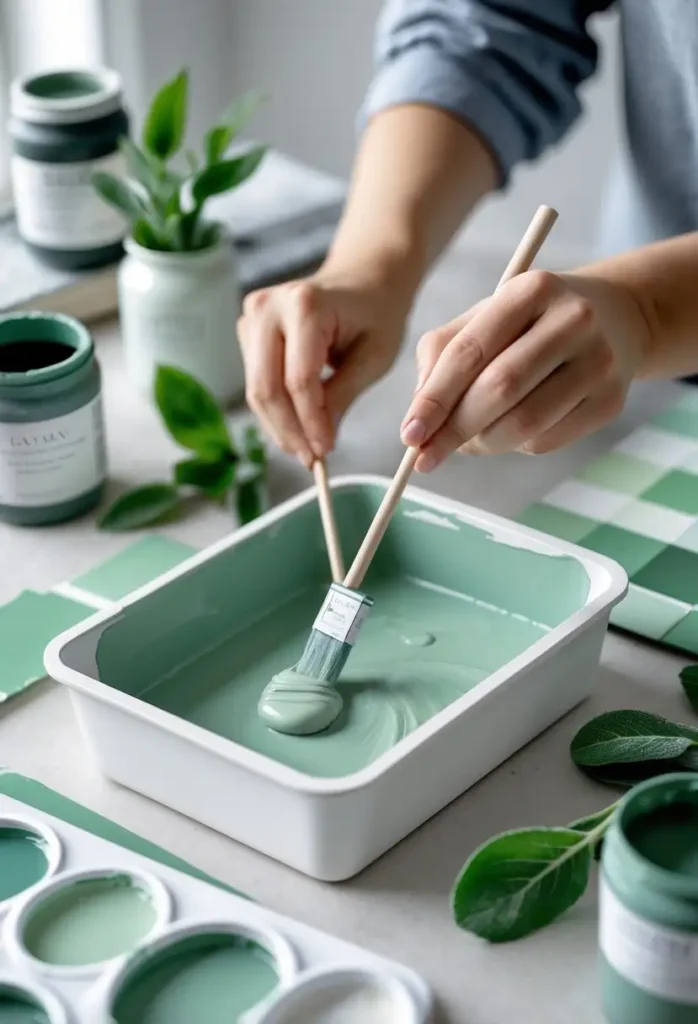
I look at my paint in natural light. Artificial light lies to me constantly. If the paint looks too cool or blue I add a tiny bit more yellow. If it looks too dark I add more white. I adjust until the color feels balanced.
I sometimes add a microscopic dot of red if I want the sage to look even earthier and more like olive. Red cancels out green so it works wonders for muting the color further.
Troubleshooting My Mixes
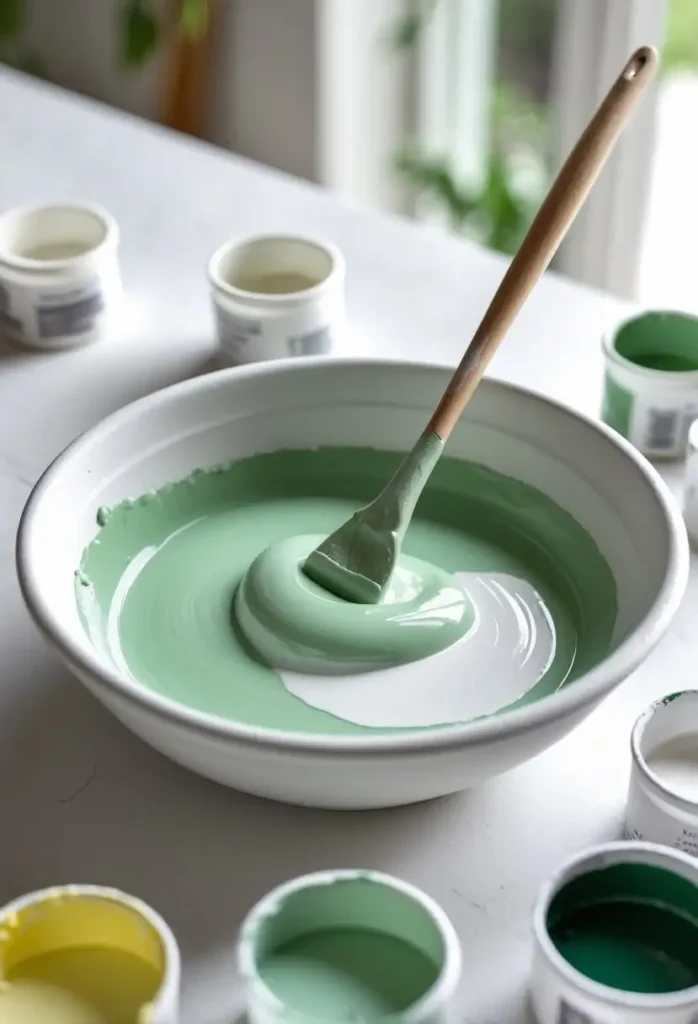
I mess up sometimes. It happens. Paint mixing is trial and error. Here is how I fix common problems.
Color looks too minty
I fix this by adding more yellow and a touch more gray. Mint happens when there is too much white and blue. I need to warm it up.
Color looks too muddy
I probably added too much black. I save this by adding more yellow and white to bring the life back into it. Or I start over with a smaller amount of black next time.
Paint dried darker than I thought
Acrylic and latex paints dry darker than they look when wet. I always mix my paint a shade or two lighter than I want the final result to be. I test a swatch and let it dry completely before committing.
FAQs
Final Thoughts on Mixing Sage Green
I hope this guide encourages you to grab a brush and start mixing. Making my own sage green paint transforms a generic room into a personal sanctuary. I love the feeling of looking at a wall and knowing I created that specific color. It is a small detail that makes a massive difference in how a home feels. I say go for it and do not be afraid to make a mess.

I am Mindy Medford, a home décor, paint, and design specialist with over a decade of hands-on experience transforming ordinary spaces into cozy, personality-packed havens. Since 2013, I have been helping homeowners discover the art of beautiful yet practical design. I share my love for color, texture, and layout—making stylish interiors & exteriors feel achievable for everyone. Whether it’s picking the perfect paint shade or reimagining a small space, I’m here to guide and inspire.