20 Garden Trellis Ideas For A Stunning Vertical Landscape
I remember staring at my first garden bed and feeling like something was missing. The plants were happy enough on the ground, but the space looked flat and uninspired. I realized I needed to grow up rather than out.
Vertical gardening completely transformed my yard. It gave me more room for crops and added a beautiful architectural layer that flat beds simply cannot provide. If you are ready to take your garden to new heights, I have collected my favorite methods for you.
20 Garden Trellis Ideas
1. The Cattle Panel Arch
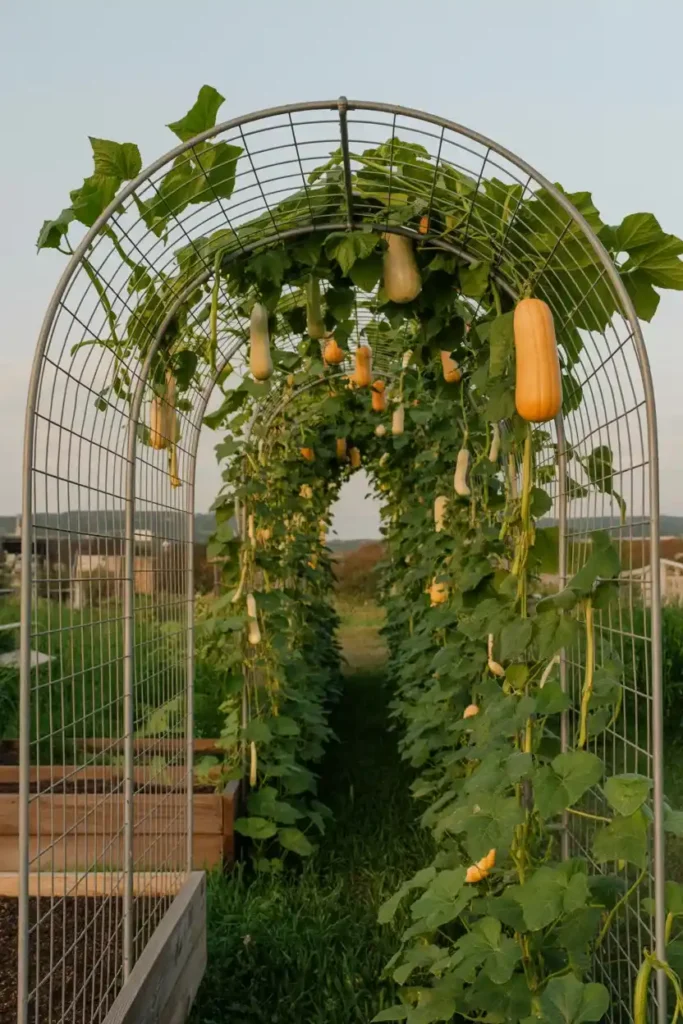
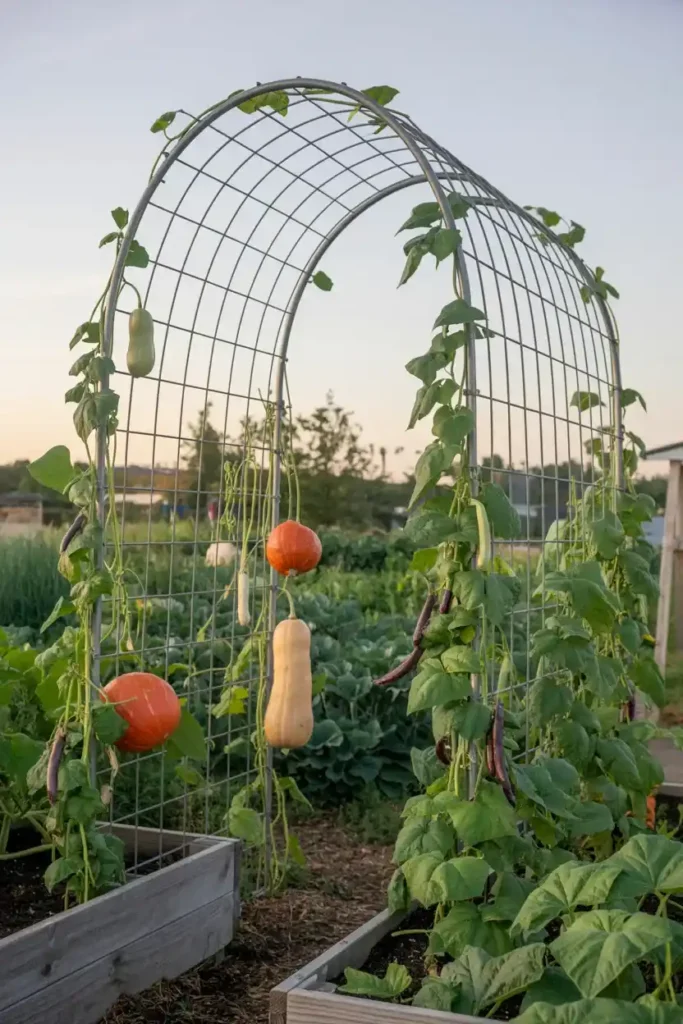
I consider this the gold standard for heavy duty vertical gardening. A cattle panel is a sixteen foot long piece of galvanized wire fencing that you can find at farm supply stores.
You simply bend it into an arch and secure it between two raised beds or T posts. It creates an instant tunnel that looks incredible when covered in pole beans or squash.
I love how it makes harvesting easy because the vegetables hang right down in front of your face. It is strong enough to hold heavy pumpkins too.
2. Rustic Remesh Tomato Cages
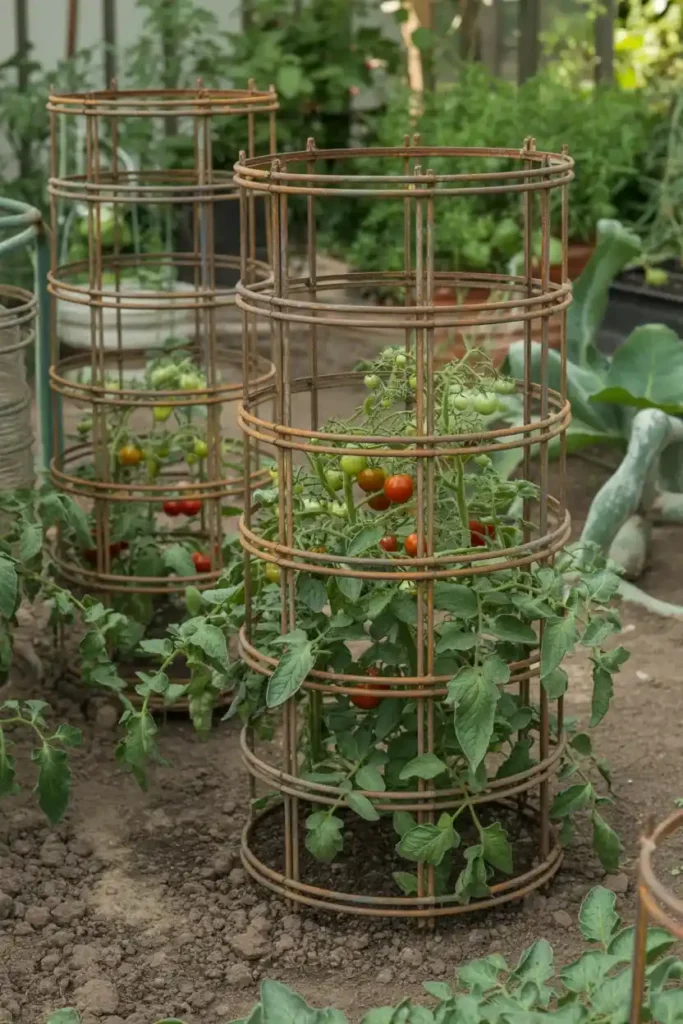
You do not need to spend a fortune to get sturdy plant support. Concrete reinforcing wire, or remesh, creates fantastic circular cages that last for years.
I buy a roll of it and cut it into lengths that form cylinders. The material rusts over time, which gives it a charming rustic aesthetic that blends perfectly into a cottage garden.
Just be careful with the cut edges because they can be sharp. I suggest filing them down or bending them inward to keep your hands safe during harvest time.
3. Classic Cedar Obelisk
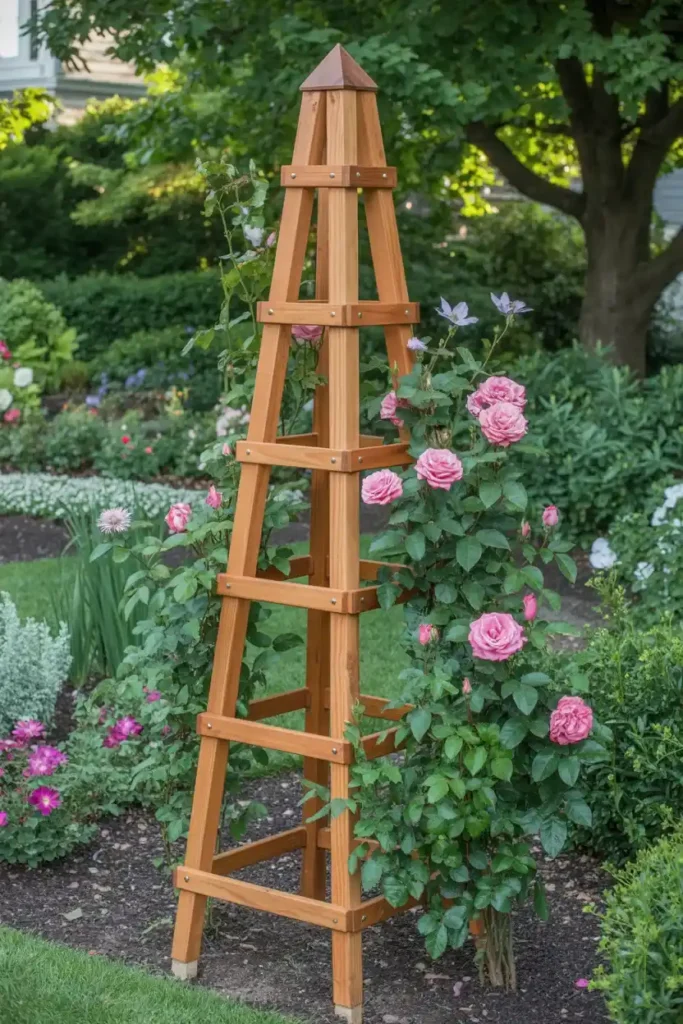
There is nothing quite as elegant as a cedar obelisk standing tall in a flower border. I love using cedar because it is naturally resistant to rot and insects without needing chemical treatments.
You can build a pyramid shape with four legs and horizontal cross pieces. It provides excellent support for climbing roses or clematis. The wood turns a lovely silvery gray color as it ages.
IMO this is the best choice if you want something that looks good even in winter when the plants die back.
4. A Frame Cucumber Trellis
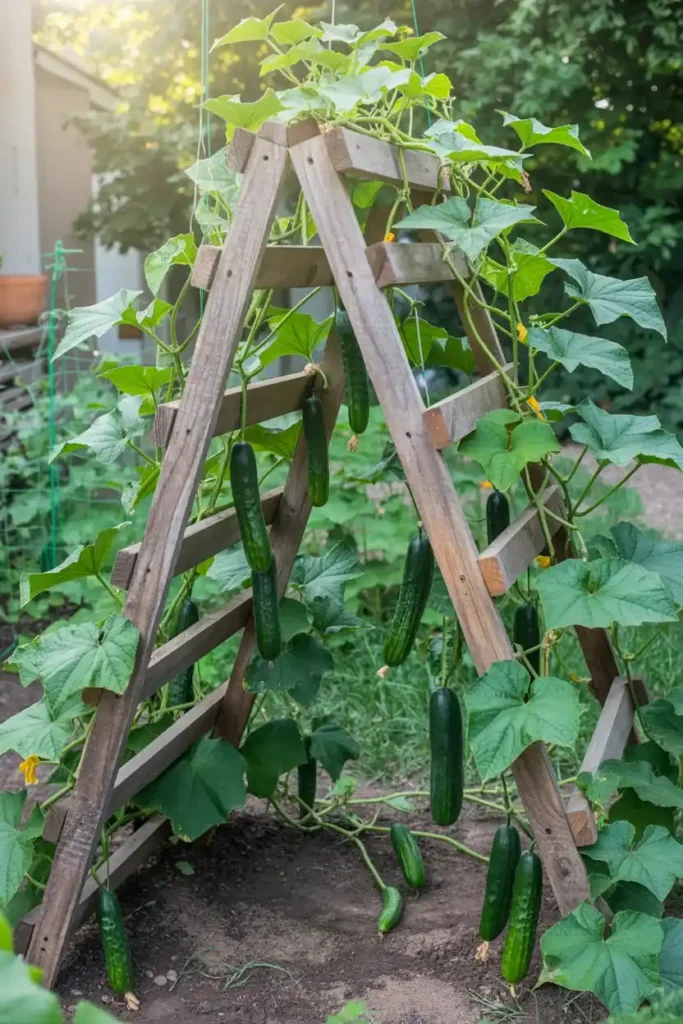
Cucumbers love to climb, and an A frame structure is the perfect way to let them do it. You can build this easily with two wooden pallets lean against each other or by constructing a simple frame with scrap lumber and chicken wire.
The shape allows the vines to crawl up one side and down the other. I find that this method keeps the leaves drier and reduces fungal diseases.
Plus the cucumbers grow straight and clean because they are not sitting in the dirt.
5. Wall Mounted Privacy Lattice
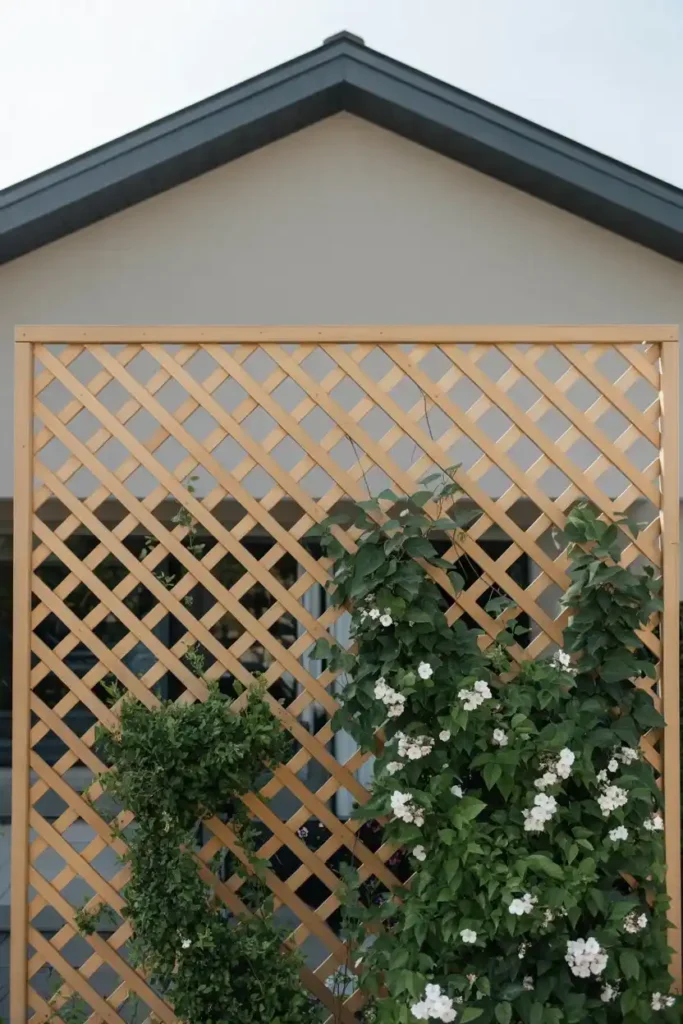
Do you have an ugly wall or a nosy neighbor you want to screen out? A wall mounted lattice is your new best friend.
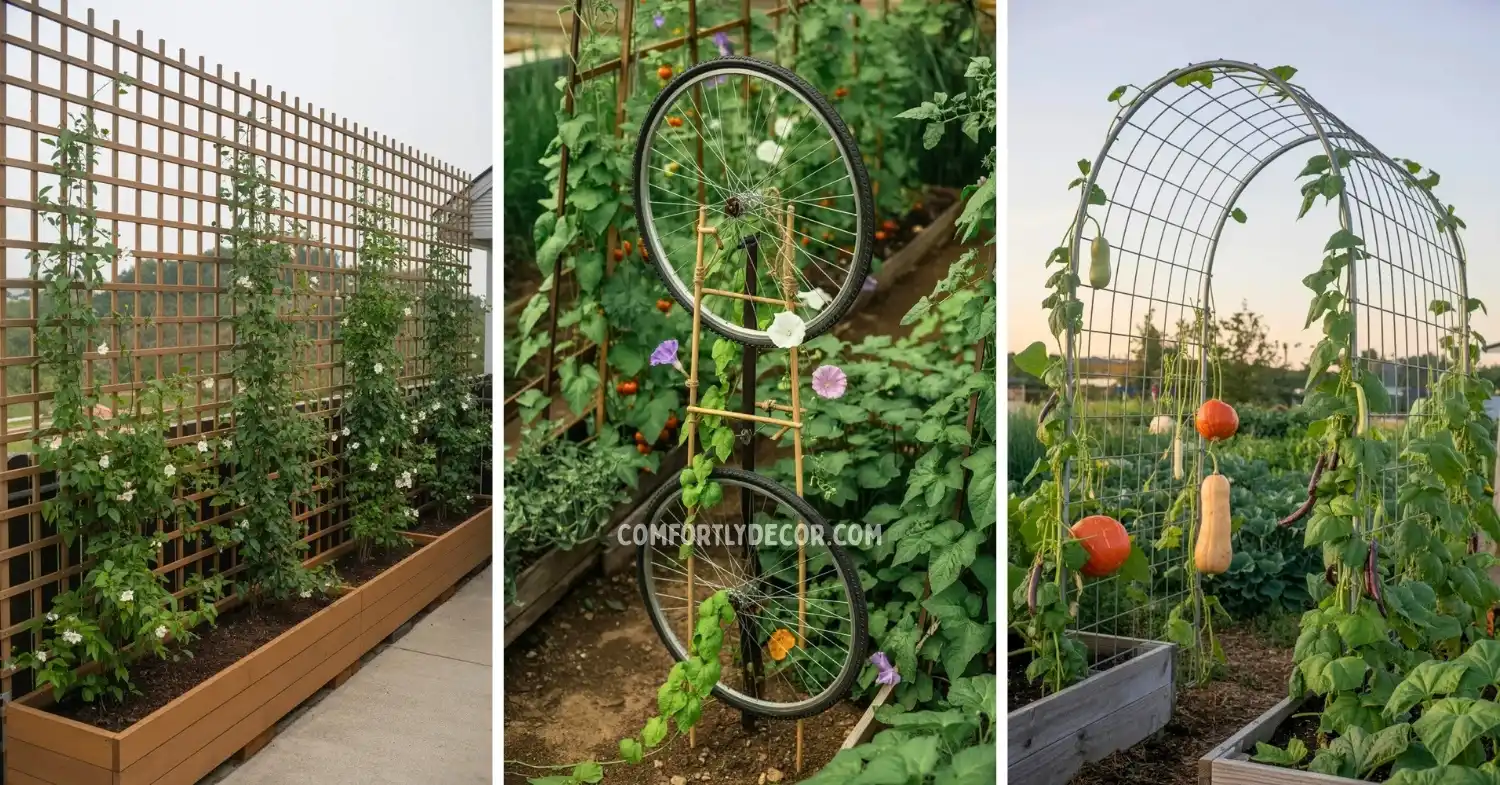
I attach a wooden lattice panel directly to the side of my house or garage with spacers to allow air circulation behind it. It creates a lush living wall when you plant fast growing vines like ivy or jasmine at the base.
It turns a boring blank surface into a vertical garden feature. This idea adds massive curb appeal with very little ground space required.
6. Bamboo Teepee Bean Pole
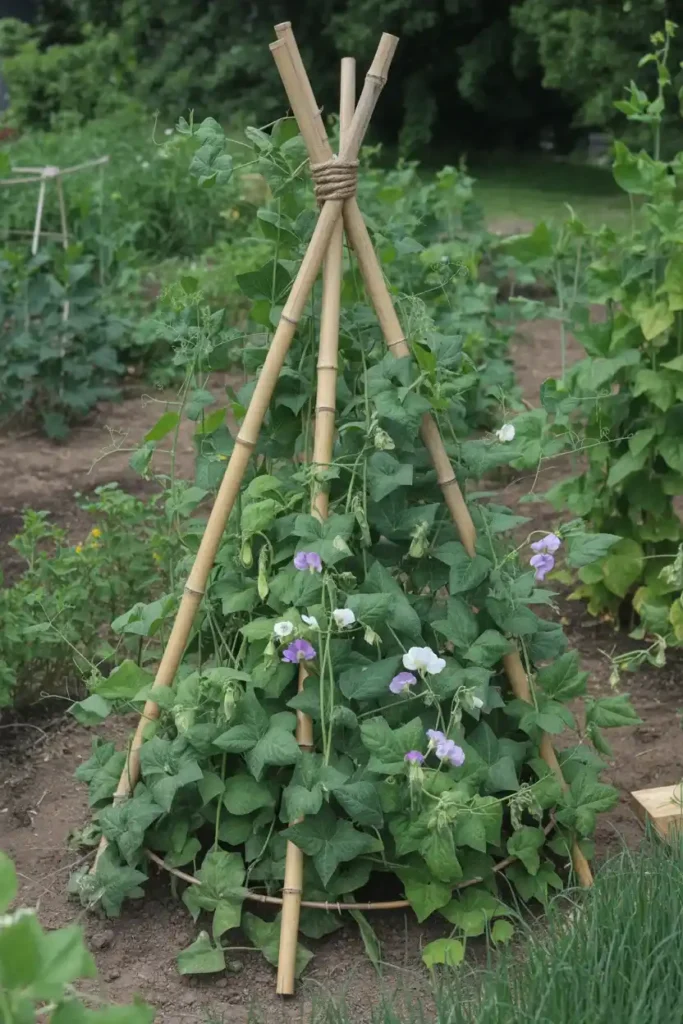
This is one of the easiest and cheapest trellises you can build. I gather three or four long bamboo poles and tie them together at the top with sturdy twine.
Spread the legs out in a circle and push them into the soil. It creates a strong cone shape that pole beans adore. I often plant sweet peas on these too for a pop of color and scent.
It is a temporary structure that you can take down and store away when the season ends.
7. Gothic Arch with Two Panels
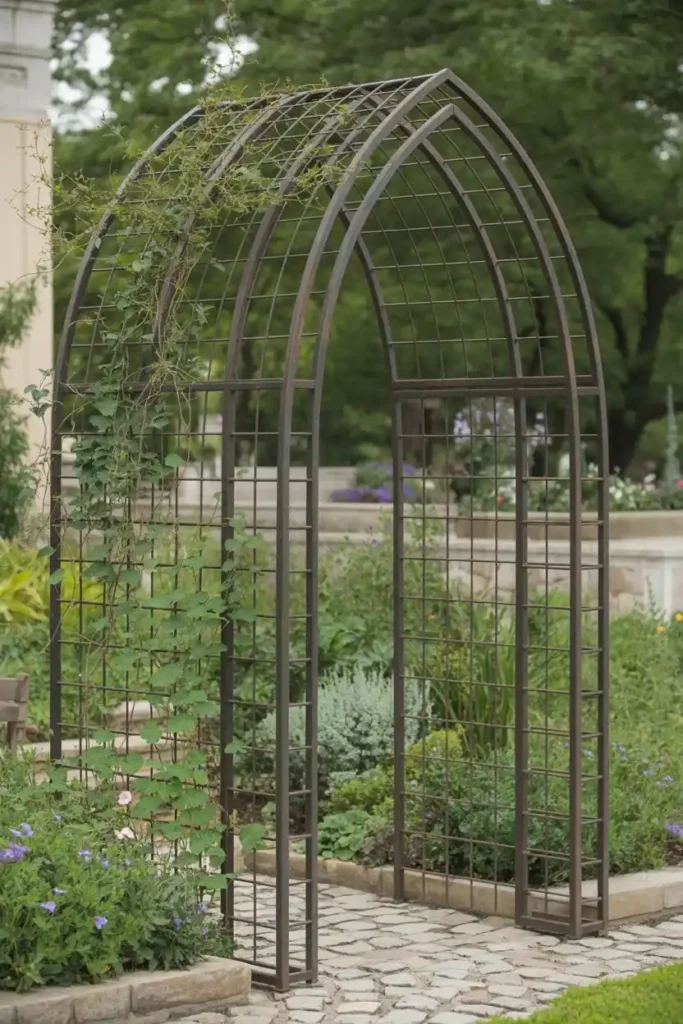
If you cannot transport a sixteen foot cattle panel, you can use two smaller panels to create a pointed arch. I fasten two eight foot panels together at the top to form a peak rather than a smooth curve.
It mimics the gothic style architecture you see in old churches. This shape effectively sheds snow in the winter if you leave it up.
I think this style looks particularly striking when framing a garden path. It adds a touch of drama that a standard round arch lacks.
8. Upcycled Bicycle Wheel Trellis
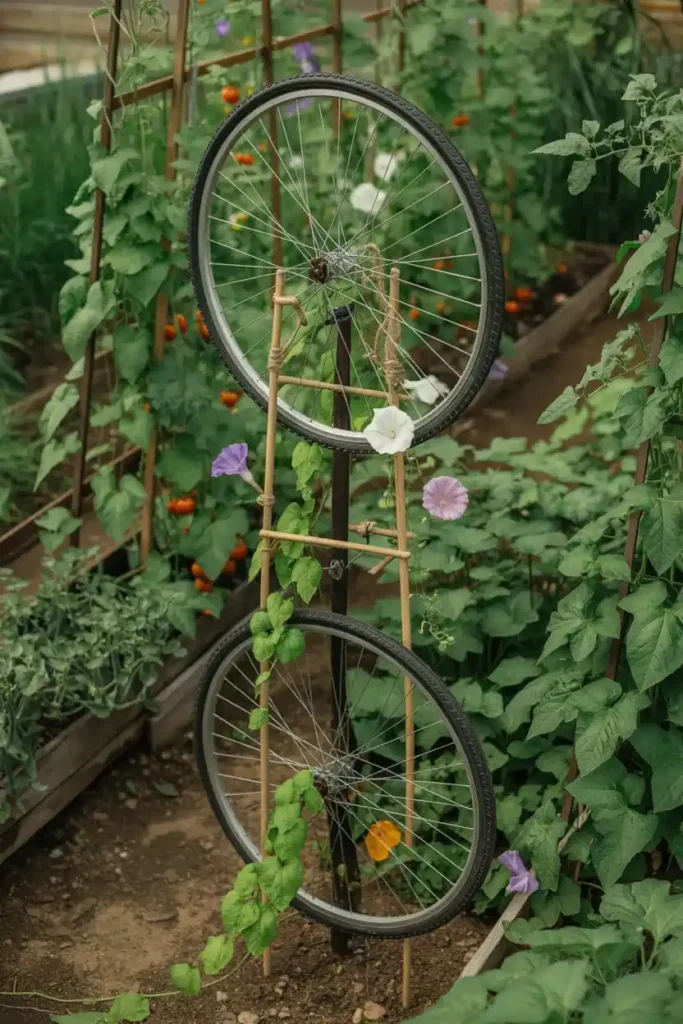
I love turning trash into treasure in the garden. You can take two old bicycle wheels and mount them on a central metal pole.
Run strings from the top wheel to the bottom wheel to create vertical lines for vines to climb. It looks like a spinning sculpture even before the plants cover it.
This is a fantastic conversation starter and works well for lightweight climbers like morning glories or black eyed Susan vines. It adds a whimsical and artistic vibe to any vegetable patch.
9. Old Crib Spring Grate
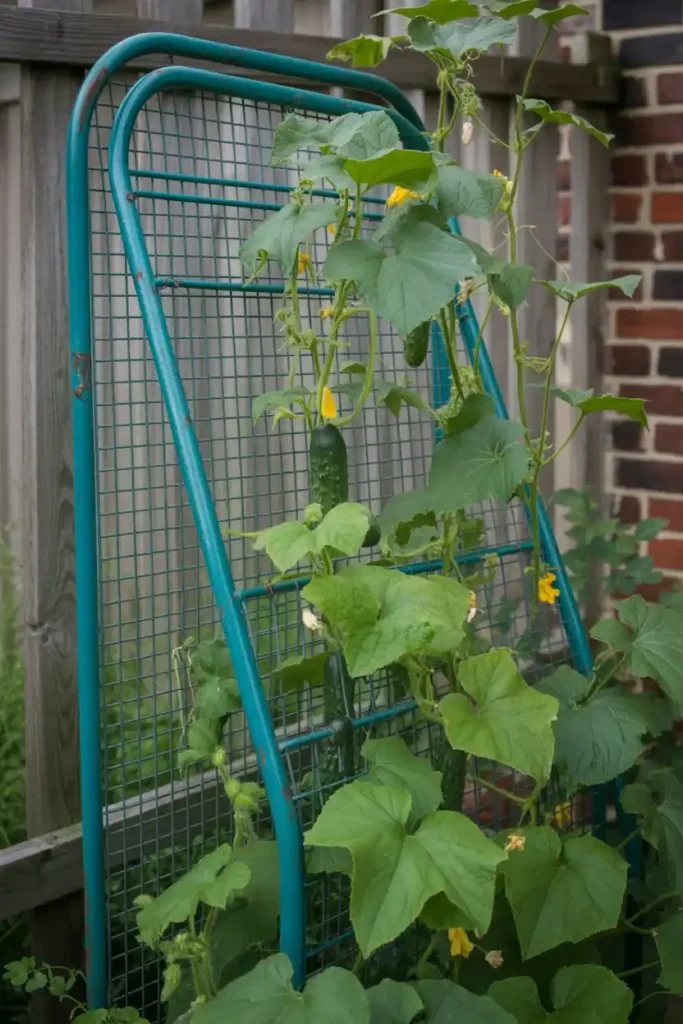
Do not throw away that old metal crib spring frame. You can lean it against a wall or hang it up to make an instant heavy duty trellis. The metal grid is perfect for plants to grab onto with their tendrils.
I spray paint mine in bright colors like teal or yellow to make them pop against the green foliage. It is an excellent way to keep sturdy items out of the landfill.
This works surprisingly well for cucumbers and small melon varieties.
10. The Free Pallet Trellis
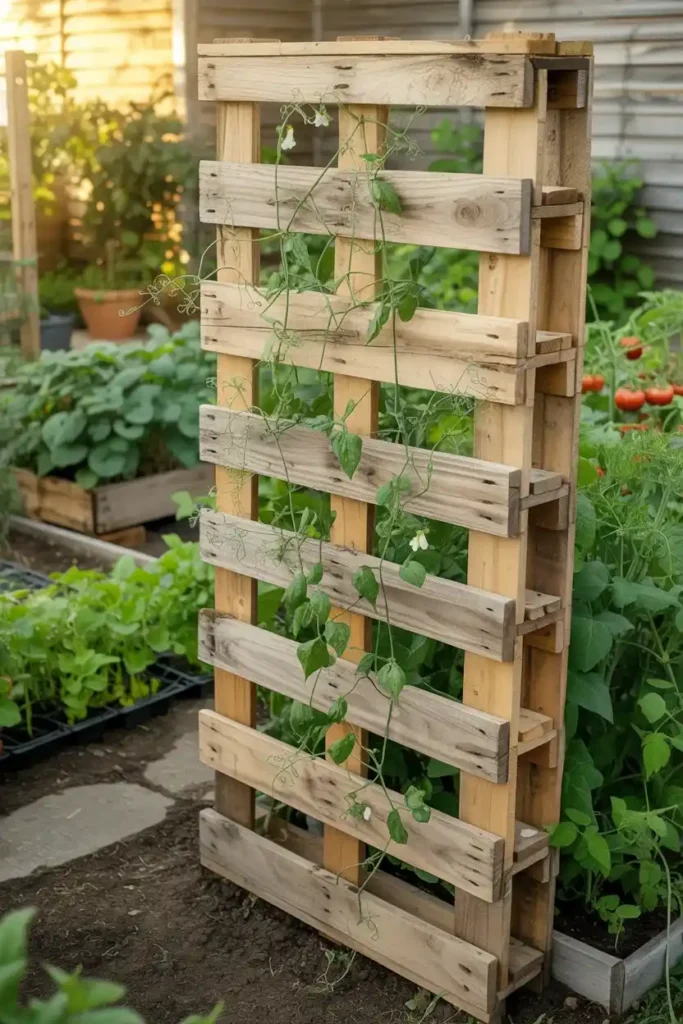
Wood pallets are often available for free if you ask local businesses. You can stand a pallet on its end and use it as a support for shorter crops.
I sometimes pry off every other slat to give the plants more room to weave through. It creates a sturdy and rustic look that costs absolutely nothing.
Just make sure you check the stamps on the wood to ensure it was heat treated rather than chemically treated. You do not want harsh chemicals leaching into your soil.
11. Modern Wire Rope Trellis
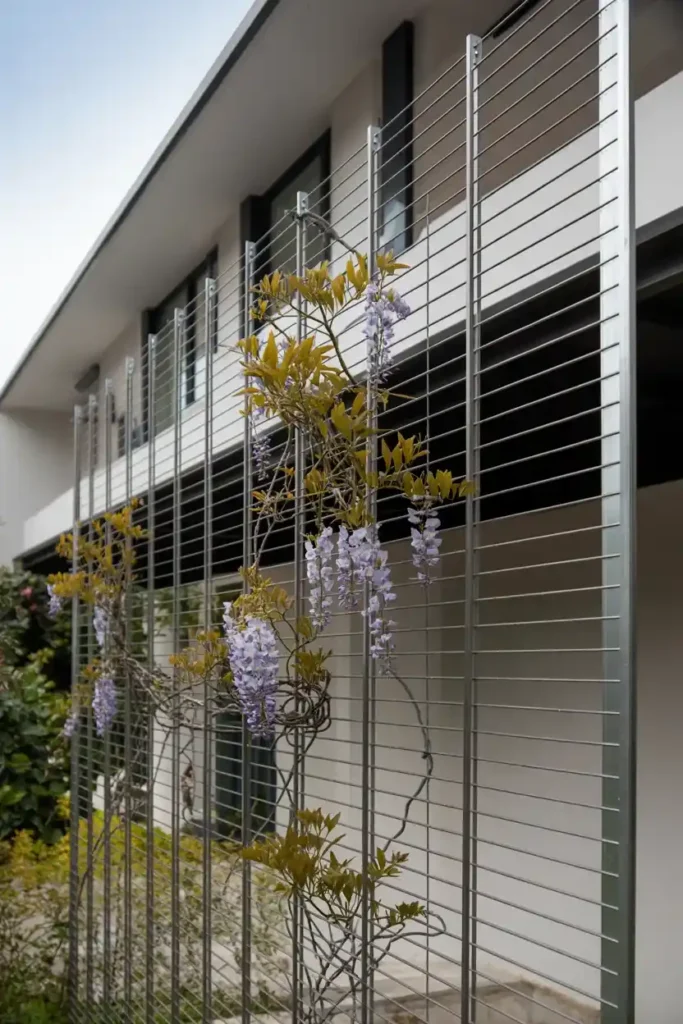
For a sleek and contemporary look, I recommend a wire rope system. You install stainless steel tensioners and run steel cables in a grid pattern on a wall or fence.
It becomes almost invisible until the plants start to grow. This is perfect for modern homes where you want clean lines and minimal visual clutter.
I use this for wisteria because the steel cables are incredibly strong. It is a bit more expensive to install but the professional finish is worth the investment.
12. Willow Branch Wattle
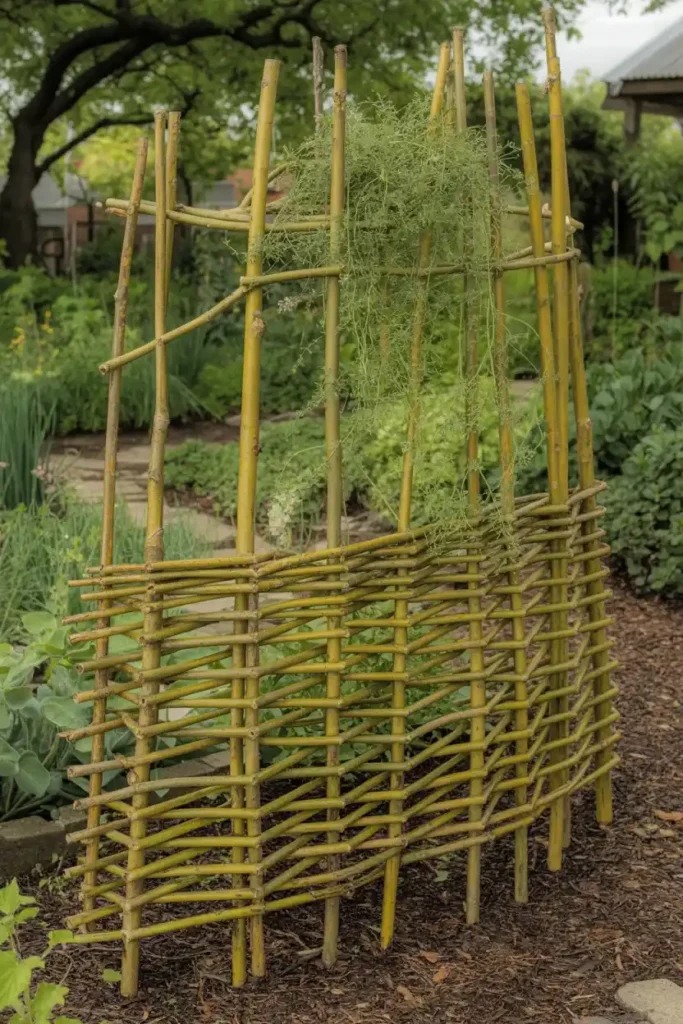
If you have access to flexible branches like willow or hazel, you can weave a natural wattle trellis. I push thicker stakes into the ground and weave the thinner branches horizontally between them.
It creates a beautiful basket weave texture that looks right at home in a permaculture garden. This material is free if you do your own pruning.
It eventually decomposes and feeds the soil, which I think is a brilliant cycle. It is nature supporting nature in the most literal sense.
13. Copper Pipe Industrial Trellis
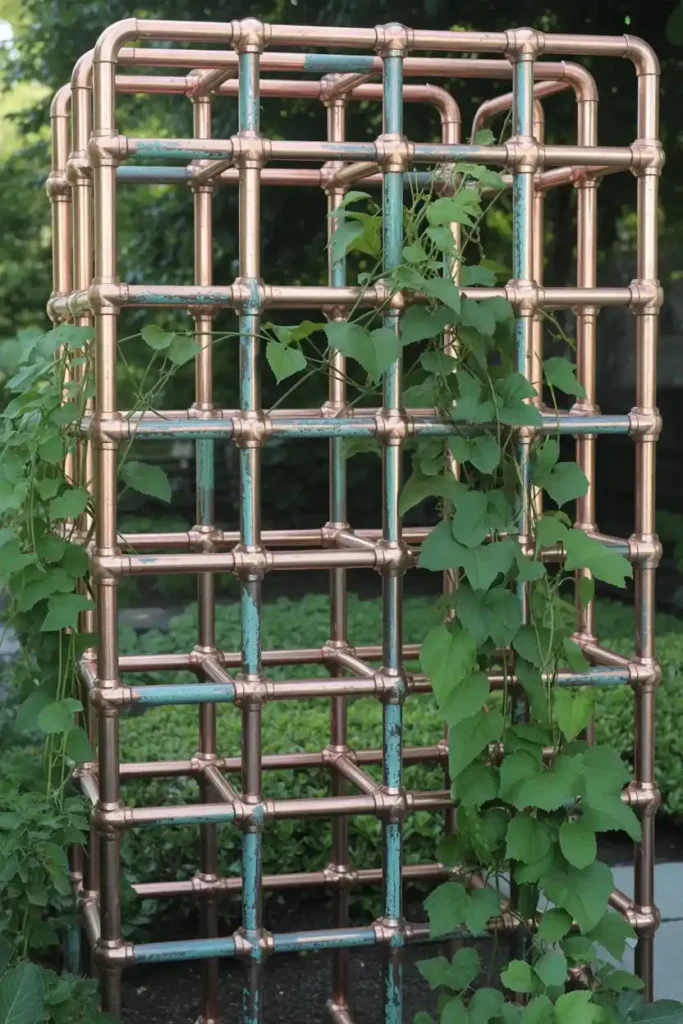
Copper pipes create a stunning industrial look that shines brightly in the sun. You can solder standard plumbing pipes into a ladder or grid shape.
As the copper ages, it develops a beautiful green patina that looks ancient and earthy. I love how the smooth metal contrasts with the soft leaves of climbing plants.
It is a bit of a splurge project, but it acts as a piece of permanent garden art. Plus copper naturally repels slugs and snails.
14. Traditional Fan Trellis
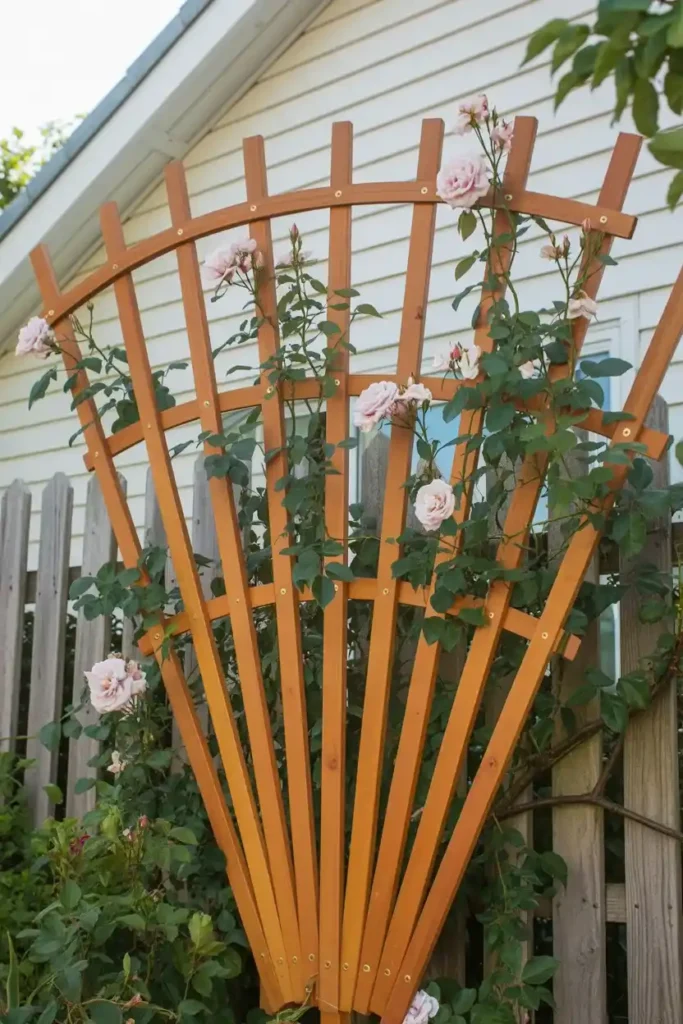
The fan shape is a classic for a reason. It flares out at the top to give climbing roses plenty of room to spread their blooms.
You can buy these in wood or plastic, but I prefer building my own out of thin cedar strips. I nail them together at the bottom and spread them out like a hand of cards.
It looks lovely leaning against a house or fence. It guides the plant growth upward and outward in a very controlled manner.
15. Tunnel of Greenery
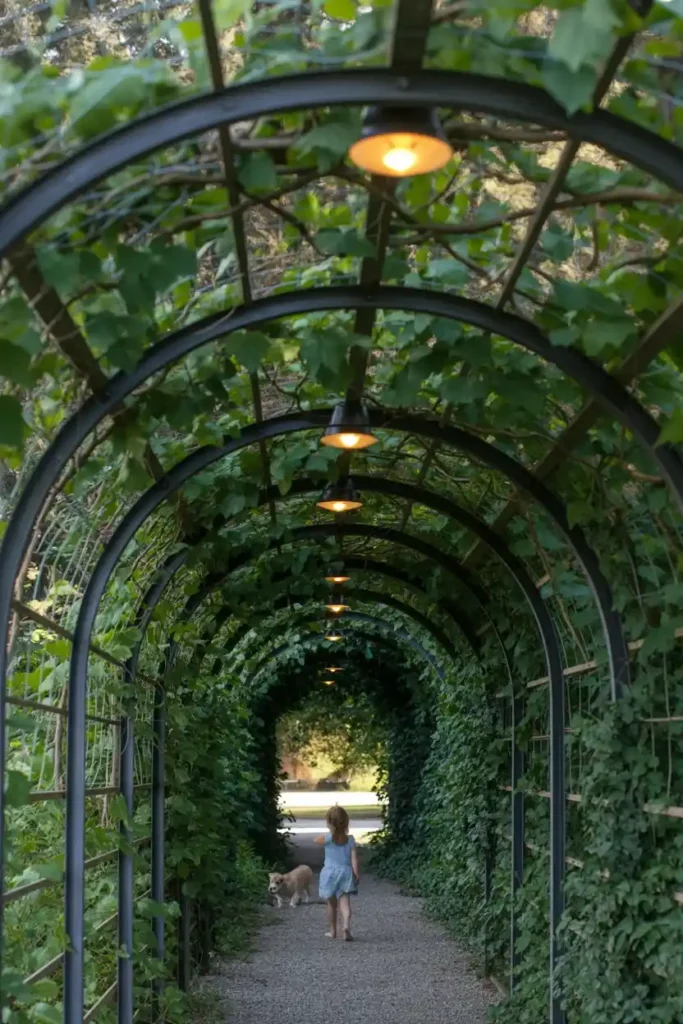
Why stop at one arch when you can have five? I space several cattle panel arches about two feet apart to create a long tunnel.
When the plants fill in, you feel like you are walking through a secret jungle passage. I hang solar lights from the top to make it magical at night.
It is my favorite place to escape the summer heat because the leaves provide deep shade. Kids and dogs absolutely love running through it too.
16. Window Frame with Chicken Wire
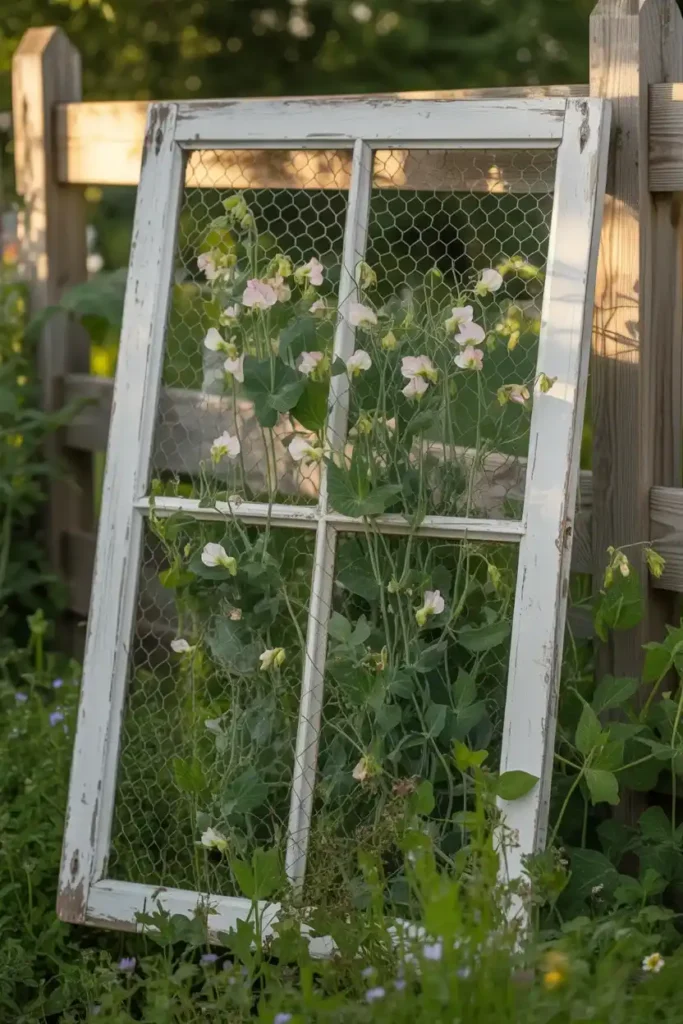
I found an old window frame at a salvage yard and removed the glass. I stapled chicken wire across the back to create a mesh grid.
You can hang this on a fence or prop it up in a garden bed. It makes a charming picture frame for your climbing plants.
I plant sweet peas at the base so the flowers fill the frame. It adds a shabby chic aesthetic that feels cozy and nostalgic. It is a quick afternoon project.
17. Vertical String Trellis
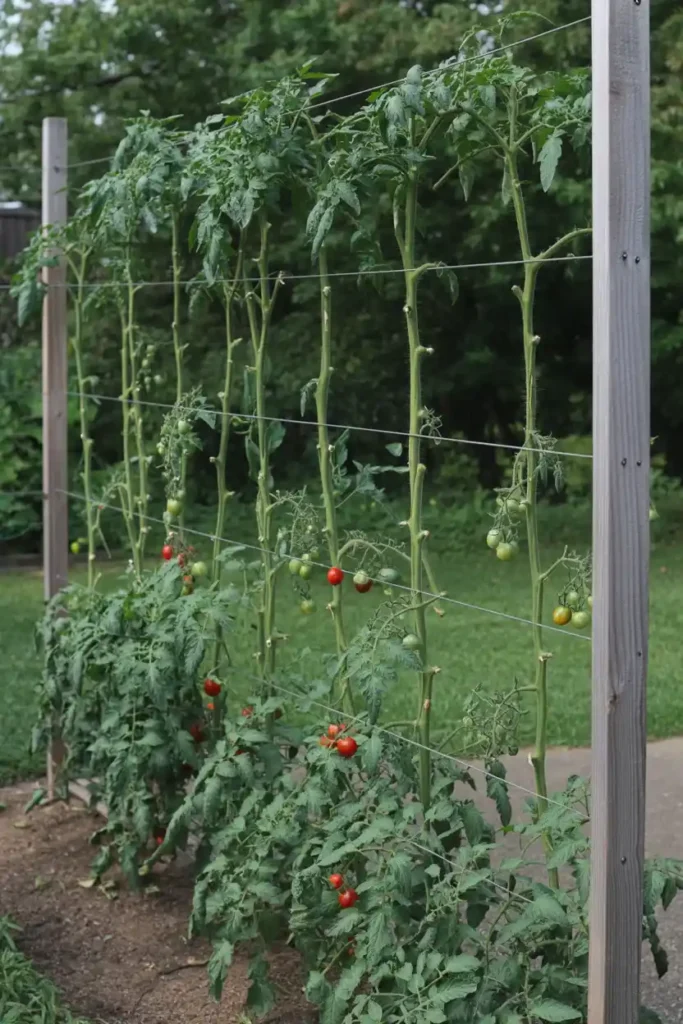
Greenhouse growers use this method because it is cheap and effective. You run a strong wire horizontally about seven feet in the air. Then you tie strings to the wire and drop them down to the plants.
You clip the main stem of the tomato or cucumber to the string. I wind the plant around the string as it grows. It keeps the plant perfectly vertical and saves a ton of space.
FYI this requires regular pruning to keep the plant to a single stem.
18. Privacy Screen Planter Box
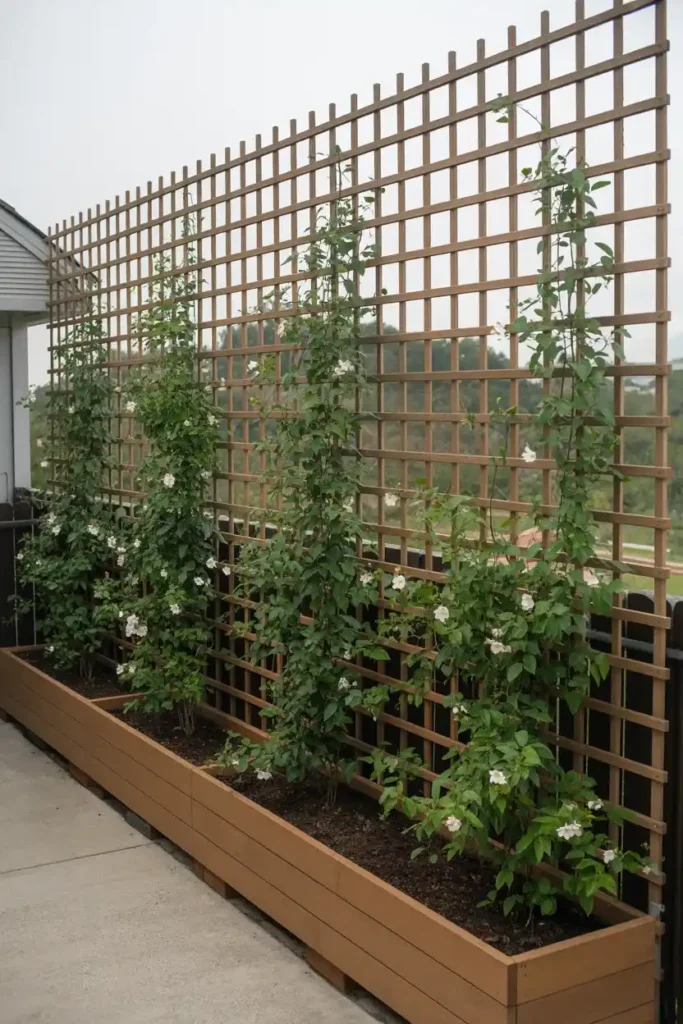
This is a great solution for renters or people with patios. You build a deep planter box and attach a tall wooden grid to the back of it.
The weight of the soil keeps the trellis stable so you do not need to dig holes in the ground. I plant evergreen climbers like star jasmine to create a year round privacy screen.
It blocks the view of the neighbors while smelling amazing. It is a portable wall that you can take with you if you move.
19. Living Wall Pockets
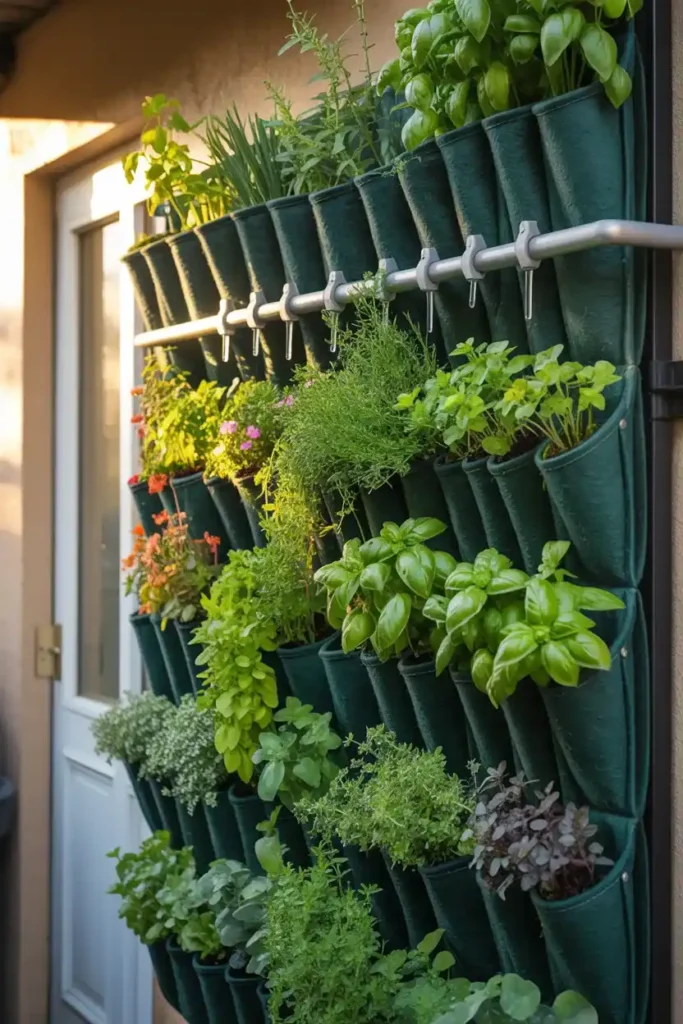
You can buy heavy duty felt pocket systems that hang on a wall. You fill each pocket with soil and plant herbs or trailing flowers.
I love this for creating a vertical salad garden right outside my kitchen door. It covers an ugly wall completely in greenery.
You do need to water these frequently because the pockets dry out faster than the ground. I set up a simple drip irrigation line at the top to make it low maintenance.
20. The Teepee with Netting
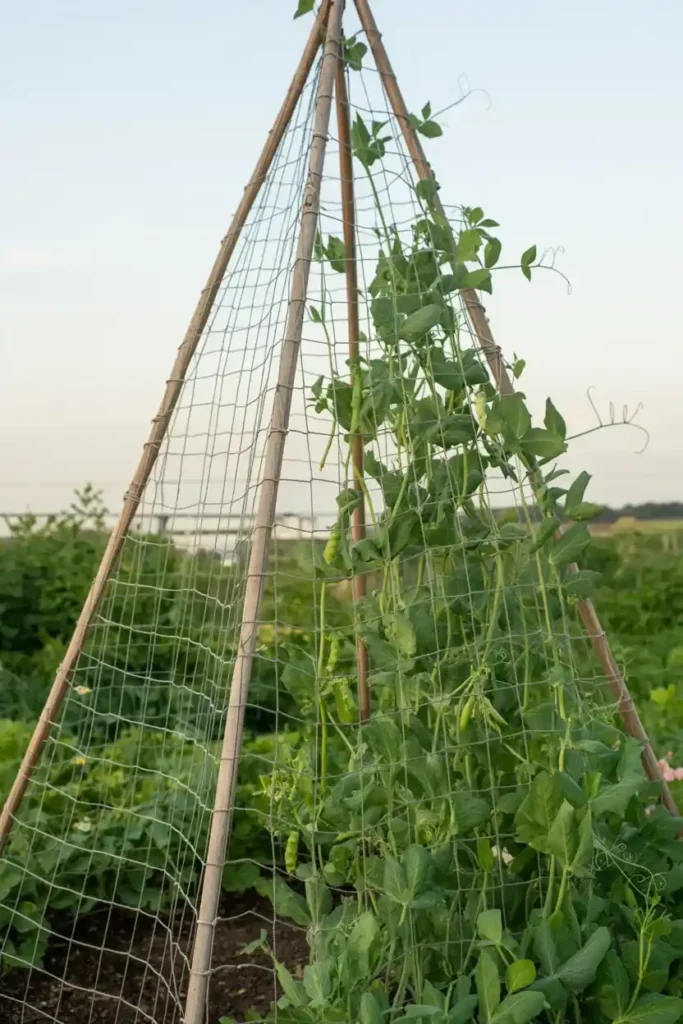
Sometimes you need to cover a large area cheaply. I set up three tall poles in a teepee shape and drape bird netting or trellis netting over the whole thing.
The netting gives the plants thousands of tiny places to grab onto. Peas and beans scramble up this mesh incredibly fast.
It is not the prettiest option in the winter, but in the summer it vanishes under a wall of leaves. It is highly functional and costs pennies to set up.
A Guide to Trellis Success
Building the perfect trellis requires a bit of planning. I want you to succeed, so here is the breakdown of what matters most when you start your build.
Choosing Your Material
Decide between wood and metal. I generally prefer wood like cedar or redwood for a natural look that blends into the landscape and resists rot. However, metal is superior for durability, as a galvanized steel panel will last for decades.
- Wood: Cedar or redwood offer a natural look and rot resistance.
- Metal: Galvanized steel provides maximum durability but can get hot and scorch delicate plants.
Installation Depth and Spacing
Don’t underestimate the wind, as a trellis covered in leaves acts like a sail. Always use a level to ensure your posts are straight before you attach anything.
- Depth: Drive stakes at least one foot deep into the soil. For taller structures, go two feet deep.
- Spacing: For arches made with cattle panels, space the legs about five feet apart to prevent the arch from bowing.
Plant Selection Matters
Match the plant to the trellis. Heavy squashes need strong steel or thick wood, as they will crush flimsy plastic. Delicate sweet peas, on the other hand, prefer thin netting or string because their tendrils are tiny.
- Heavy Plants (Pumpkins, Melons): Use sturdy cattle panels.
- Vining Flowers (Roses, Clematis): Decorative wood obelisks work well.
- Aggressive Vines (Wisteria): Build the strongest structure you can imagine, as this vine can crush even a wooden pergola.
Maintenance Tips
Check your structure every spring to ensure it doesn’t collapse in a July thunderstorm. A little prevention goes a long way.
- Fasteners: I replace my zip ties every year, as UV light makes them brittle.
- Wood Structures: Check for any wobble that indicates rot at ground level.
- Screws: Tighten any screws that may have worked loose in the wind.
FAQs
Final Thoughts on Garden Trellises
I hope these ideas inspire you to add some vertical interest to your garden this season. Adding height is the single best way to maximize your growing space and add visual drama to your yard.
Whether you choose the rugged strength of a cattle panel or the elegance of a cedar obelisk, you are giving your plants the support they need to thrive. I promise that once you start gardening vertically, you will never want to go back to flat earth gardening again. Get out there and build something beautiful.

I am Mindy Medford, a home décor, paint, and design specialist with over a decade of hands-on experience transforming ordinary spaces into cozy, personality-packed havens. Since 2013, I have been helping homeowners discover the art of beautiful yet practical design. I share my love for color, texture, and layout—making stylish interiors & exteriors feel achievable for everyone. Whether it’s picking the perfect paint shade or reimagining a small space, I’m here to guide and inspire.