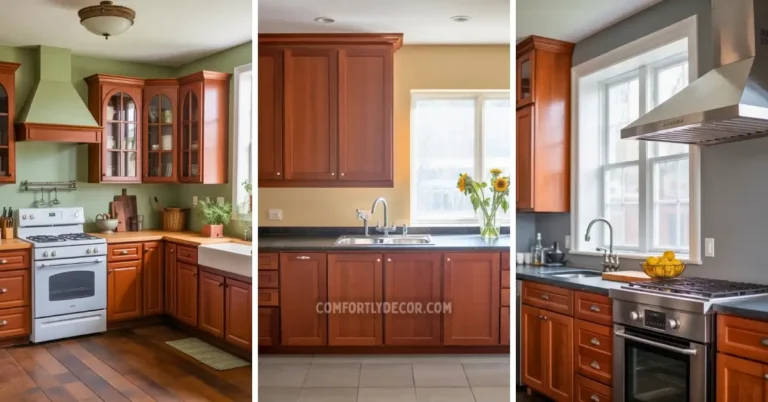
20 Kitchen Floor Tiles Ideas to Transform Your Space with Style and Durability
You stand at the doorway to a kitchen refresh and feel the pull to make a choice that lasts. I’ll guide you through 20 kitchen floor tile ideas so you can see how different materials, colors, and patterns shape mood and function for everyday life.

Pick a tile that balances durability, style, and maintenance for a kitchen that looks great and works hard.
20 Kitchen Floor Tiles Ideas
I will walk you through options from timeless checkerboard and subway looks to bold geometrics and textured natural stone, helping you picture each tile in your space so you can make a confident decision.
1. Classic Black and White Checkerboard Tiles
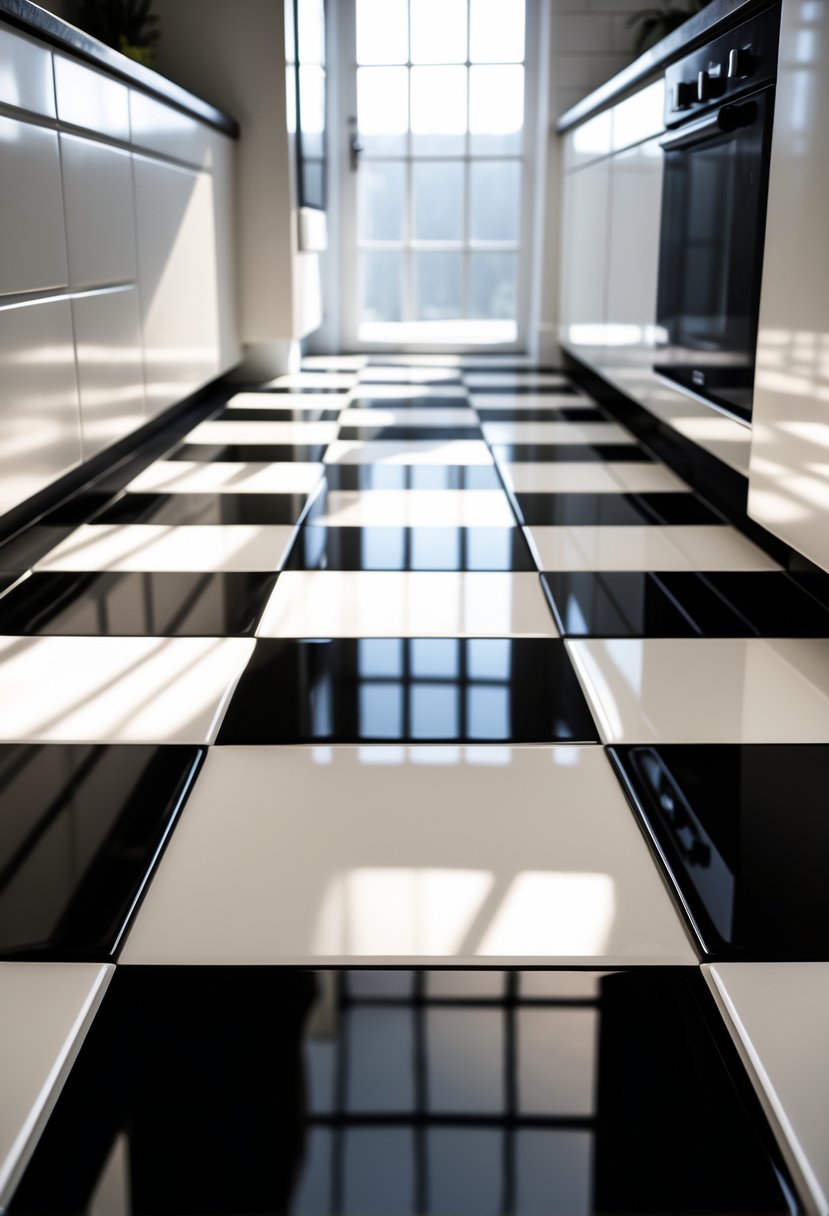
I choose black and white checkerboard tiles for their timeless clarity and strong visual rhythm. They create a focal point without overwhelming other design elements.
I use them to make small kitchens feel larger; the alternating squares draw the eye across the floor. They pair well with both modern and vintage cabinetry, giving me flexible styling options.
2. Matte Porcelain Wood-Look Tiles
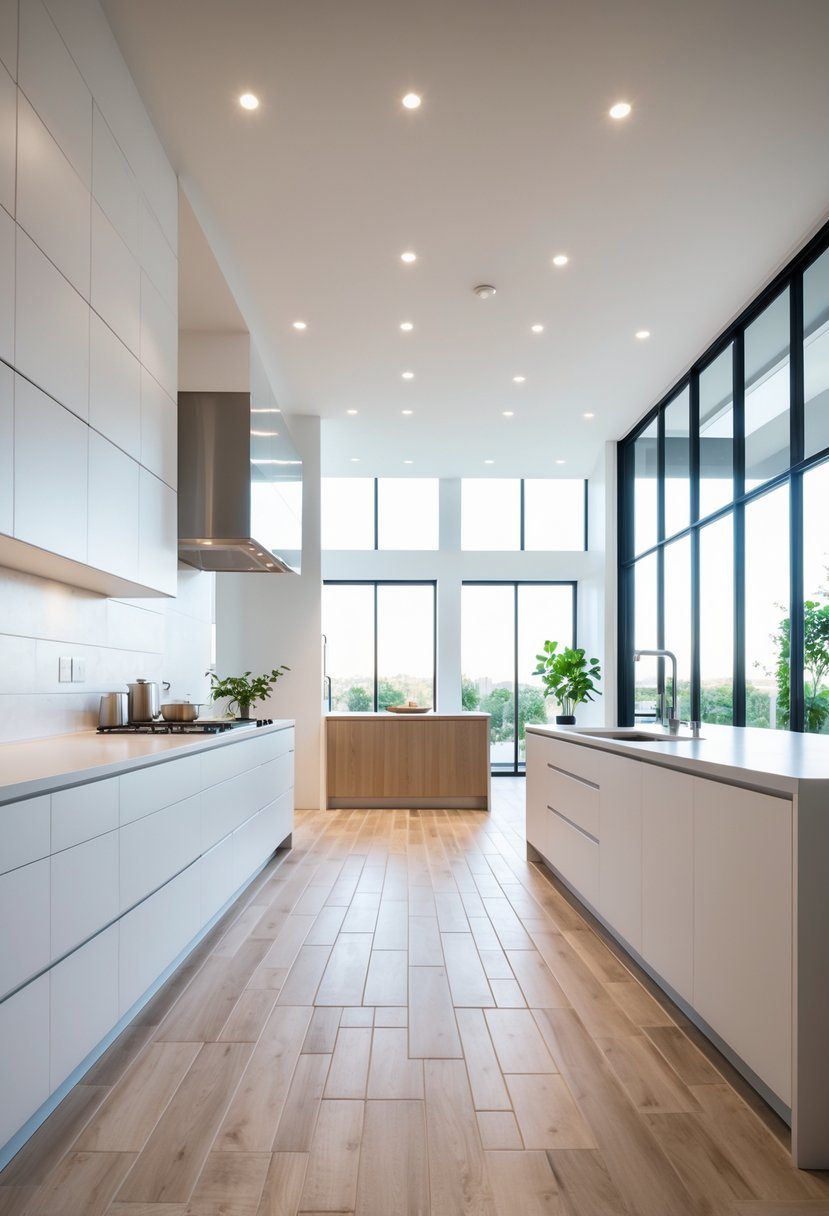
I choose matte porcelain wood-look tiles when I want the warmth of wood with the durability of tile.
They resist scratches, moisture, and heavy foot traffic, so they suit busy kitchens without sacrificing style.
I prefer matte finishes because they hide scuffs and reduce slipperiness compared with glossy tiles.
Large plank formats mimic hardwood while allowing minimal grout lines for a cleaner look.
3. Bold Geometric Patterned Tiles
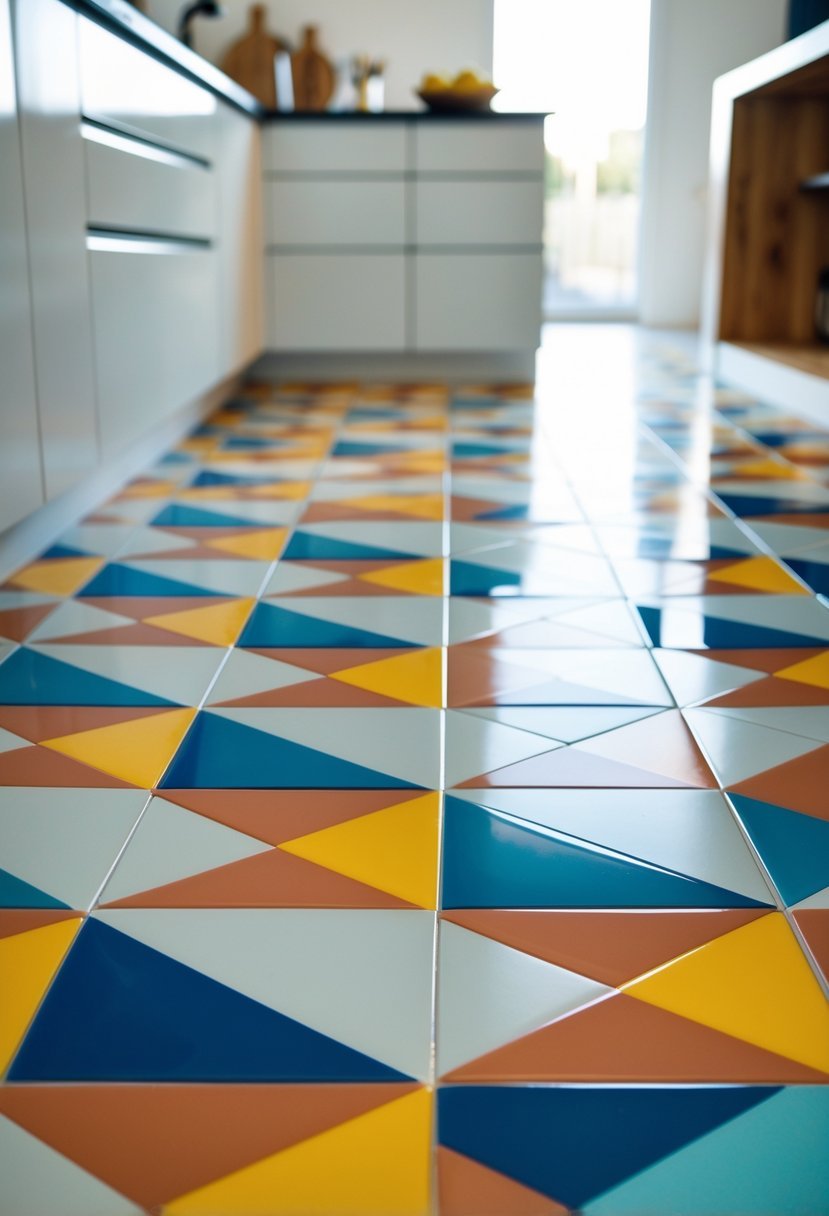
I choose geometric tiles when I want the floor to command attention without adding clutter. Sharp diamonds, hexagons, and interlocking polygons create rhythm and structure that guide the eye across the room.
I pair bold patterns with restrained cabinetry and simple countertops to keep the overall look balanced. Durable materials like porcelain work well in high-traffic kitchens and hold color and pattern over time.
4. Subway Tile Flooring in Soft Gray
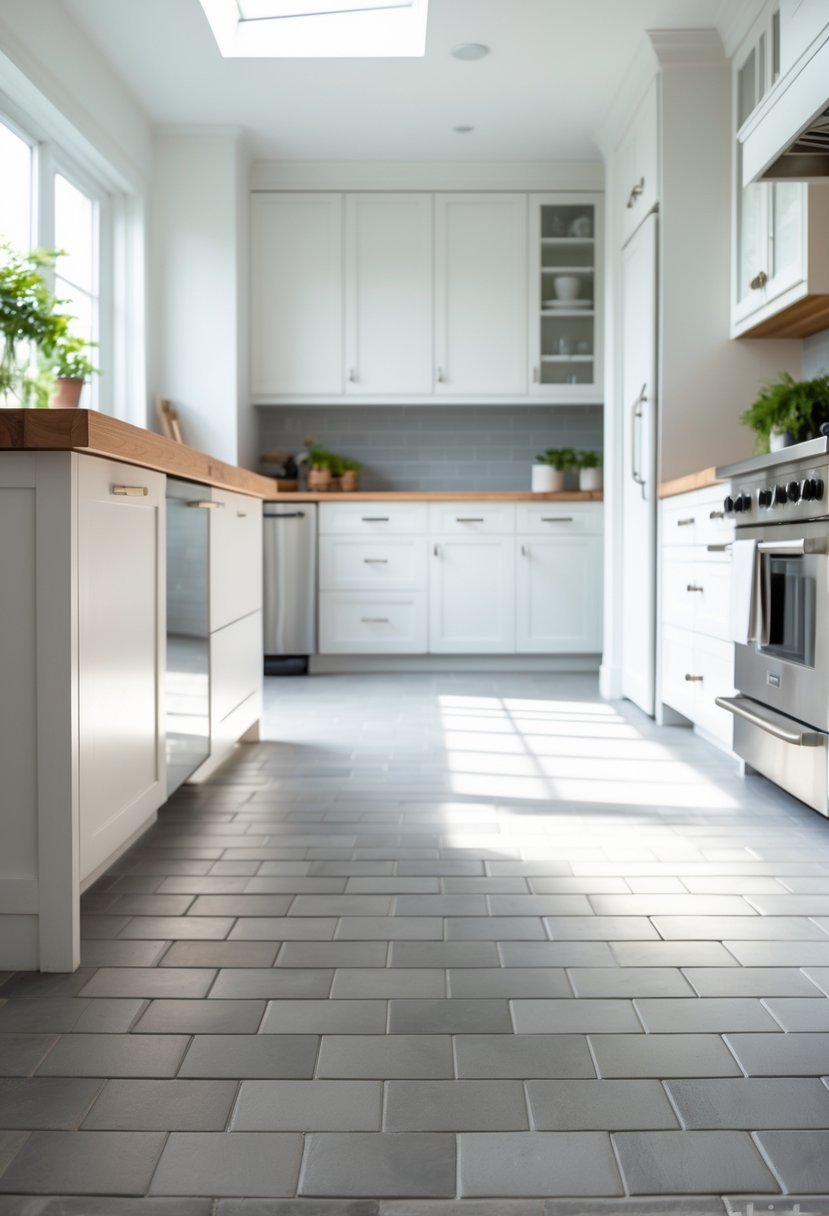
I favor soft gray subway tile on kitchen floors for its clean, understated look that pairs well with many cabinet colors.
The elongated shape helps guide movement through narrow kitchens and visually lengthens the space.
I choose matte or low-sheen finishes to reduce slip and hide wear without losing the tile’s crisp lines.
Grout in a slightly darker gray keeps maintenance manageable and preserves the tile’s defined pattern.
5. Terra Cotta Rustic Clay Tiles
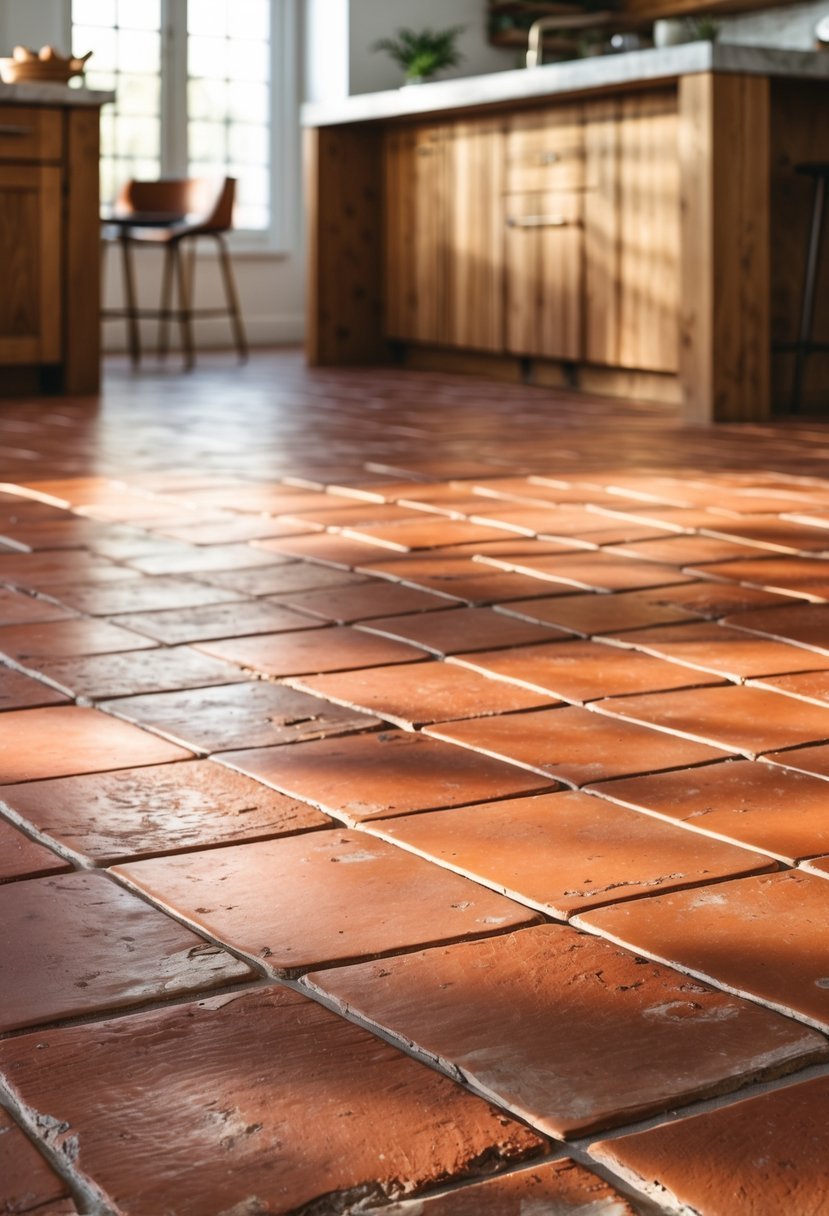
I choose terra cotta when I want a kitchen floor that feels warm and grounded. The natural clay tones—soft oranges, deep reds, and earthy browns—add instant character without overwhelming the space.
I appreciate how hand-tumbled or aged tiles bring subtle texture and a lived-in look. They pair well with wood cabinets, exposed beams, or simple modern fixtures for a balanced rustic-meets-refined aesthetic.
6. Marble Hexagon Mosaic Tiles
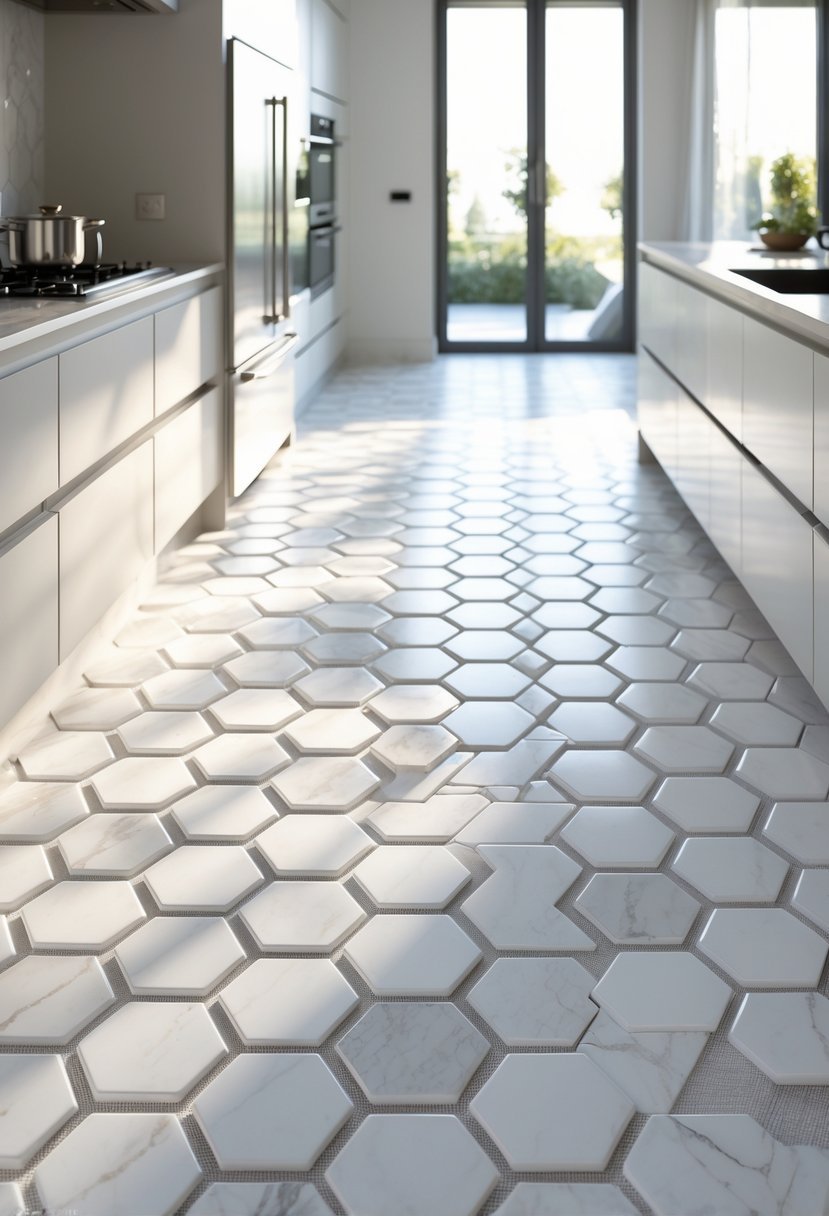
I favor marble hexagon mosaics for their blend of geometry and natural veining. They add subtle movement underfoot without overpowering a kitchen’s palette.
I often choose white or grey marbles for versatile backsplashes and floors, and darker stones for striking contrast. Proper sealing and a dense porcelain option help keep maintenance manageable.
7. Large Format Concrete-Effect Tiles
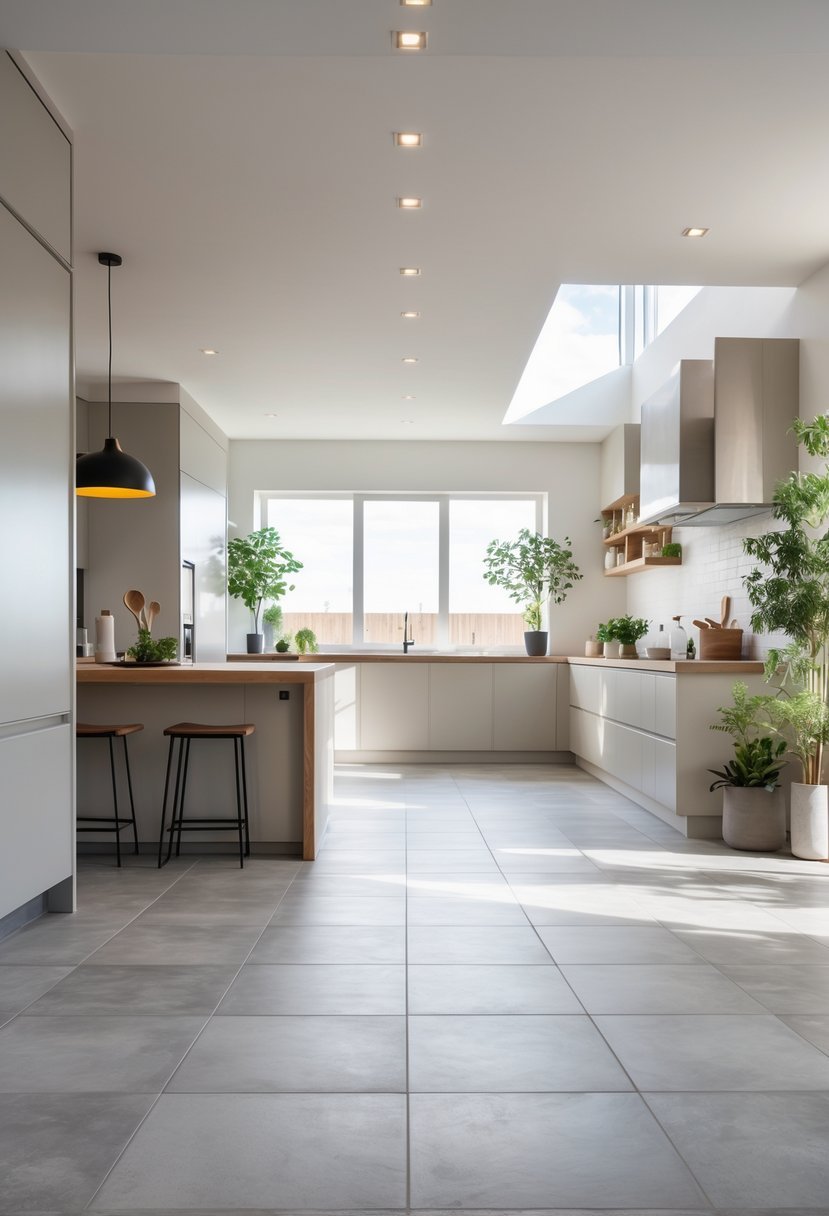
I choose large format concrete-effect tiles when I want a modern, understated kitchen floor that reads almost like a single surface. They reduce grout lines, which makes cleaning easier and visually enlarges the room.
I appreciate their range of tones and matte textures that mimic natural cement without the upkeep of real concrete. They pair well with wood or metal accents and suit minimalist and industrial schemes alike.
8. Glossy White Ceramic Tiles
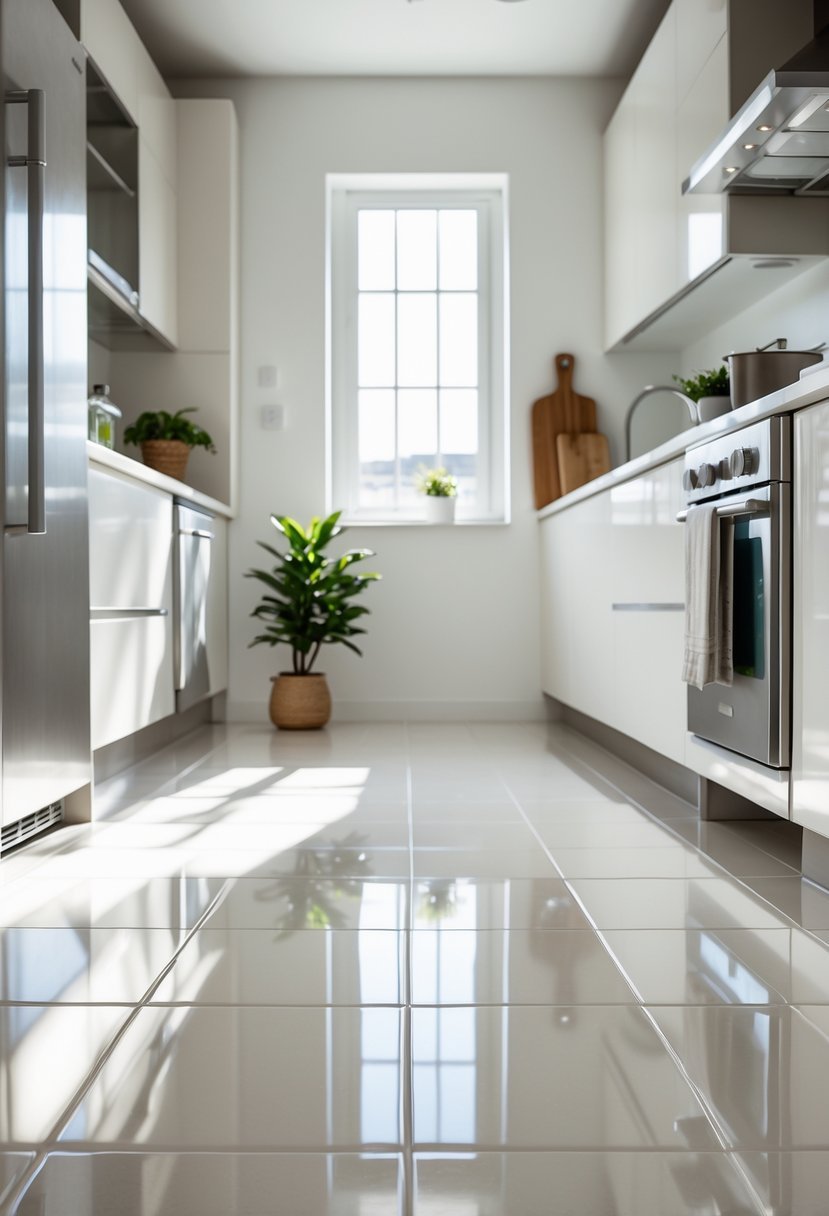
I recommend glossy white ceramic tiles when you want a bright, clean kitchen floor that reflects light and enlarges the feel of the room. They resist moisture and wipe clean easily, which suits high-traffic cooking areas.
I use them to create a minimalist backdrop or to contrast with darker cabinets and appliances.
Keep grout color practical to reduce visible staining and choose a slip-resistant finish for safety.
9. Luxury Vinyl Plank with Stone Texture
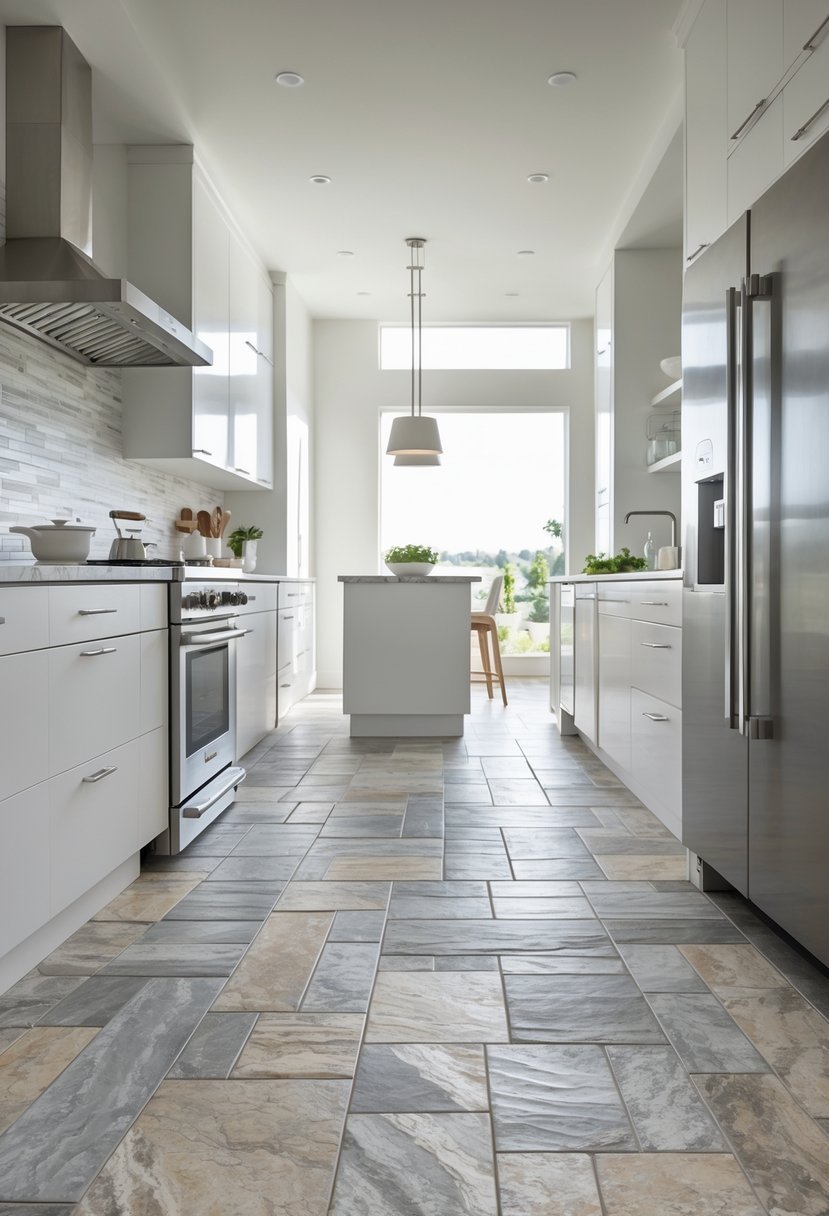
I choose luxury vinyl plank (LVP) with stone texture when I want stone realism without the weight or cost.
It mimics veining and subtle color variation while staying waterproof and easier to maintain than real stone.
I appreciate the wide range of stone-look options, from cool greys to warm beiges.
Installation is faster and less disruptive, and the surface holds up well to kitchen traffic and spills.
10. Patchwork Moroccan Style Tiles
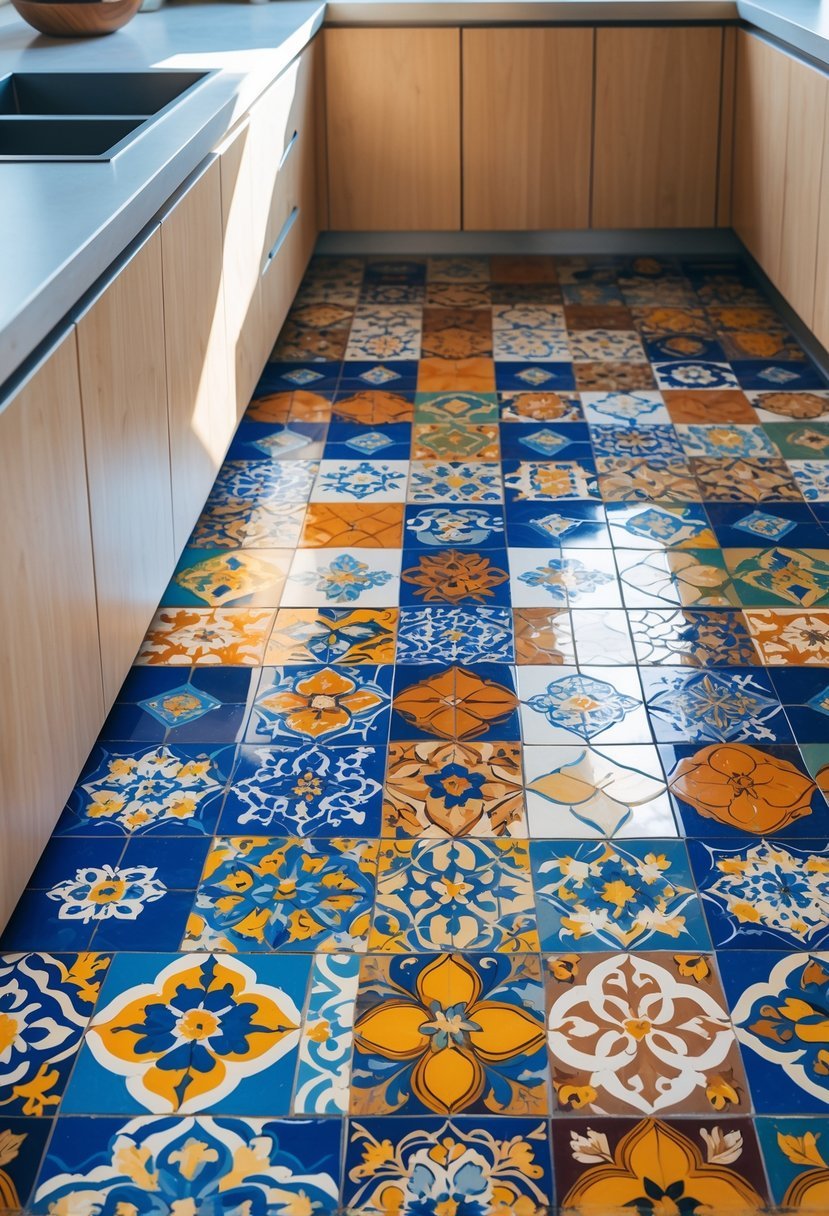
I choose patchwork Moroccan tiles when I want a lively, textured floor that reads as art.
Their mix of geometric and floral motifs lets me combine color and pattern without overwhelming the room.
I often balance them with simple cabinetry and neutral countertops to keep the kitchen grounded.
Used as a focal area or across the whole floor, they add personality and a handcrafted feel to modern spaces.
11. Herringbone Patterned Hardwood Tiles
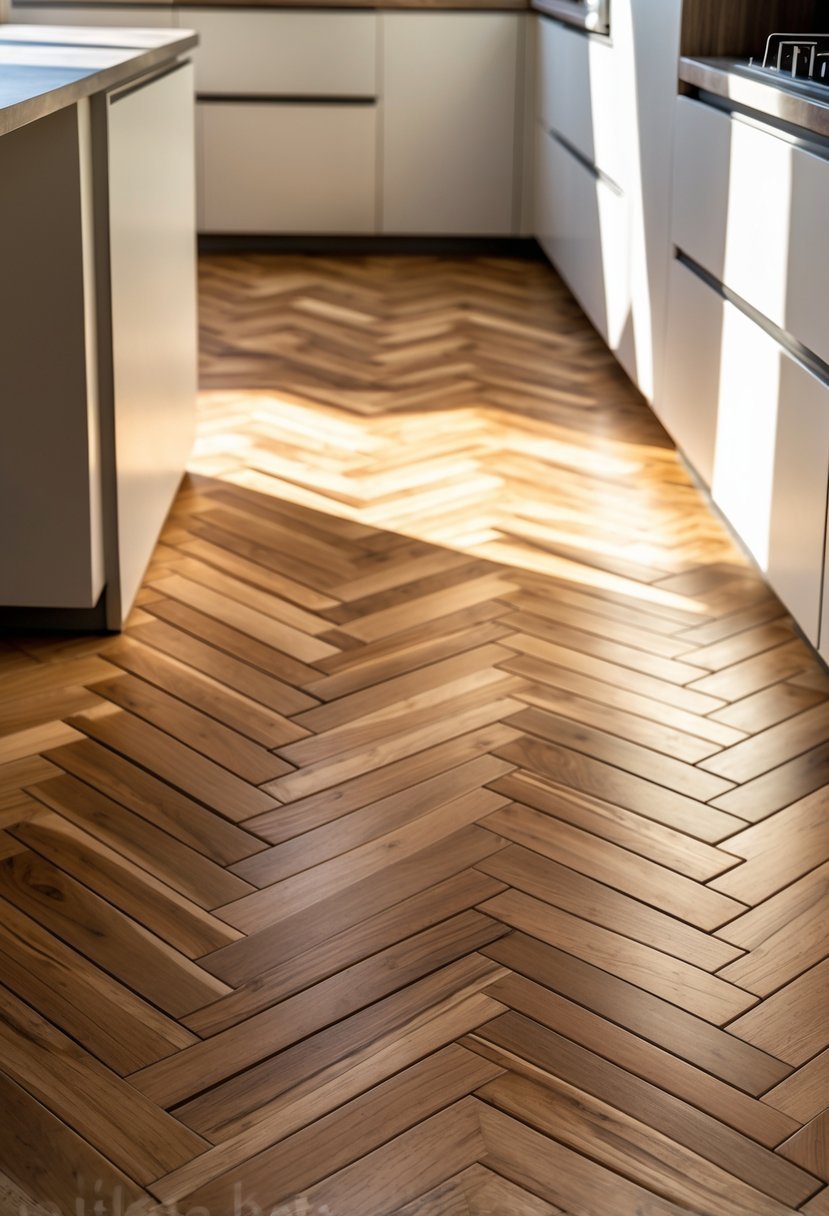
I choose herringbone hardwood tiles when I want classic movement without busy color.
The staggered V-shaped layout adds visual depth and guides the eye through the kitchen.
I prefer engineered hardwood tiles for moisture resistance and easier installation.
They deliver wood warmth with greater stability than solid planks in kitchen environments.
I recommend pairing medium-toned wood with simple cabinetry to let the pattern stand out.
Care and regular sealing keep the grain and joints looking crisp over time.
12. Chevron Pattern Porcelain Tiles
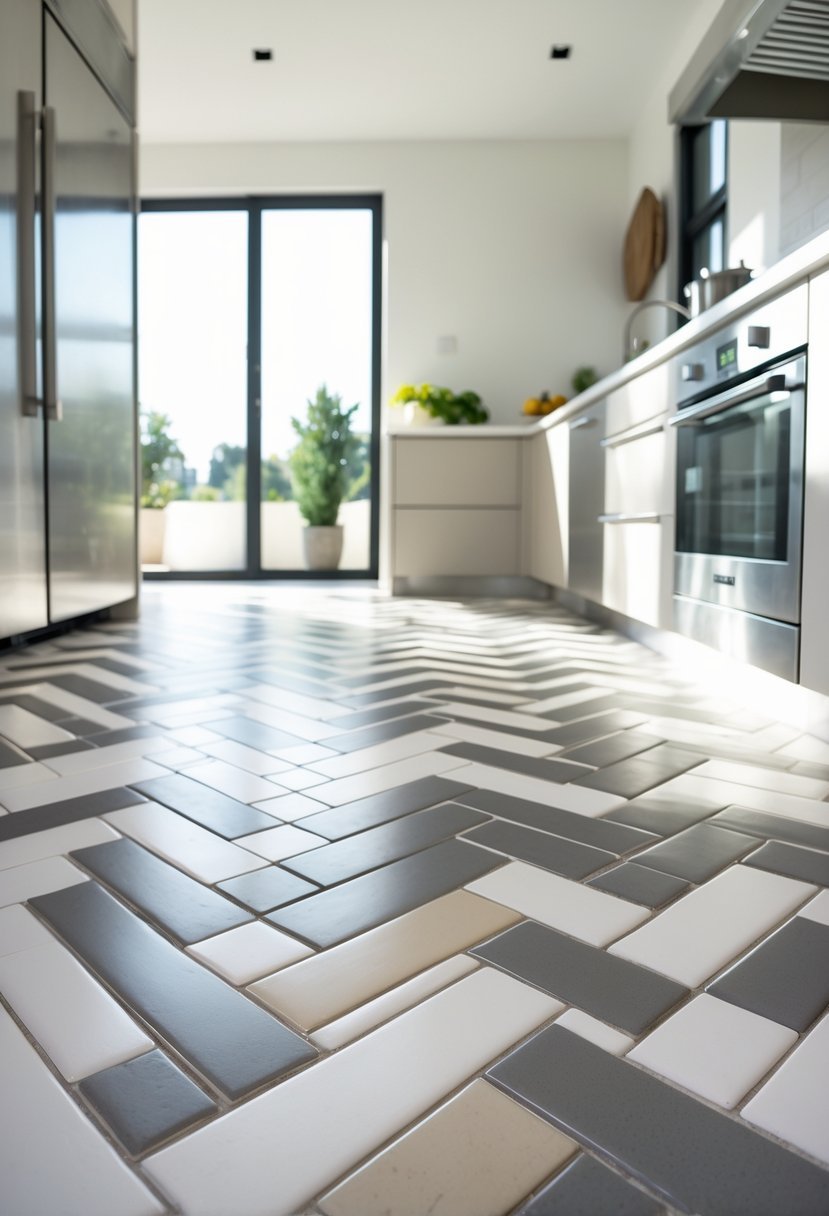
I choose chevron porcelain when I want a crisp, modern floor that still feels timeless.
Porcelain gives me durability and low maintenance, while the V-shaped chevron adds movement without visual clutter.
I often place the pattern aligned with the room’s axis to elongate the space.
Mixing matte and polished finishes or subtle color contrasts keeps the look refined and practical for kitchens.
13. Slate Textured Floor Tiles
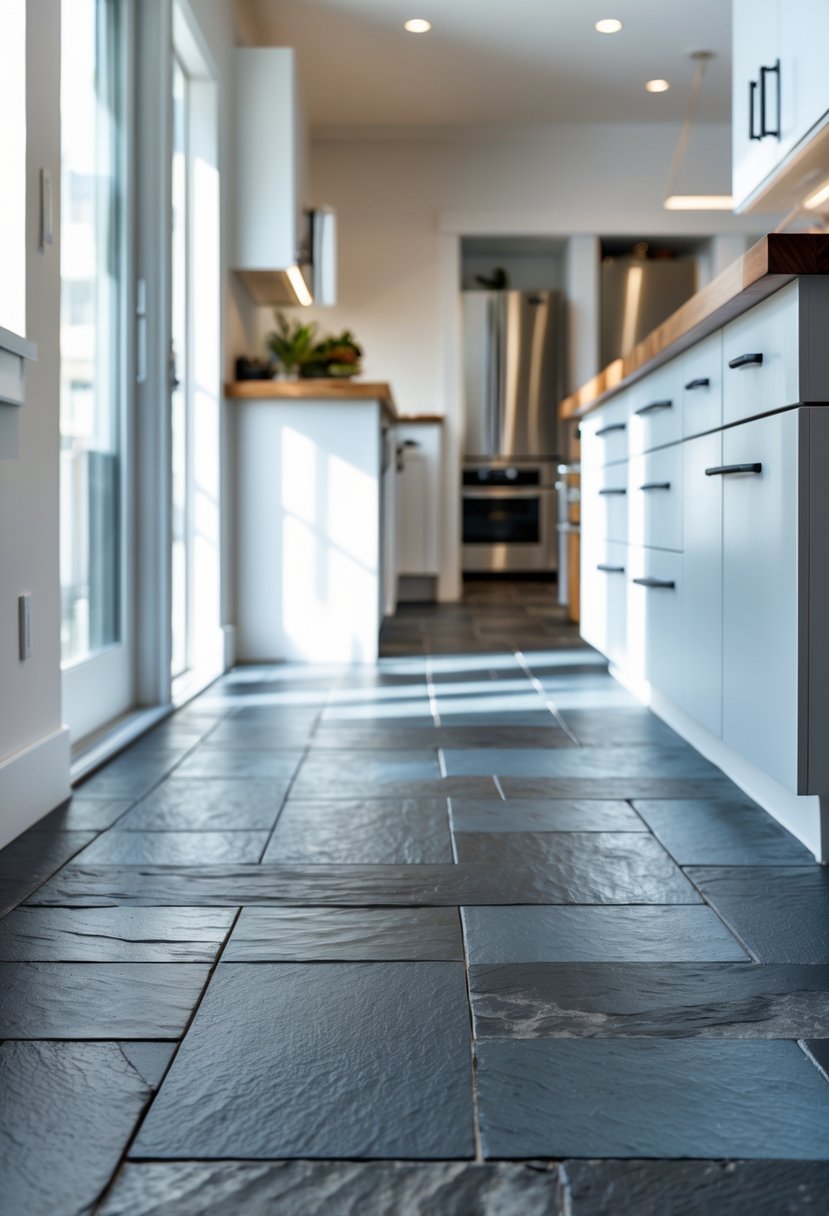
I favor slate textured tiles for kitchens because they combine natural character with hard-wearing performance.
Their varied tones and subtle grit hide wear and add grip underfoot, which helps in busy cooking zones.
I recommend choosing sealed slate to protect against stains while keeping the stone’s tactile look.
Layout and grout color matter; I match grout to the darker veining to create a cohesive, low-maintenance floor.
14. Hand-Painted Spanish Encaustic Tiles
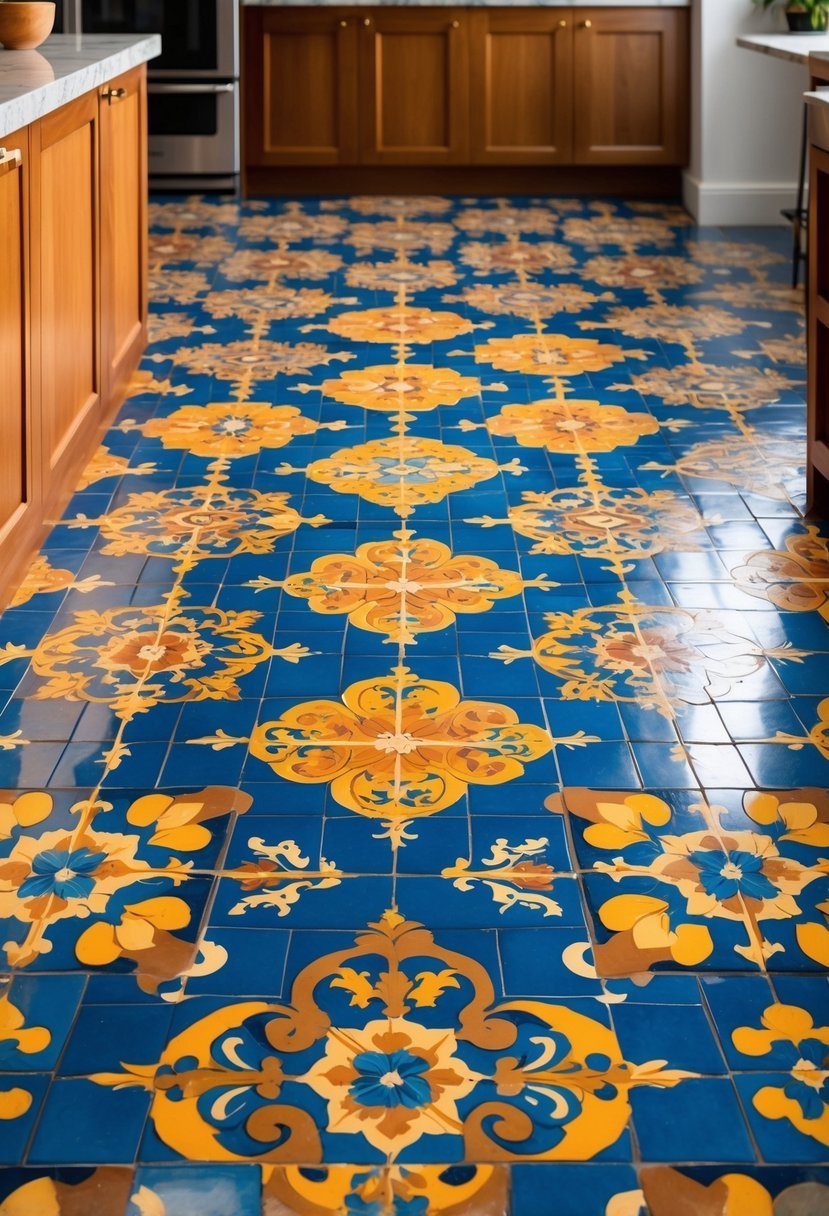
I favor hand-painted Spanish encaustic tiles for their artisanal character and durable surface. They pair well with rustic wood cabinets or modern white islands to add pattern without overwhelming the room.
I recommend using them as a focal zone—around the sink or stove—or as an entire kitchen floor for visual warmth. Expect natural variation in color and small imperfections that highlight the handmade process.
15. Textured Hexagonal Natural Stone Tiles
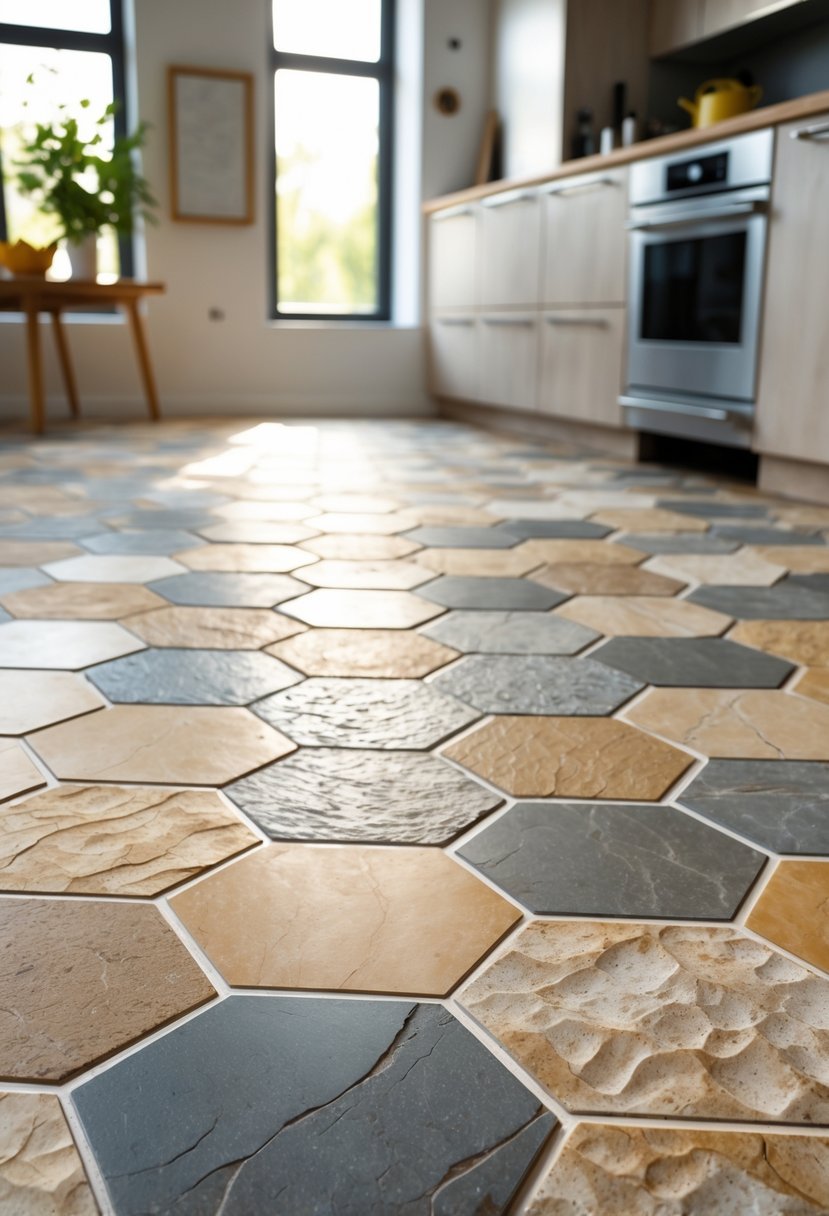
I recommend textured hexagonal natural stone when you want depth and grip without sacrificing style. The irregular surface adds tactile interest and reduces slipperiness in busy kitchen zones.
I choose neutral stone tones to anchor varied cabinet and countertop finishes. Small to medium hex sizes let me create subtle patterns or bold field layouts depending on the room scale.
16. Vintage Blue and White Delft Tiles
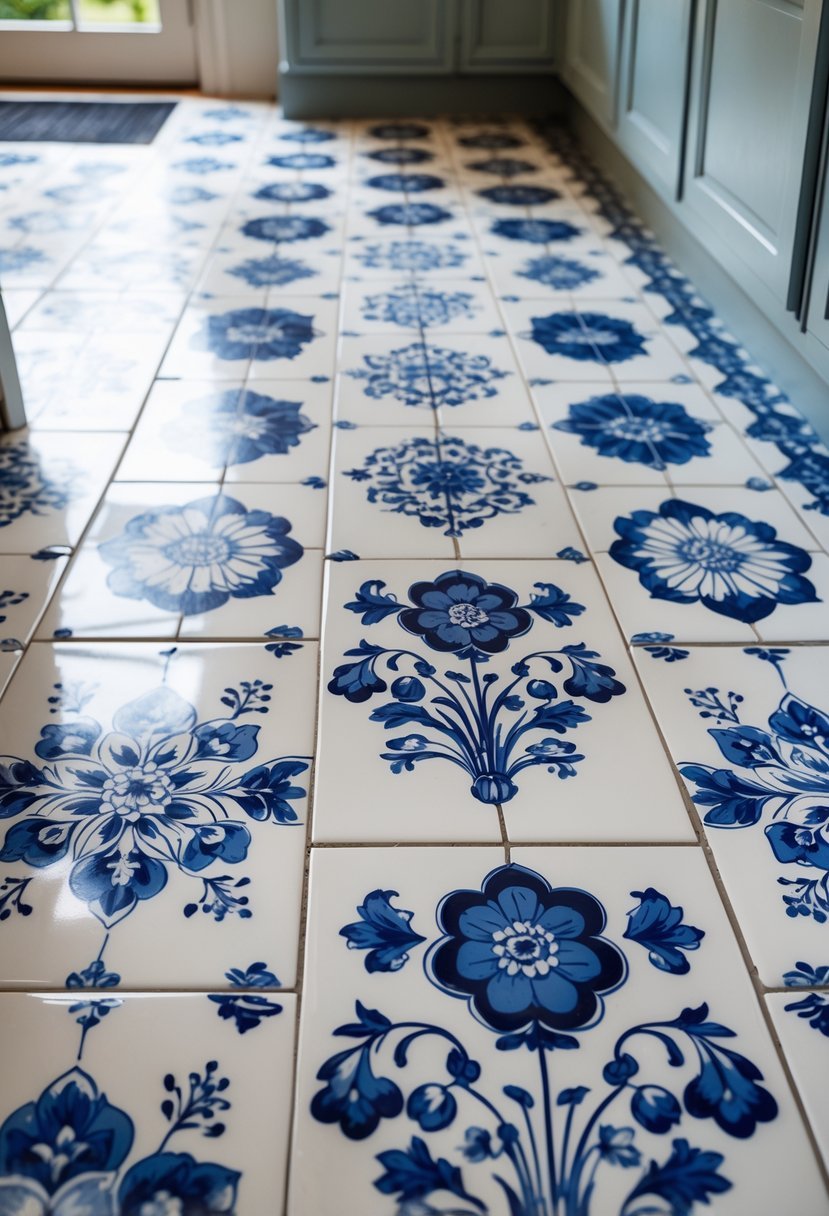
I chose Delft tiles for my kitchen to add historic charm without overwhelming the space. The signature blue-on-white motifs—windmills, florals, and scenes—bring focused pattern and handcrafted warmth.
I mix them with plain tiles to keep the floor readable and avoid visual clutter. Their glazed surface cleans easily, and I use them as accents or a full-field design depending on the room’s size.
17. Polished Travertine Tiles
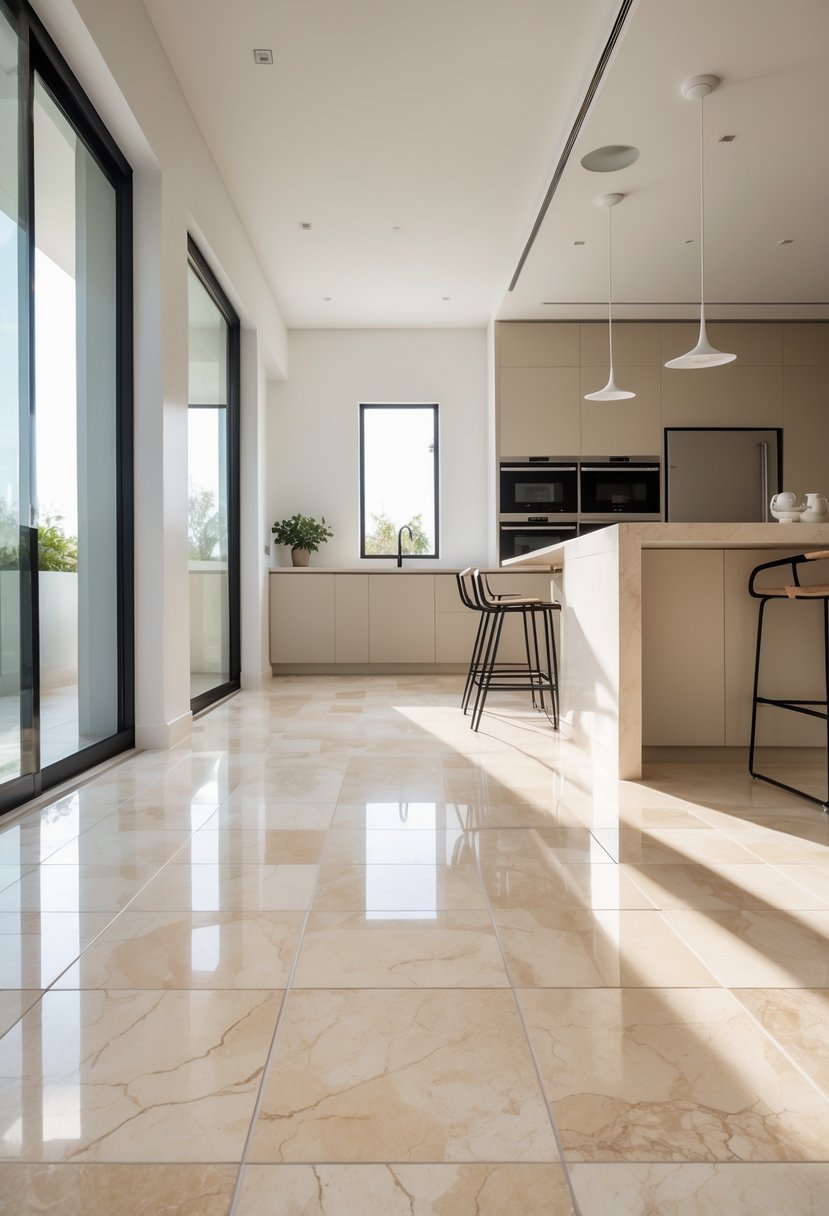
I recommend polished travertine when you want a sleek, reflective kitchen floor that still feels natural.
Its smooth surface brightens the room and visually enlarges compact kitchens without adding synthetic sheen.
I know polished travertine requires more sealing and gentle cleaners than honed stone.
That maintenance trade-off pays off with an elegant, durable finish that suits both contemporary and transitional kitchens.
18. Glossy Black Ceramic Hex Tiles
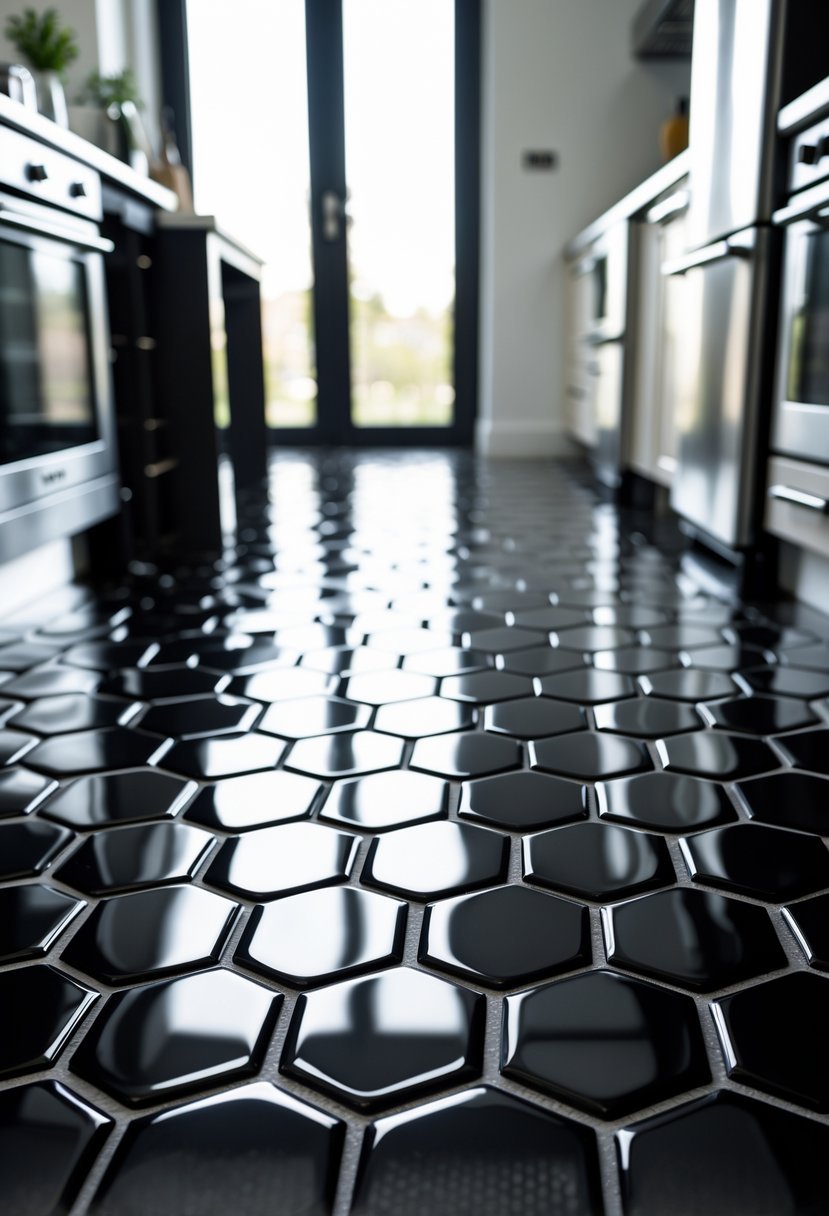
I like glossy black ceramic hex tiles for their mix of modern edge and timeless polish. They reflect light to make smaller kitchens feel airier while keeping a dramatic, sophisticated base.
I pair them with light cabinetry or warm wood to balance contrast. Their hex shape adds subtle geometry without overwhelming the space.
19. Distressed Oak Hardwood Floor Tiles
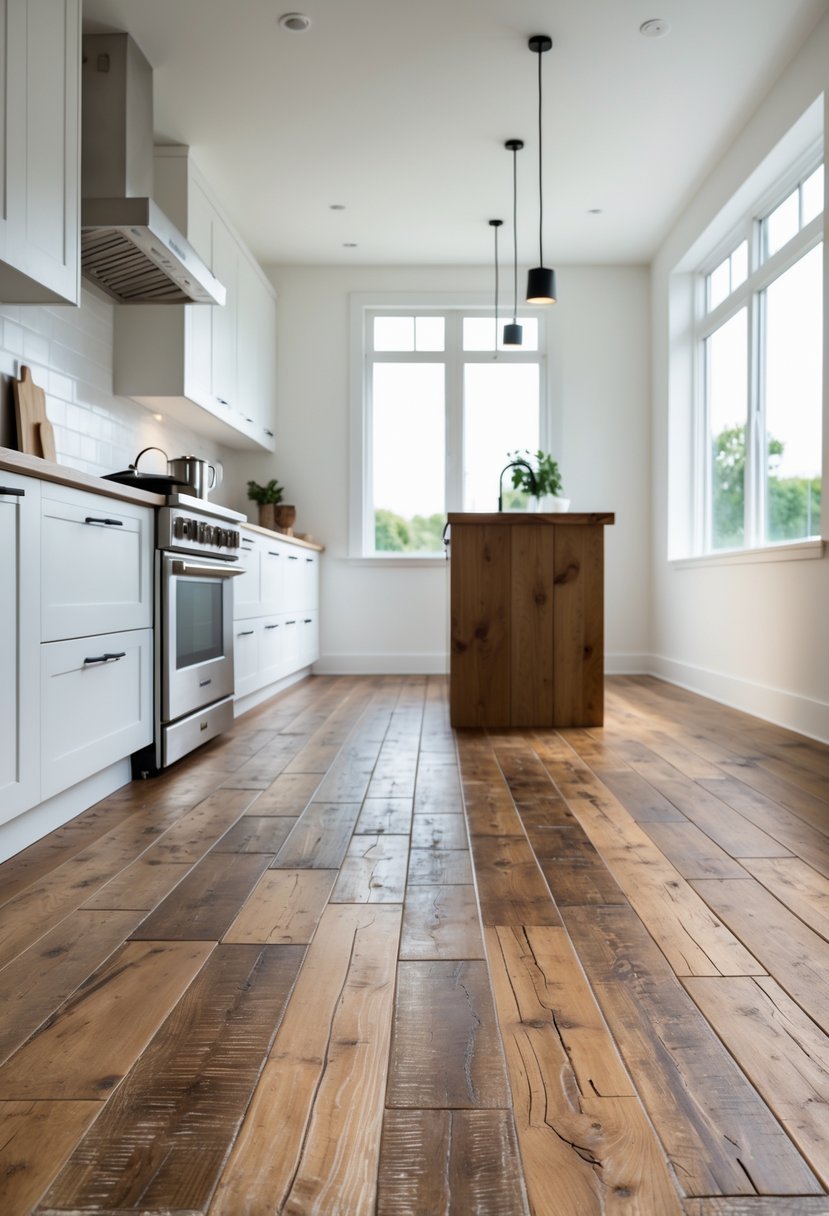
I often recommend distressed oak hardwood tiles for kitchens that need warmth without feeling overly polished. They combine the character of reclaimed wood with the durability and low maintenance of tile.
I like how the subtle nicks and color variation hide wear and create a lived-in look. These tiles work well with farmhouse cabinets or modern green tones for a balanced, inviting space.
20. Small Penny Round Mosaic Tiles
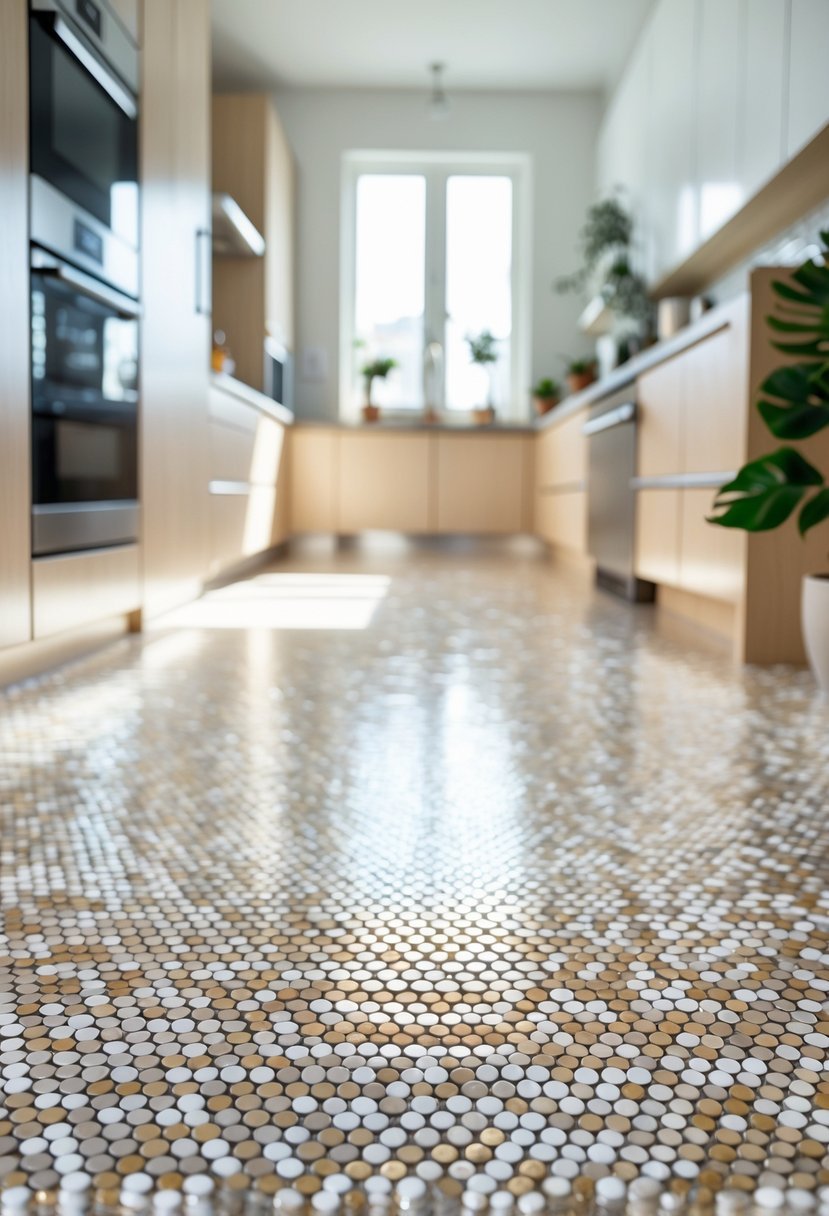
I like small penny round mosaics for kitchens because they add texture without dominating the room.
Their tiny, circular shapes create subtle movement underfoot and work well in both modern and retro schemes.
I use lighter, glossy colors to reflect light in compact kitchens and darker matte tones sparingly to avoid visually shrinking the space.
They install on mesh sheets, which speeds installation and lets me experiment with patterns or borders.
Designing a Kitchen Floor That Looks Great and Works Hard
Start With How You Use Your Kitchen
When I plan kitchen floor tiles ideas, I begin with daily habits. Cooking spills heavy foot traffic and constant movement all shape my choice.
I lean toward porcelain ceramic or sealed stone because they handle moisture heat and wear without constant upkeep.
Choose Texture for Safety and Comfort
A kitchen floor needs grip as much as beauty.
- Matte finishes reduce slipping
- Light texture adds traction without trapping dirt
- Smooth polished tiles work best only in low spill zones
I always walk on samples to feel how the surface responds underfoot.
Match Pattern to Room Size
- Pattern can expand or shrink a kitchen visually.
- Large patterns and long planks help open layouts feel connected.
- Small mosaics and patchwork designs work best when balanced with simple cabinets and counters.
Keep Maintenance Realistic
- I ask myself how much cleaning I want to do long term.
- Grout color tile finish and material all affect upkeep. I choose tones that hide crumbs water spots and wear so the floor stays attractive with normal care.
Tie the Floor to the Rest of the Space
- The floor sets the tone for everything else.
- I coordinate tile color with cabinet finish wall color and lighting so the kitchen feels intentional rather than pieced together.
FAQs
Kitchen Floor Tiles Ideas That Anchor Style and Everyday Living
Choosing the right kitchen floor tiles ideas allows me to blend beauty durability and ease into one strong design choice. With thoughtful texture scale and material selection, the kitchen floor becomes a foundation that supports daily life while elevating the entire space.

I am Mindy Medford, a home décor, paint, and design specialist with over a decade of hands-on experience transforming ordinary spaces into cozy, personality-packed havens. Since 2013, I have been helping homeowners discover the art of beautiful yet practical design. I share my love for color, texture, and layout—making stylish interiors & exteriors feel achievable for everyone. Whether it’s picking the perfect paint shade or reimagining a small space, I’m here to guide and inspire.