17 Easter Decorations Vintage Ideas 2026
I admit it freely. I am officially tired of the neon plastic eggs that crack the moment you look at them sideways. There is something about the current aisle of seasonal decor at big box stores that feels a little empty to me. Maybe I am just becoming my grandmother, but I crave items with a history. I want decorations that have seen a few decades and have the scratches to prove it.
The charm of vintage Easter decor lies in the imperfections. It is the faded paint on a papier mache rabbit or the slightly wonky eye on a chenille chick that makes these pieces special. They hold stories. They bring a warmth to a home that mass produced plastic simply cannot match.
If you are looking to curate a collection that feels curated and cozy rather than cheap and disposable, you have come to the right place.
17 Easter Decoration Vintage Ideas
I have spent years digging through dusty boxes at estate sales to find the good stuff. I have learned what holds value and what just looks like old junk.
My goal here is to help you build a display for 2026 that feels timeless. Let us look at the best vintage treasures you should be hunting for right now.
#1. German Dresden Die Cuts
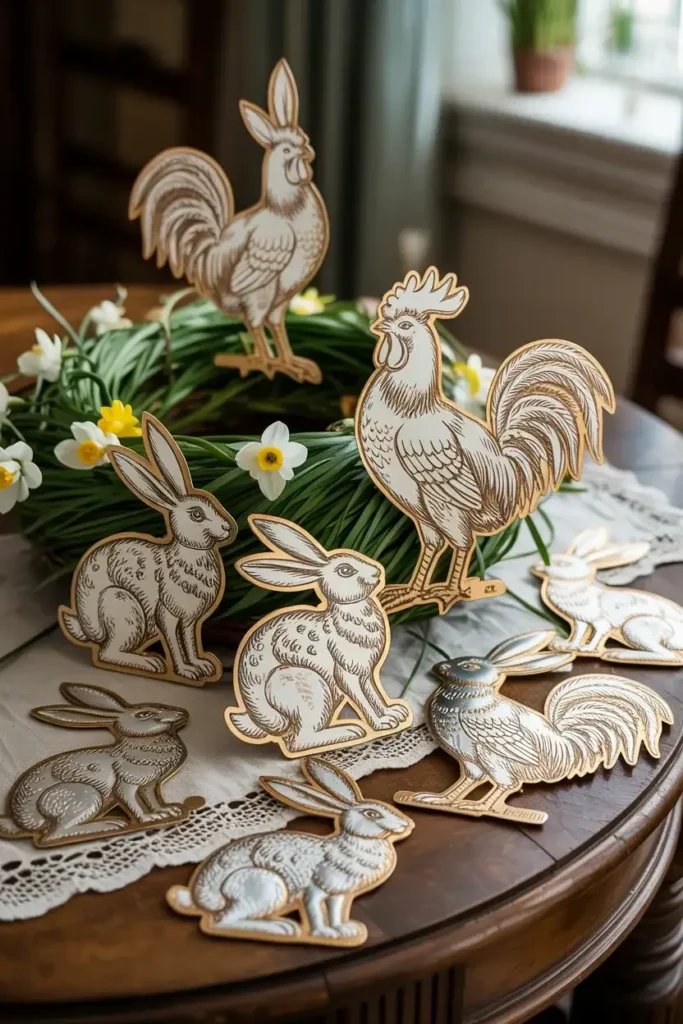
I absolutely adore the intricate detail of German Dresden die cuts. These embossed paper trims were originally produced in Germany and date back to the Victorian era. They usually feature gold or silver foil and incredible embossing that makes them look almost like metal. You often find them in the shapes of rabbits, roosters, or intricate eggs.
The craftsmanship here is undeniable. I love to scatter these across a dining table or tuck them into a wreath for a bit of shimmer. They are delicate, so handling them requires a gentle touch.
If you find a stash of these in good condition, grab them immediately. They add an instant level of sophistication to any vignette and are getting harder to find every single year.
#2. Papier Mache Nesting Eggs
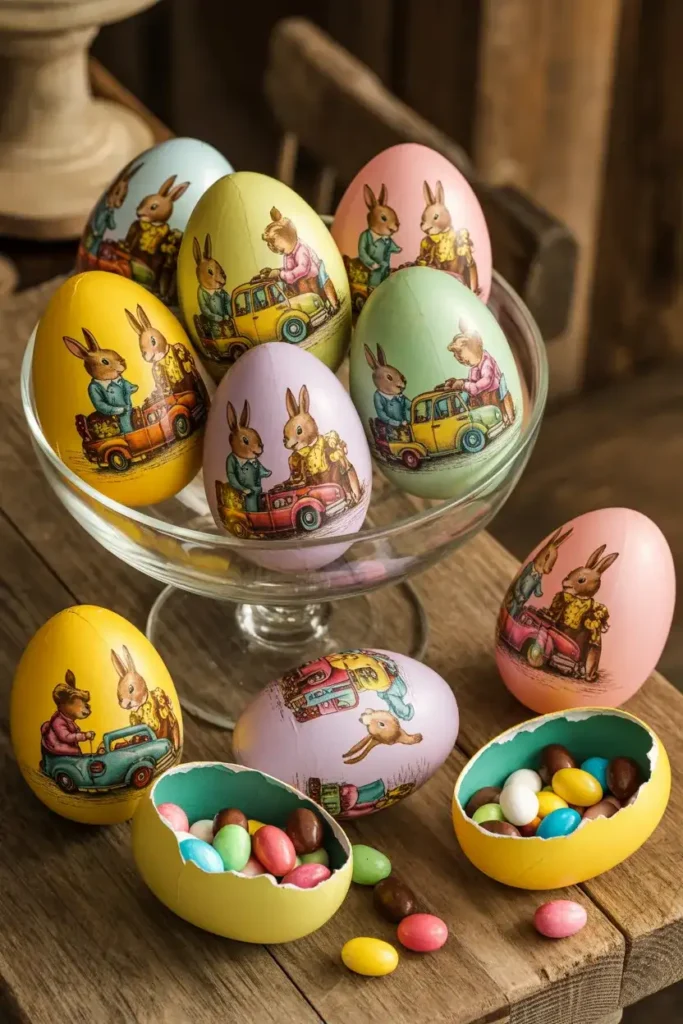
There is nothing quite like the graphic punch of vintage papier mache nesting eggs. Most of these originated in Germany (East or West) and feature bright, lithographed paper liners.
I love the duality of them. They are beautiful decor when closed, but you can also fill them with jelly beans or chocolates for a functional treat.
Look for eggs marked “Made in Germany” or “Container Made in Western Germany” on the inside. The best ones feature illustrations of bunnies doing human things, like driving cars or going to school.
I think that specific brand of whimsy is what makes vintage Easter so fun. Stack them in a bowl or display them open to show off the pretty patterned interiors.
#3. Chenille Chicks
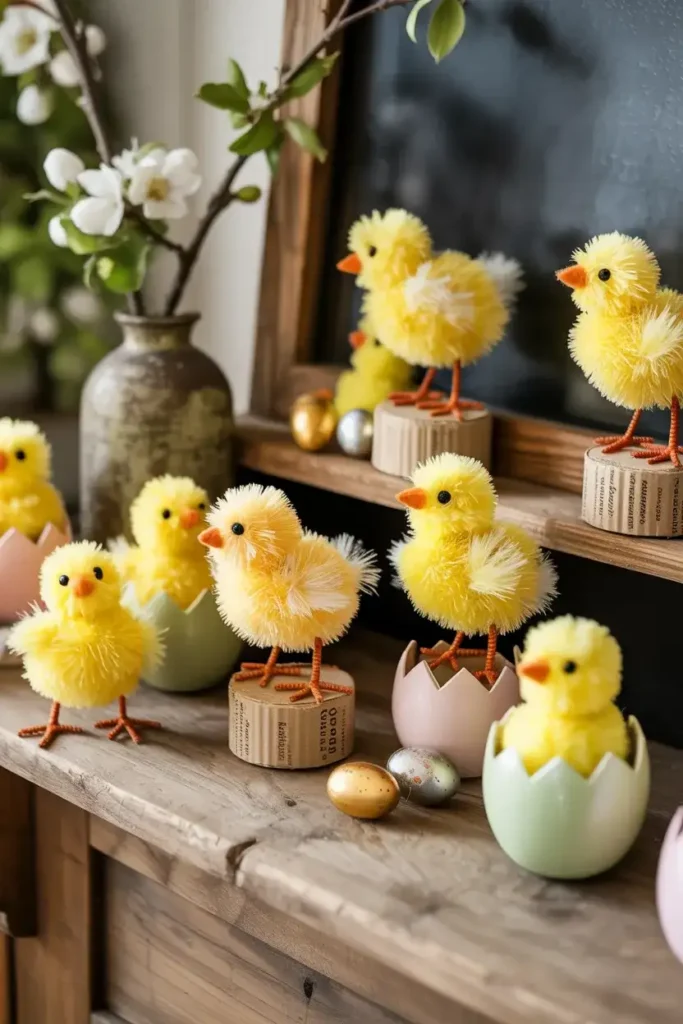
If you want something that screams cute and kitschy, you need chenille chicks. These fuzzy little yellow guys are usually made of wire and soft pipe cleaner material.
I have a whole army of them lined up on my mantel. They often come glued to small cardboard bases or perched inside plastic eggshells.
Many of these were made in Japan in the mid century era. I find their tiny plastic eyes and felt beaks hilarious. IMO they are the perfect entry point for new collectors because they are still relatively affordable.
You can perch them on branches of a flowering quince arrangement or just let them invade your bookshelves. They add a texture that is soft and playful.
#4. Gurley Novelty Candles
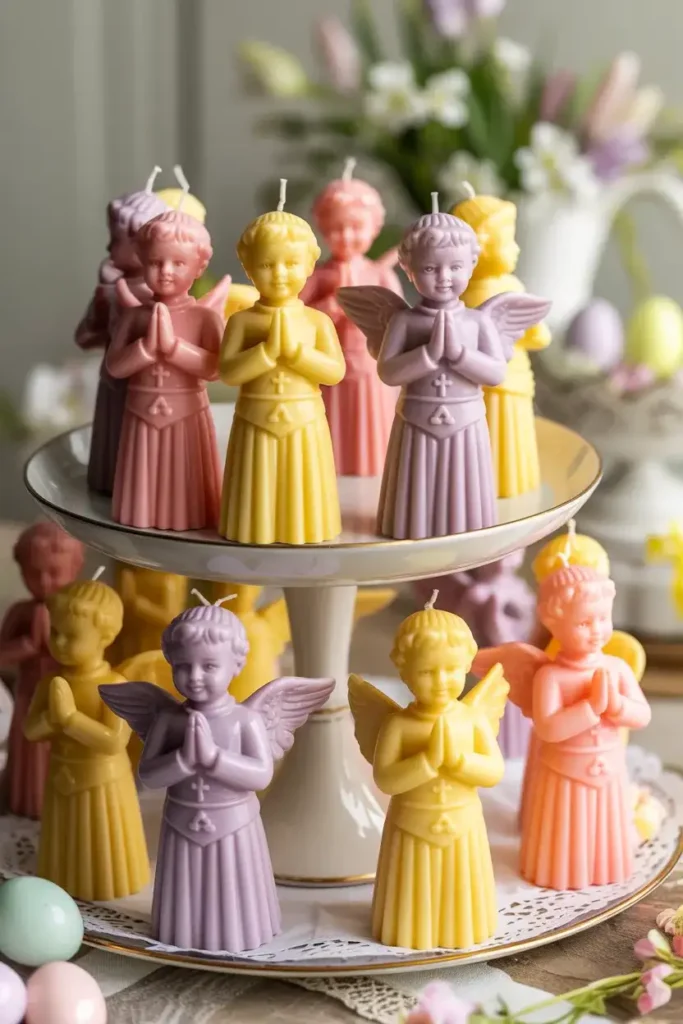
I have a strict rule about Gurley novelty candles in my house. We do not burn them. Ever. These wax figures from the 1940s to the 1960s are too cute to melt.
Gurley made candles for every holiday, but their Easter line is exceptional. You will see choir boys, praying angels, and of course, bunnies in waistcoats.
The colors are usually vibrant pinks, yellows, and purples. I love the way they look grouped together on a cake stand. It creates an instant centerpiece.
Just be careful with heat sources, as vintage wax can warp even if you do not light the wick. Keep them out of direct sunlight to preserve those bright colors for years to come.
#5. Vintage Easter Postcards
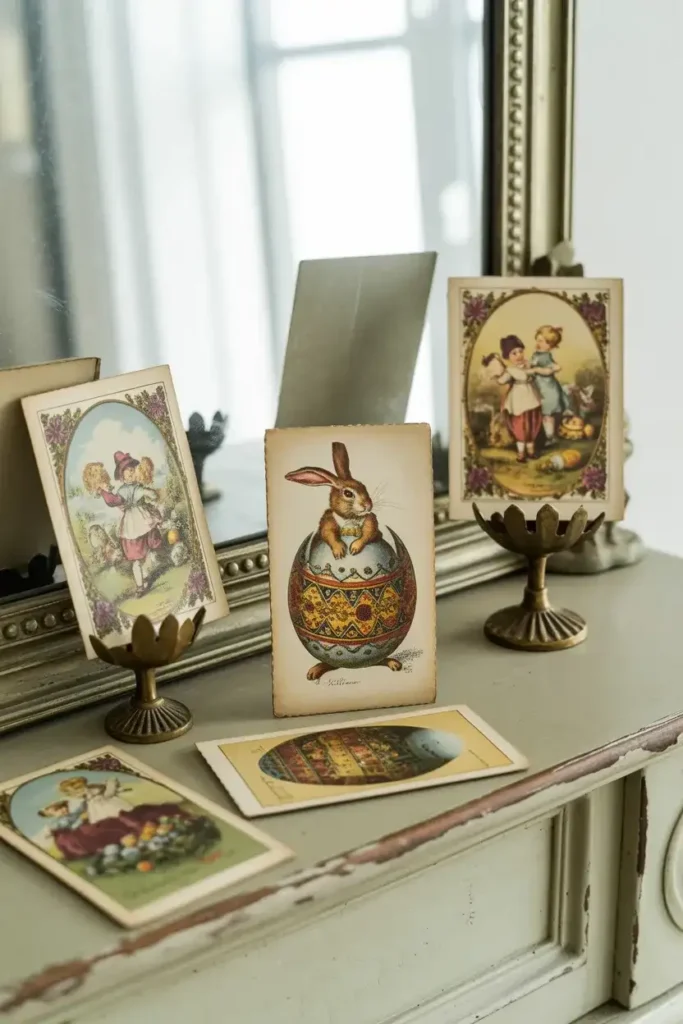
Paper ephemera is my secret weapon for affordable decorating. Vintage Easter postcards from the early 1900s offer stunning artwork for a fraction of the price of 3D objects.
The Victorian and Edwardian eras produced cards with rich colors and sometimes bizarre imagery. Have you ever seen a rabbit hatching out of a giant egg? It is weird, but I love it.
I display these using flower frogs or simply tucked into the frame of a mirror. They take up zero storage space, which is a massive win if you live in a smaller home.
You can also scan them and print copies to use as gift tags. It is a simple way to spread the vintage love without giving away your precious originals.
#6. Plastic Blow Molds
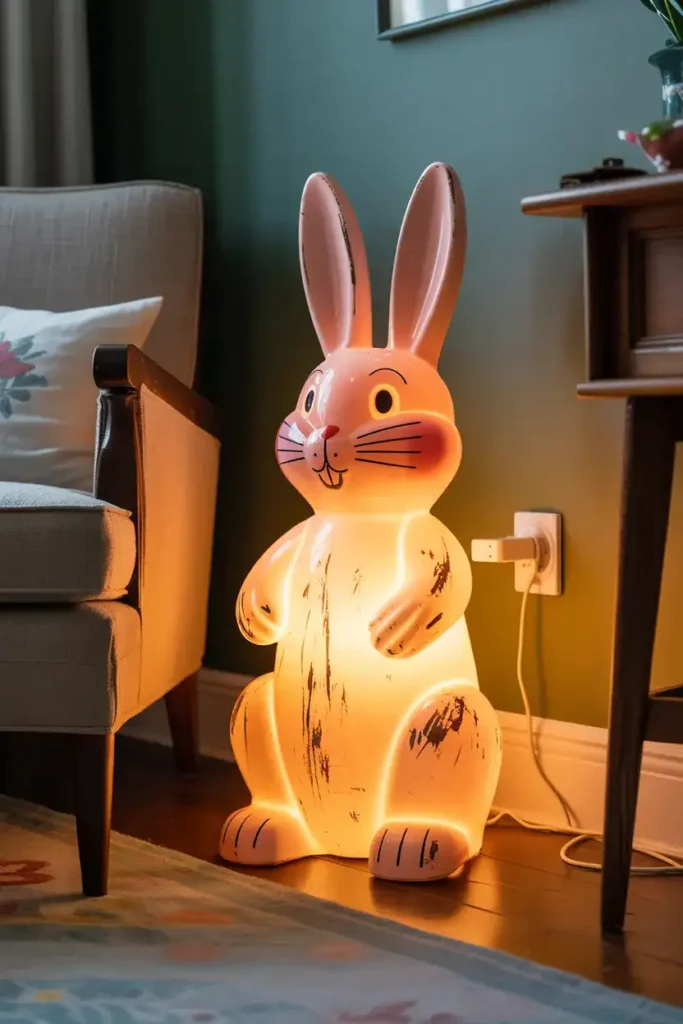
If you want to make a big statement, you need a plastic blow mold. These hollow hard plastic figures were huge in the 1960s and 70s.
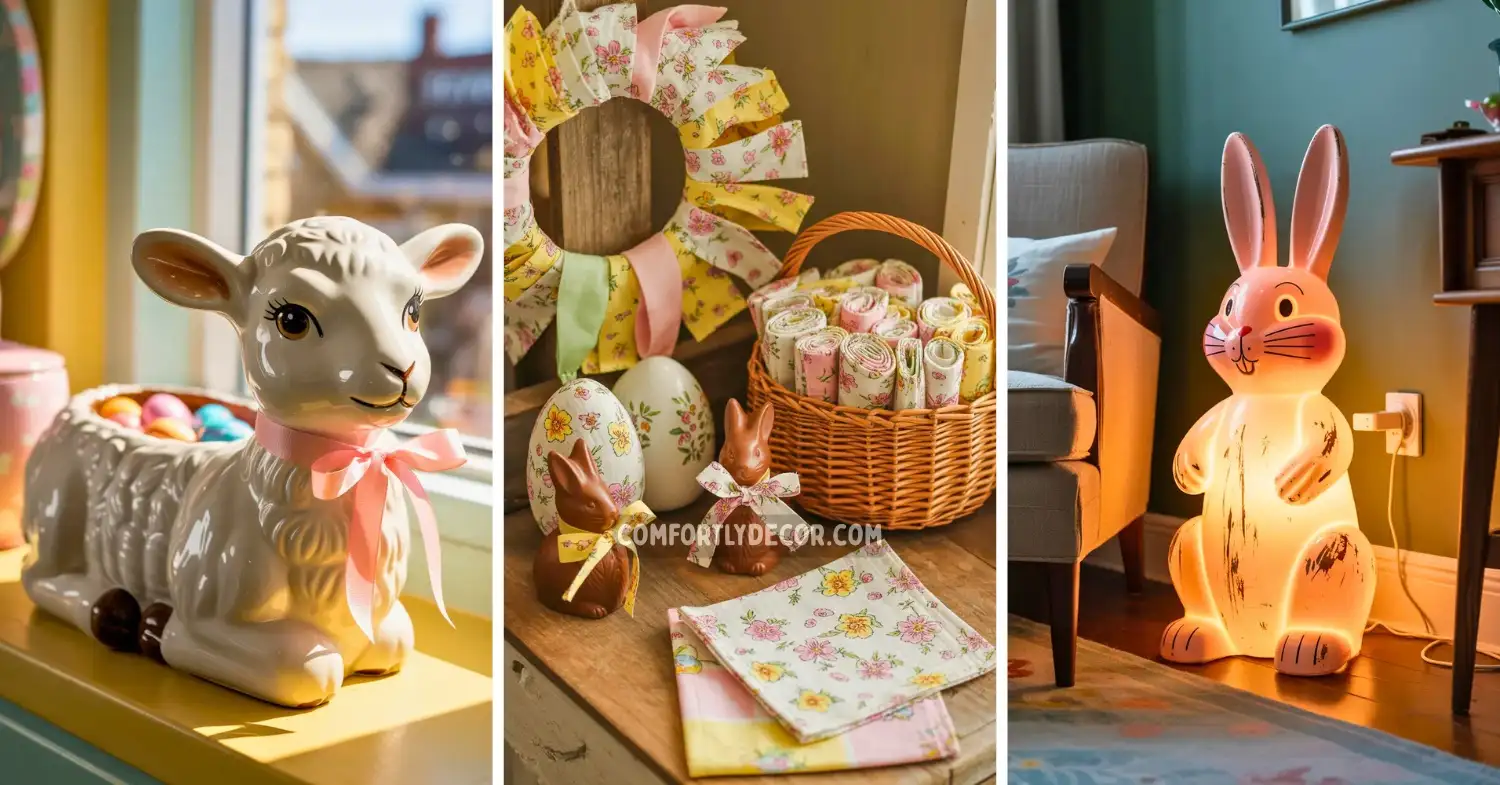
You usually see them as light up decorations for the front lawn, but I think they look fantastic indoors too. A 30 inch glowing bunny in the corner of the living room definitely starts a conversation.
Look for brands like Empire or General Foam Plastics. The paint on these often fades or scratches over time, but I think that wear adds character.
Just make sure the cord and bulb socket are in good shape before you plug it in. Safety first! These provide a nostalgic glow that instantly transports me back to childhood evenings.
#7. Spun Cotton Figures
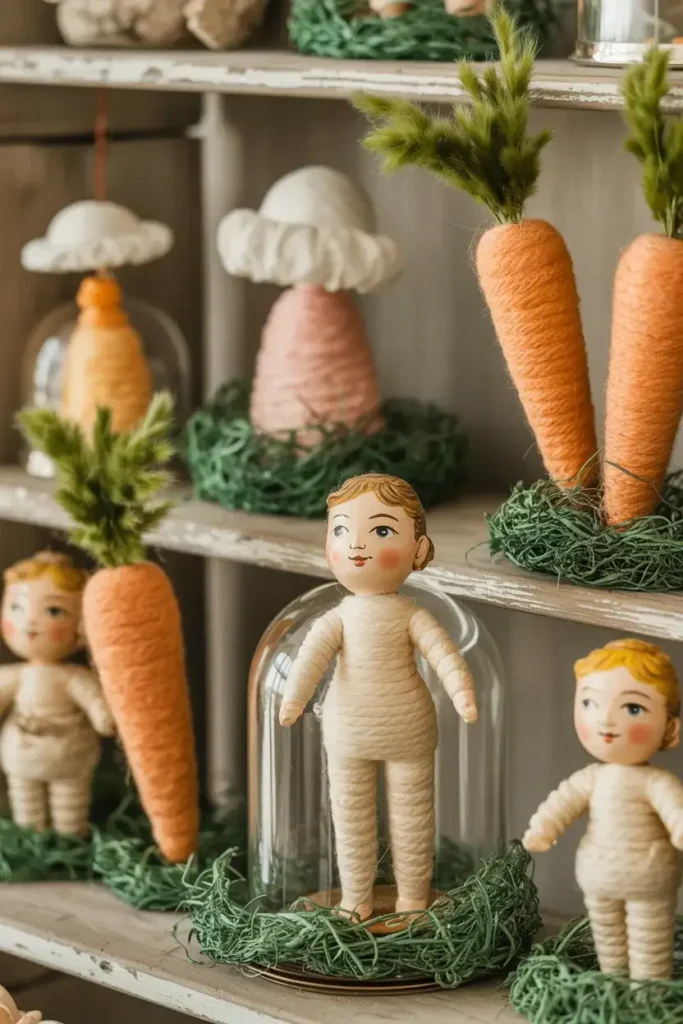
Collectors go wild for spun cotton figures. These delicate ornaments were typically made in Germany and involve cotton batting wrapped tightly around a wire frame.
They are often shaped like mushrooms, carrots, or little people. The texture is unique and soft, giving them a very specific antique look.
Because they are made of cotton and glue, they are extremely fragile. Moisture is their enemy. I keep mine under a glass cloche to protect them from dust and humidity.
They are rare finds in the wild, so if you spot one at a garage sale, consider it your lucky day. They look magical when nestled into a bed of dried moss.
#8. Milk Glass Vases
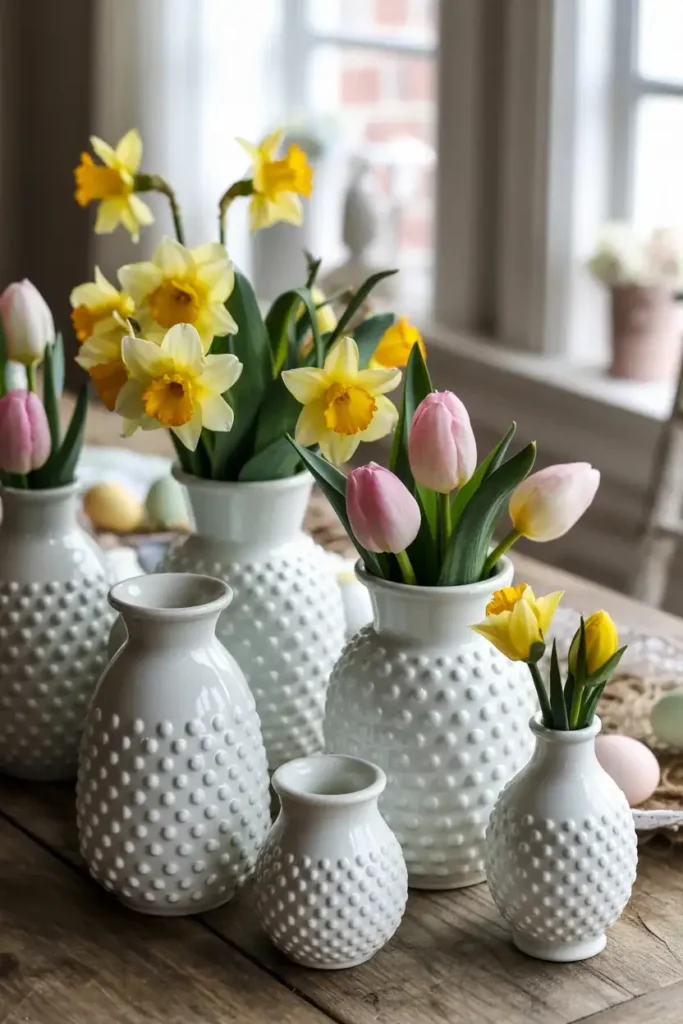
While not exclusively for Easter, white milk glass feels made for the season. The opaque white glass pops beautifully against the pastel colors of spring flowers.
I love the hobnail pattern, which has those little bumps all over it. It adds a tactile element to your display.
Fill a collection of different shapes and sizes with daffodils or tulips. The crisp white unifies the look even if the vase shapes are totally different.
You can find these at almost any thrift store. They are sturdy, classic, and make any cheap supermarket bouquet look expensive. I use them year round, but they work overtime in April.
#9. Jadeite Dishware
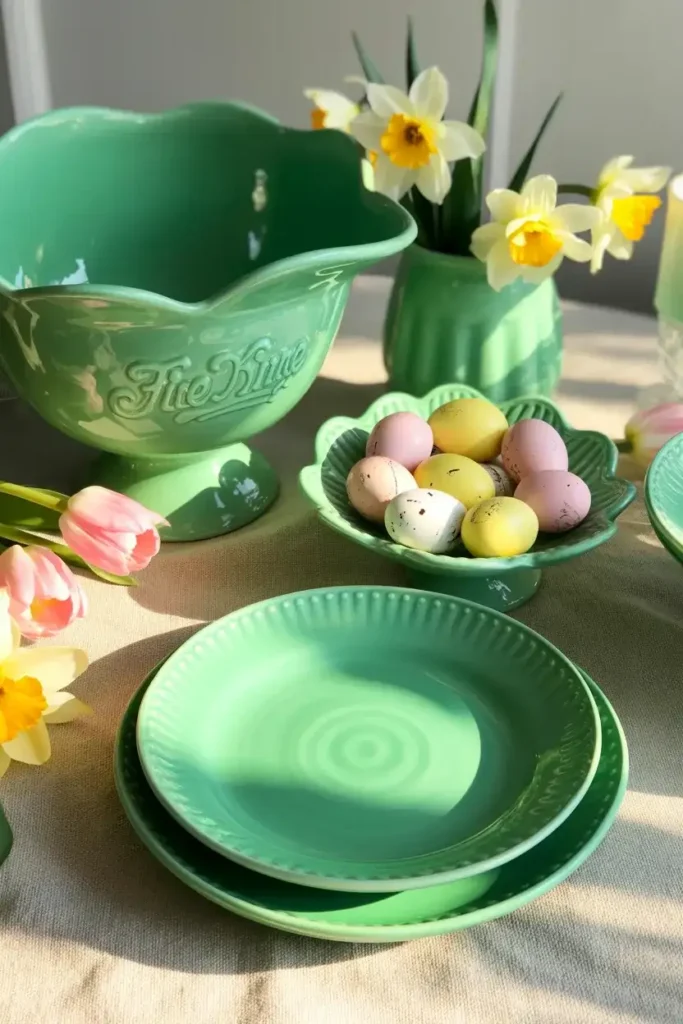
The color alone makes Jadeite dishware a spring essential. That milky, translucent green is the perfect pastel shade.
While authentic Depression era Jadeite can be pricey, it is worth the investment for the impact it makes. Brands like Fire King or McKee are the big names to look for.
I use my Jadeite bowls to hold painted eggs or candy. You do not need a full dinner service to get the look. A single cake stand or a mixing bowl is enough to set the mood.
The green pairs perfectly with pinks and yellows, creating that classic Easter palette without trying too hard. Just do not put these in the dishwasher. Hand wash only!
#10. Ceramic Lamb Planters
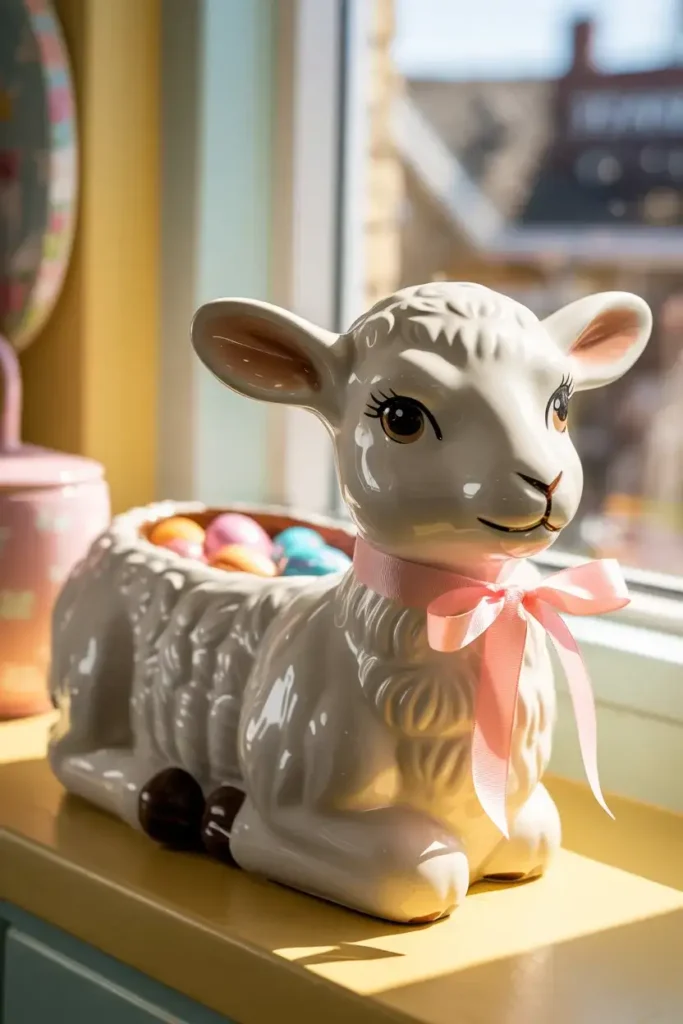
Is it really Easter without a ceramic lamb planter? These kitschy ceramics were a staple in the mid century home.
They usually feature a doe eyed lamb with a hollow back meant for a small plant. I prefer to fill mine with mini chocolate eggs instead of soil. It is less messy.
You will find these from makers like Hull, McCoy, or Napco. Some have pink or blue ribbons painted around their necks. I think they look sweet on a kitchen windowsill.
They bridge the gap between nursery decor and grown up style. Plus, they are durable enough to survive a house with pets or kids, unlike the spun cotton stuff.
#11. Feather Trees
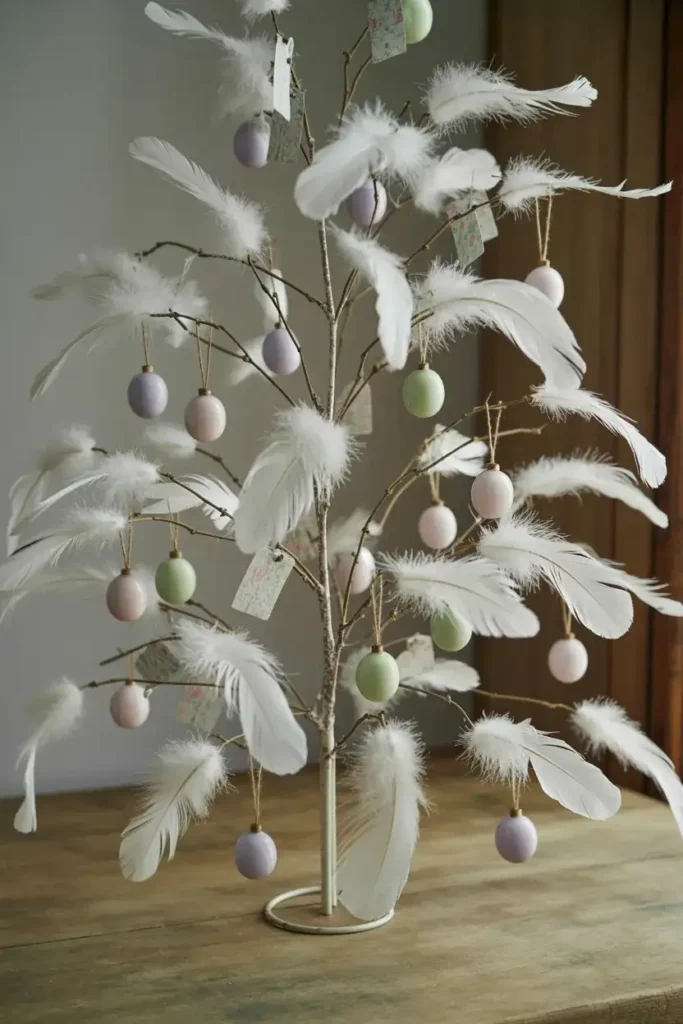
Originally a Christmas tradition, feather trees have made a huge crossover into Easter decor. These are artificial trees made of dyed goose feathers wrapped around wire branches.
For Easter, look for white or pastel colored trees. They serve as the perfect armature to display your smaller ornaments.
I hang my mini glass ornaments and tiny paper scraps on a white feather tree. The spacing between the branches is wide, which allows each ornament to shine.
It creates a vertical moment in your display. FYI, modern reproductions are available if you cannot find an antique one, but the old ones have a patina that is hard to fake.
#12. Vintage Candy Containers
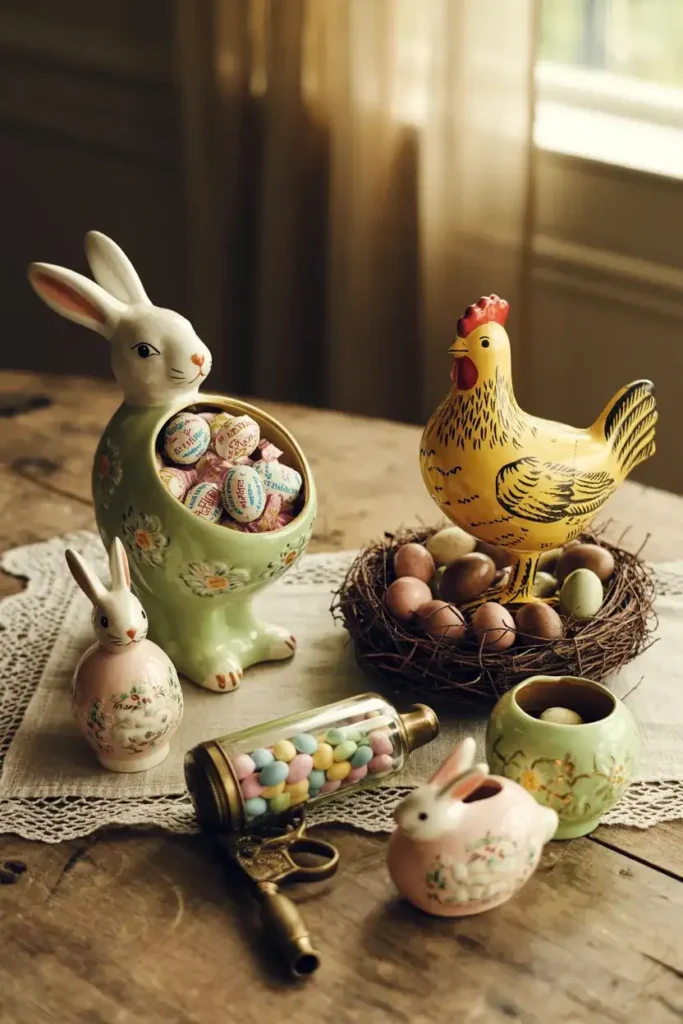
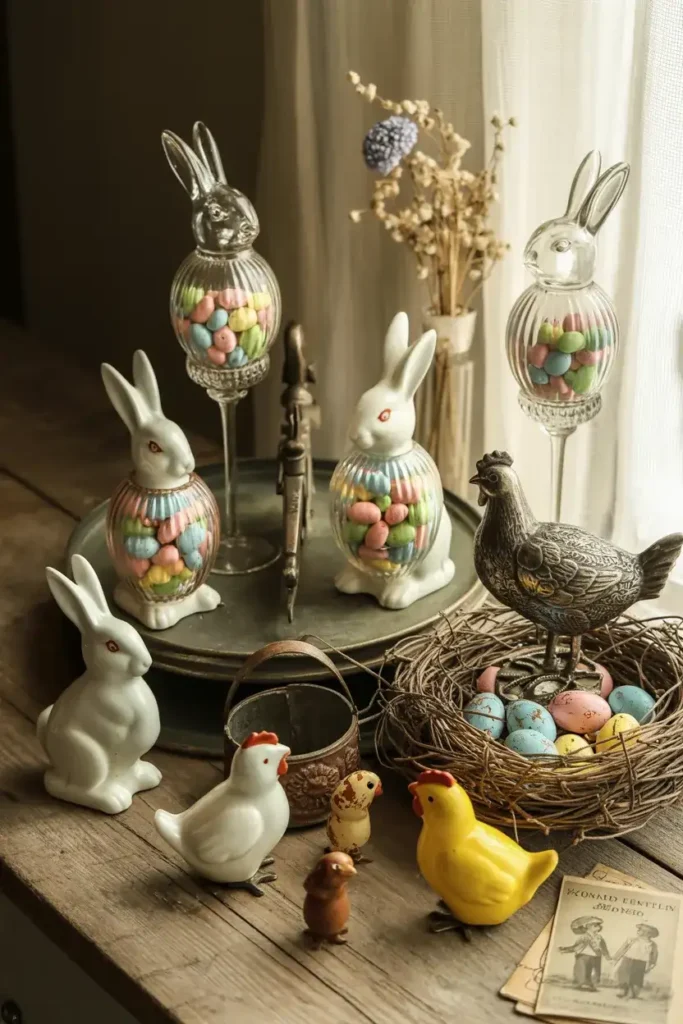
In the early 20th century, glass or composite candy containers were sold as toys filled with tiny sweets. Once the candy was gone, the kid had a toy to play with.
Today, these are highly collectible. Look for glass rabbits, chickens on nests, or even glass pistols (odd but true).
I love the way the light hits the vintage glass. Some of them still have the original cardboard closure on the bottom. I group these on a silver tray to catch the light.
They are small, so you can fit a lot of them on a single shelf. They are a great example of packaging that was too beautiful to throw away.
#13. Putz Houses
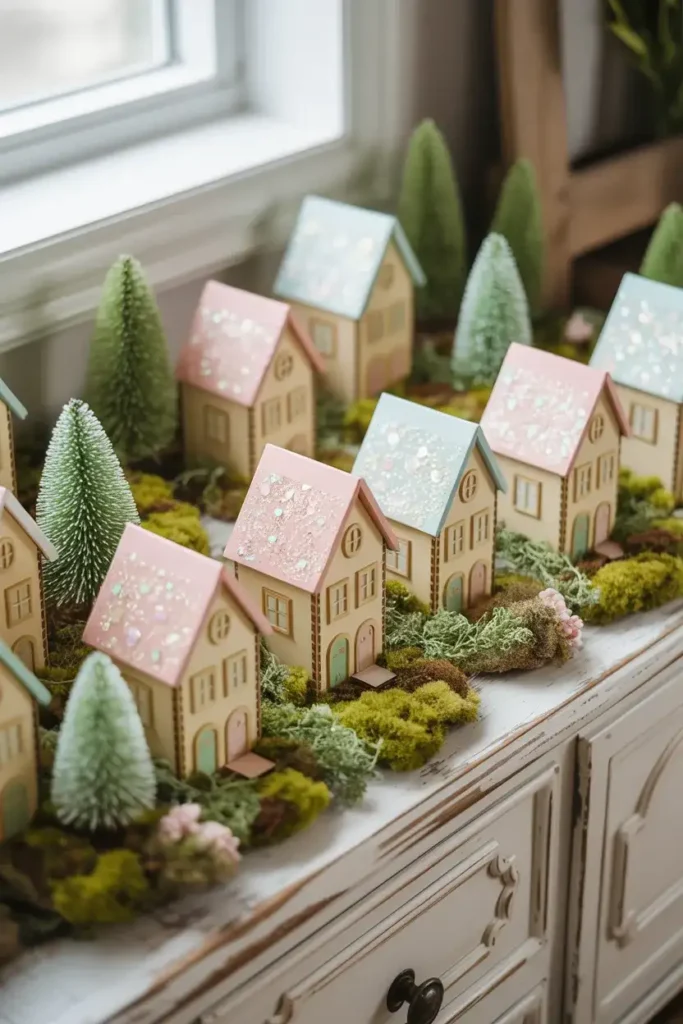
You might know Putz houses as those glittery cardboard houses used for Christmas villages. However, there is a whole subgenre of pastel Putz houses made specifically for spring. They often feature pink or blue roofs and tiny bottle brush trees in fresh green shades.
Building a little Easter village on a sideboard is a fun project. I scatter some faux grass around them to complete the scene.
The glitter sheds everywhere, so be prepared for that. It is worth the mess for the sparkle. These houses create a miniature world that feels magical and nostalgic.
#14. Vintage Fabric Scraps
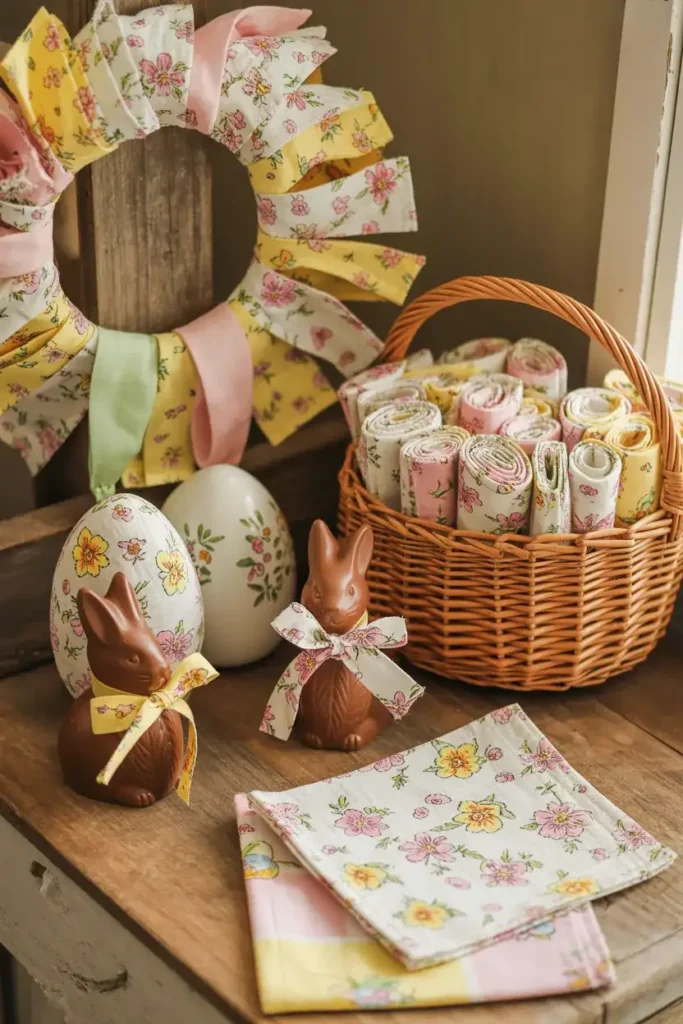
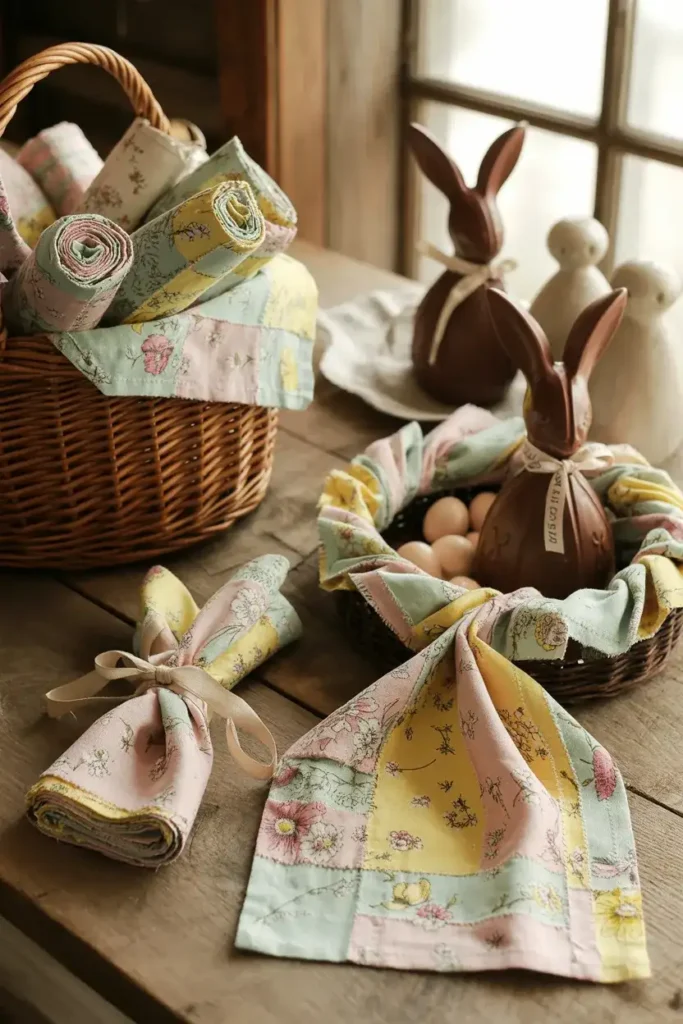
I am always on the hunt for vintage fabric scraps, specifically feed sacks from the 1930s and 40s. These fabrics feature cheerful, small scale floral prints that define the vintage aesthetic. I use them to make rag wreaths or to tie ribbons around my chocolate bunnies.
The patterns are distinct and impossible to replicate with modern digital printing. You can make simple napkins or table runners if you have basic sewing skills.
Even just filling a basket with rolled up fabric quarters looks decorative. It adds softness and pattern to a room that might feel too full of hard ceramic or glass objects.
#15. Celluloid Toys
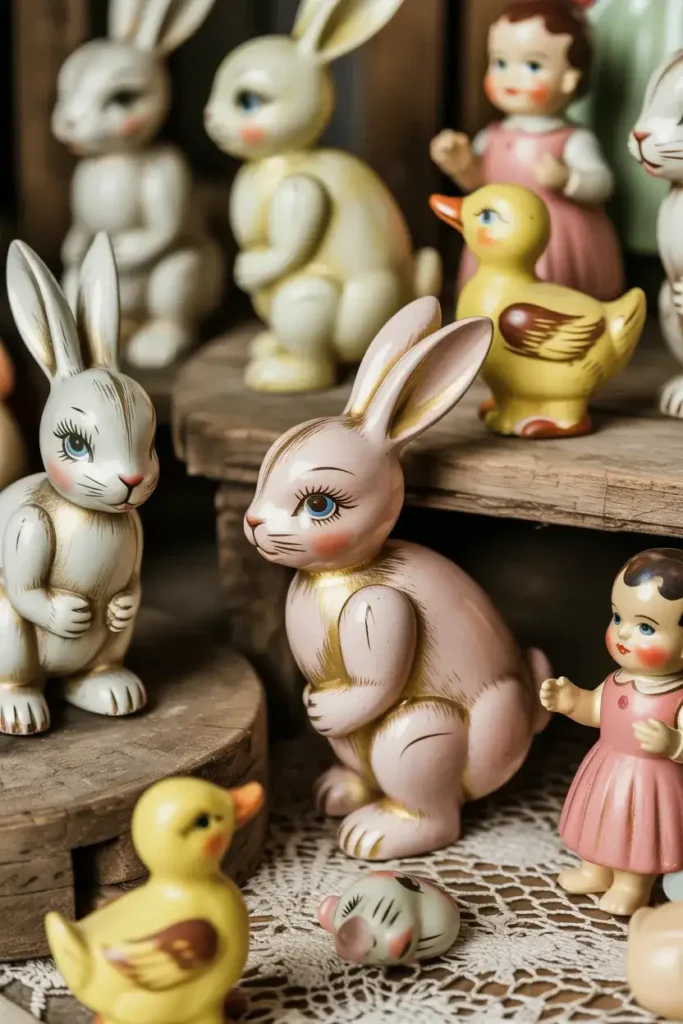
Before modern plastic, there was celluloid. These ultra light, brittle toys were huge in the 1920s and 30s. They are often airbrushed in soft colors and have a distinct, hollow feel. You will find ducks, bunnies, and dolls made of this material.
A word of warning though. Celluloid is highly flammable. Keep these far away from your stove or candles. I treat mine like museum pieces.
Their fragility makes them precious. I love the matte finish they have compared to shiny modern plastics. They look ancient in the best way possible.
#16. Metal Chocolate Molds
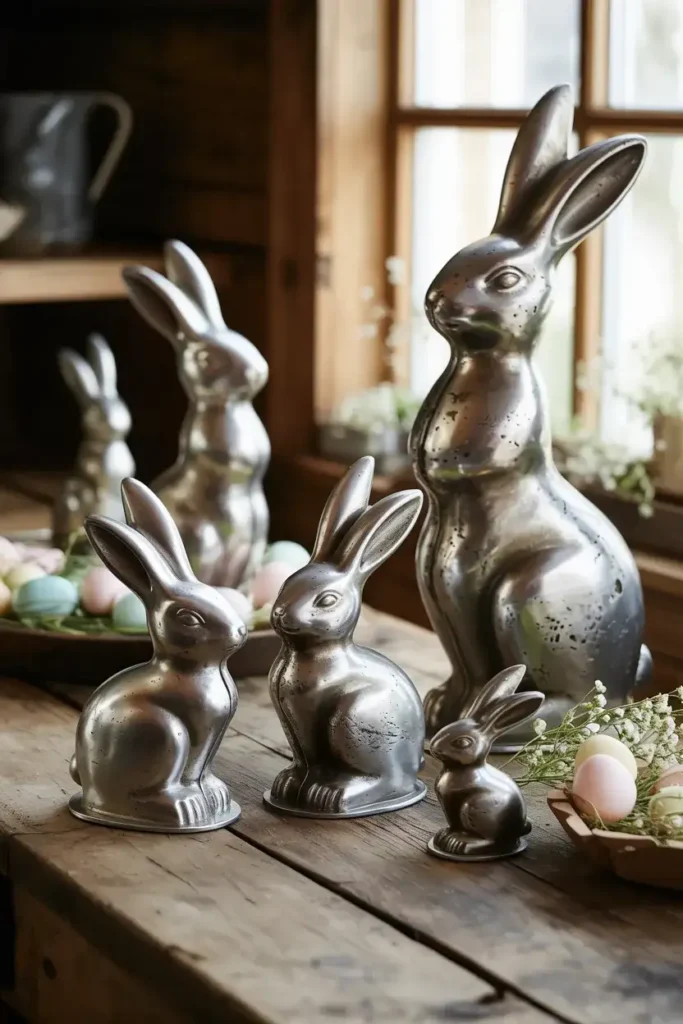
For a more industrial farmhouse look, metal chocolate molds are fantastic. These heavy metal clamps were used by confectioners to shape hollow chocolate bunnies and eggs. They have a beautiful silver patina and look like sculptural art pieces.
I display these open to show both halves, or clamped shut standing up. They are heavy and substantial. They provide a nice contrast to all the soft pastels and fluff of Easter.
Also, they feel masculine and grounded. You can find them in all sizes, from tiny bite sized molds to massive two foot tall rabbits.
#17. Painted Wicker Baskets
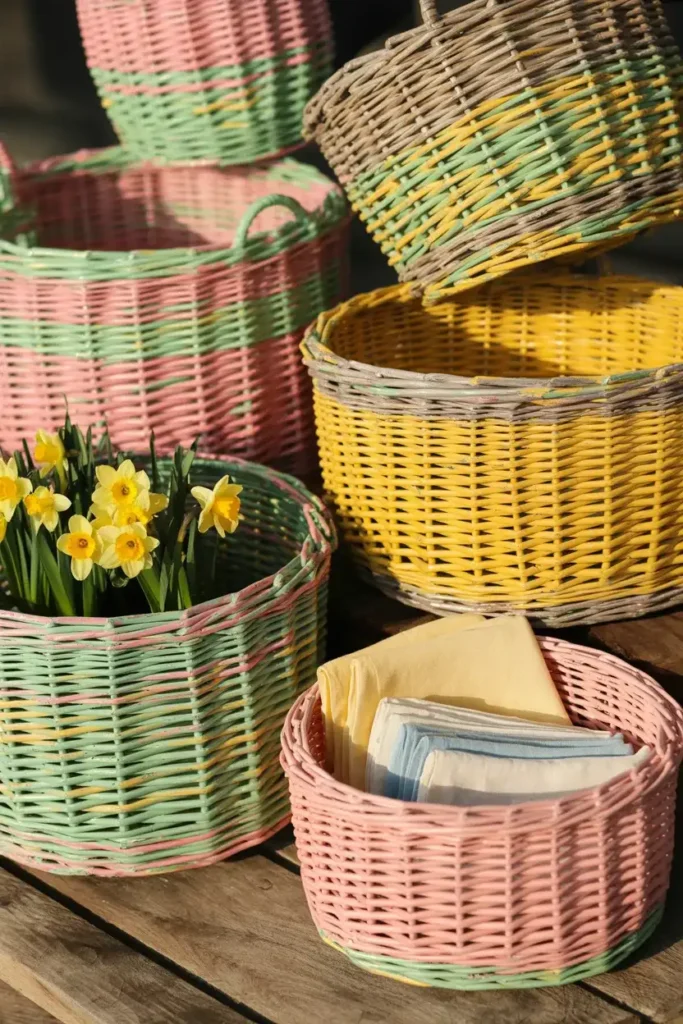
Finally, you cannot forget painted wicker baskets. I look for the tight weave baskets from the mid century that were spray painted in thick, glossy pastels.
Pinks, mint greens, and lemon yellows are the standard. They are sturdy and perfect for holding your actual egg hunt haul.
I use them to hold potted daffodils or stacks of vintage linen napkins. The paint usually cracks a little over time, revealing the natural wicker underneath.
That texture is delicious. They are practical storage that doubles as decor. I stack them on top of my kitchen cabinets when not in use.
How to Style Vintage Easter Decor
You have collected the goods. Now you need to style them without your house looking like a chaotic antique store. I have made that mistake before. Here is how I make it work.
Group Like with Like
One ceramic lamb looks lonely. Three ceramic lambs look like a collection. I always group similar items together to create impact.
Place all your milk glass on one shelf. Cluster your Gurley candles on a single tray. This creates visual order and stops the eye from bouncing around too much.
Mix Textures
Vintage Easter decorations vintage items can feel a bit flat if everything is shiny ceramic. You need to mix it up.
Pair the rough texture of a chenille chick with the smooth surface of a Jadeite bowl. Put a metal chocolate mold next to a soft feather tree. The contrast makes each piece pop.
Use Natural Elements
I use natural elements to ground the vintage colors. Dried moss, fresh twigs, and real flowers help the artificial colors of the vintage items feel at home.
I love using Spanish moss in my baskets to nestle the plastic eggs. It looks more organic and expensive than that plastic grass stuff.
FAQs
Bringing the Past into Your Spring
Collecting Easter decorations vintage style is about more than just buying old stuff. It is about preserving a little bit of history and magic. Each chipped paint spot and faded ribbon tells a story of a holiday past. I hope this list inspires you to look past the shiny new inventory at the store and hunt for something with a soul.
Start small. Buy one thing that makes you smile. Before you know it, you will be the one with the house full of weird, wonderful treasures that your grandkids will fight over one day. Happy hunting and I hope your spring is filled with pastel perfection.

I am Mindy Medford, a home décor, paint, and design specialist with over a decade of hands-on experience transforming ordinary spaces into cozy, personality-packed havens. Since 2013, I have been helping homeowners discover the art of beautiful yet practical design. I share my love for color, texture, and layout—making stylish interiors & exteriors feel achievable for everyone. Whether it’s picking the perfect paint shade or reimagining a small space, I’m here to guide and inspire.