20 Drought Tolerant Garden Ideas for 2026 to Future Proof Your Yard
I used to look at my water bill and want to cry. Every summer became a battle between my wallet and my desire for a green lawn. I eventually realized that fighting nature is a losing game. Why force thirsty grass to grow where it does not want to be? That is when I discovered the magic of xeriscaping.
You do not need to sacrifice beauty to save water. In fact, some of the most stunning landscapes I have ever seen barely sip a drop of moisture. If you are ready to ditch the hose and reclaim your weekends, you are in the right place.
20 Drought Tolerant Garden Ideas
We are going to look at the top trends that will define sustainable gardening in 2026. These ideas will save you money and make your neighbors jealous.
1. Swap Thirsty Turf for Native Groundcover
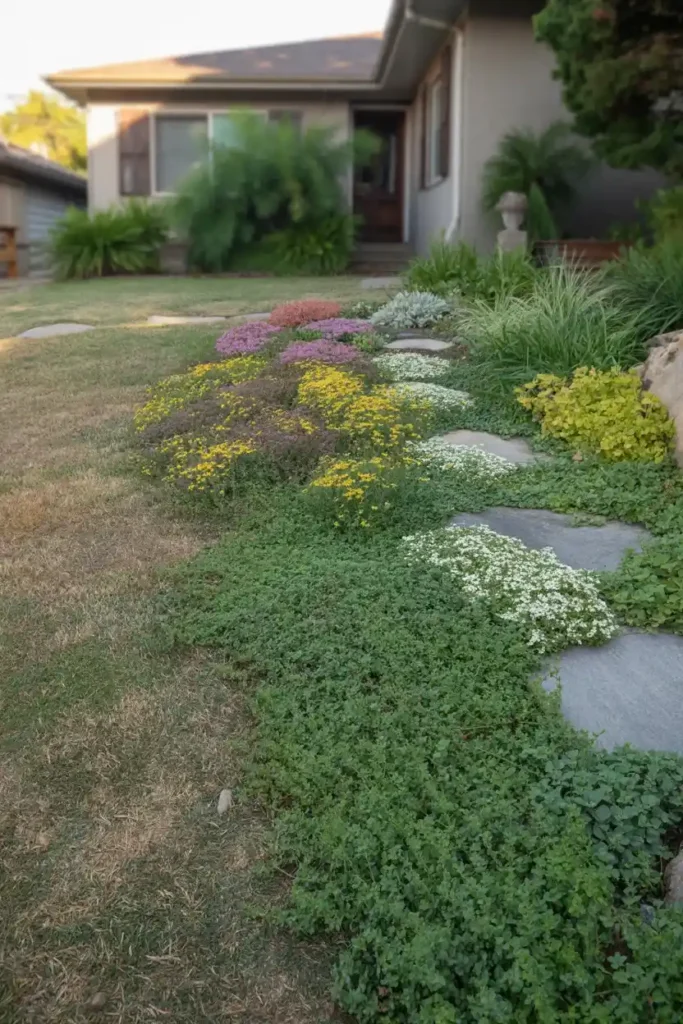
We all know that traditional grass is a diva. It demands constant attention, feeding, and watering. Native groundcovers are the complete opposite.
Plants like creeping thyme or sedum form lush carpets that suppress weeds and require almost zero supplemental water once established. I replaced a patch of struggling fescue with clover last year and have not looked back.
Native options are already adapted to your local climate and soil conditions. This makes them the ultimate low maintenance choice for busy homeowners.
2. Design a Chic Gravel Garden
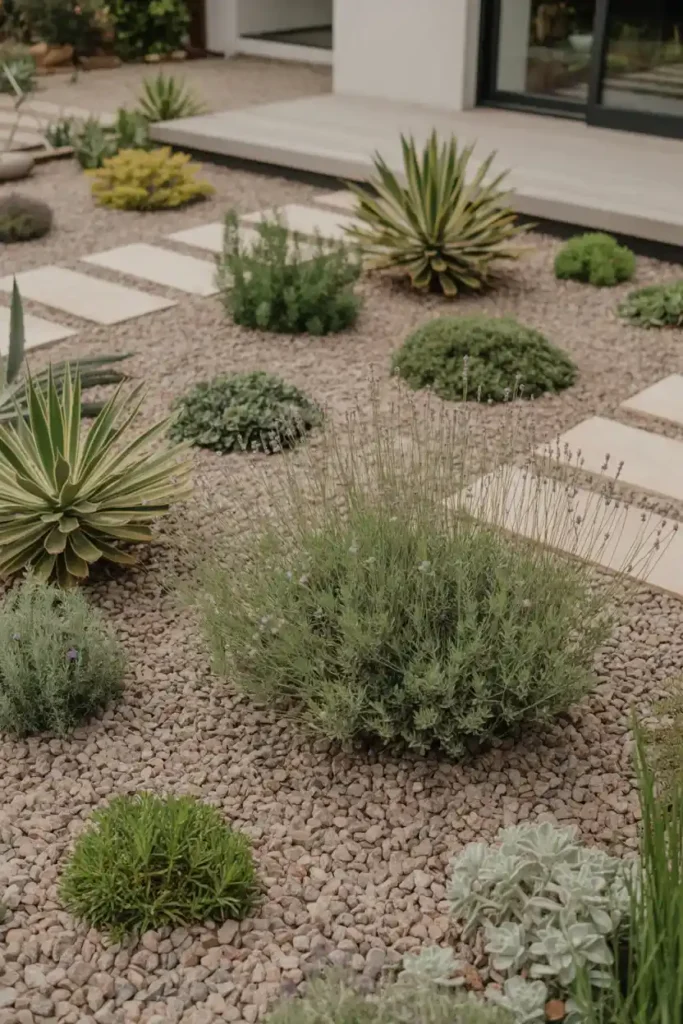
Gravel gardens are huge right now for good reason. They offer a modern and clean aesthetic that looks amazing year round.
You lay down a permeable landscape fabric and top it with pea gravel or crushed granite. You then plant drought tolerant species directly into the soil beneath. This method keeps plant roots cool and moist while providing excellent drainage.
IMO, gravel gardens are the easiest way to achieve that high end architectural look without the high end maintenance costs.
3. Install a Smart Irrigation Controller
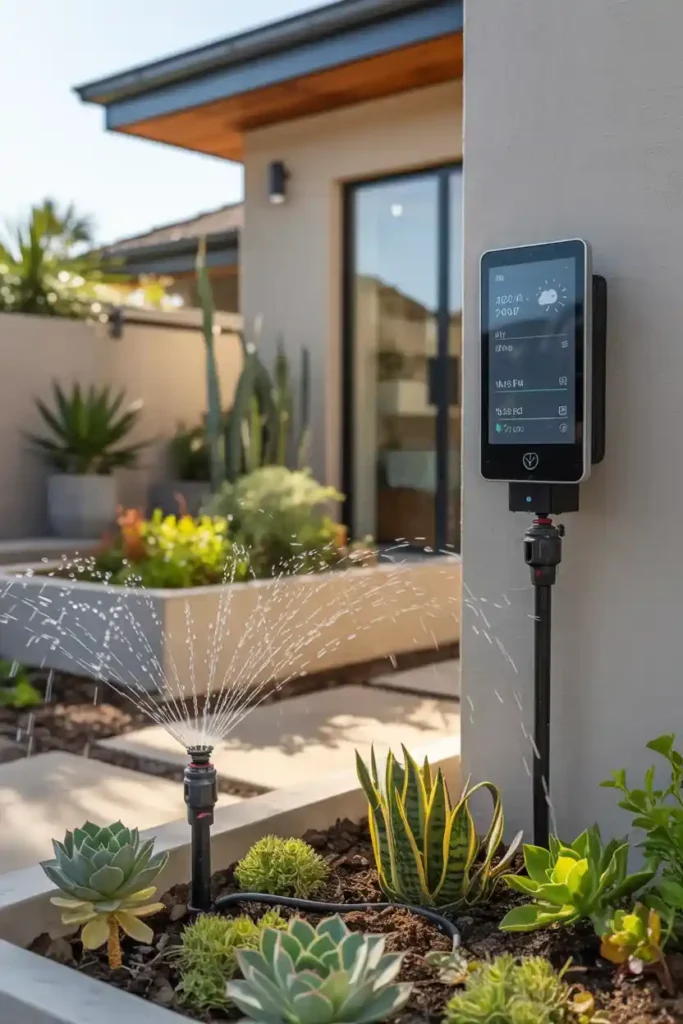
Technology is your best friend when you want to save water. Smart controllers connect to local weather stations via Wi Fi to adjust watering schedules automatically. They skip watering when it rains and increase it during heat waves.
I installed one last summer and saw my water usage drop by nearly thirty percent instantly. You no longer have to worry about forgetting to turn off the sprinklers during a storm. This gadget does the thinking for you and ensures every drop counts.
4. Create a Dry Creek Bed
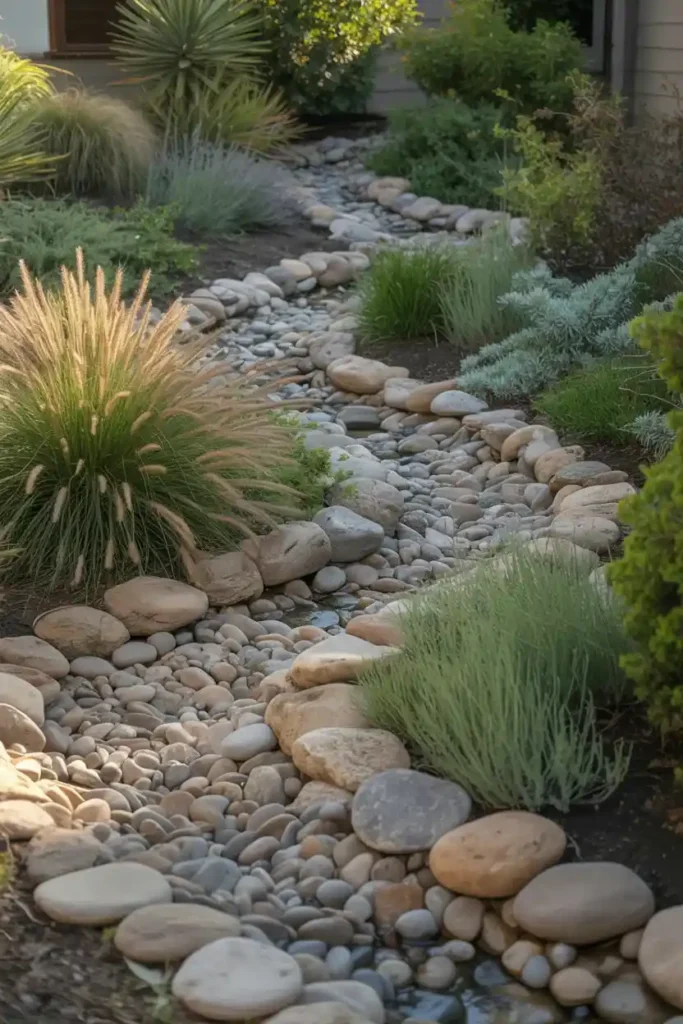
A dry creek bed is both functional and beautiful. You use river rocks and boulders to mimic the look of a natural stream channel winding through your yard. It adds visual interest and structure to your landscape design.
During heavy rains, these beds act as drainage channels to direct runoff away from your foundation or into a rain garden.
You can plant ornamental grasses along the edges to soften the look. It creates a stunning focal point that requires absolutely no water.
5. Group Plants by Water Needs (Hydrozoning)
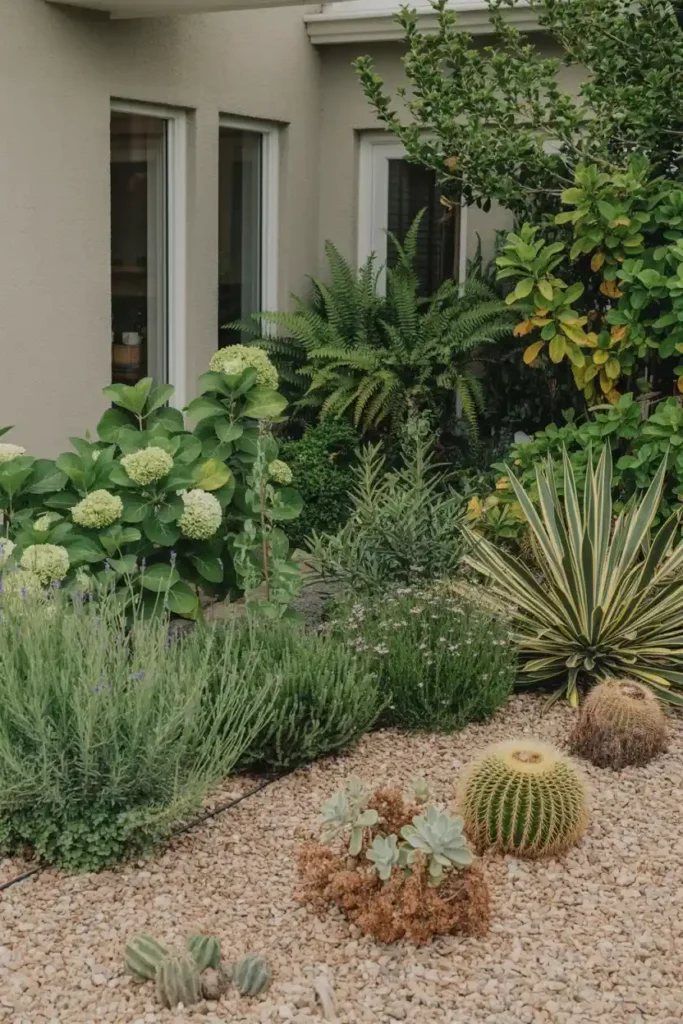
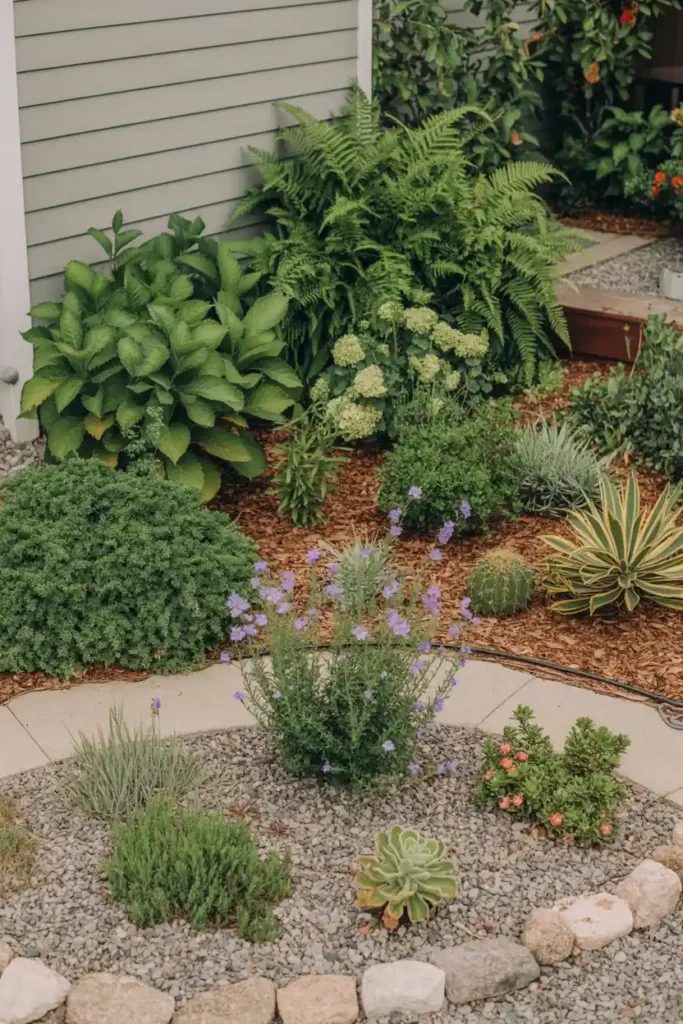
Hydrozoning is a fancy word for a simple concept. You group plants with similar water requirements together. This prevents you from overwatering tough succulents just because they are next to a thirsty hydrangea.
I organize my garden into three zones based on water needs. The plants that need the most water go closest to the house or water source.
The drought tolerant tough guys go further out. This strategy ensures efficient watering and keeps all your plants happy and healthy.
6. Embrace the Mediterranean Palette
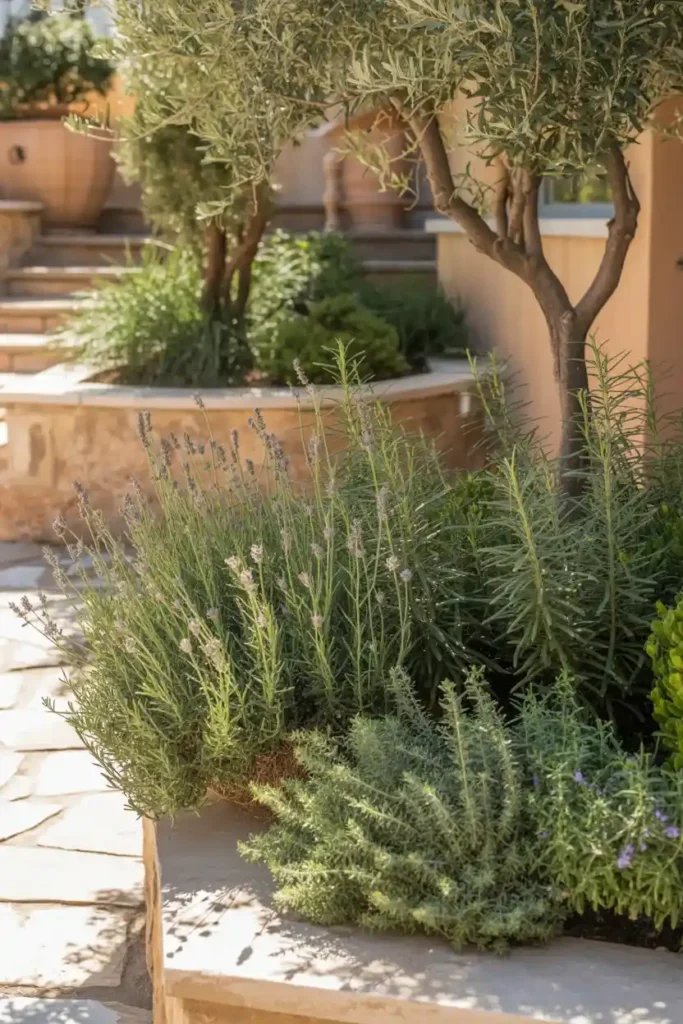
Gardens in the Mediterranean region have thrived in hot and dry summers for centuries.
You can steal their style by planting lavender, rosemary, sage, and olive trees. These plants love full sun and lean soil. They also bring incredible fragrance and texture to your outdoor space.
I love brushing past my rosemary bush whenever I walk to the mailbox. These silvery foliage plants reflect sunlight and stay cool even on the hottest July afternoons.
7. Utilize Permeable Pavers
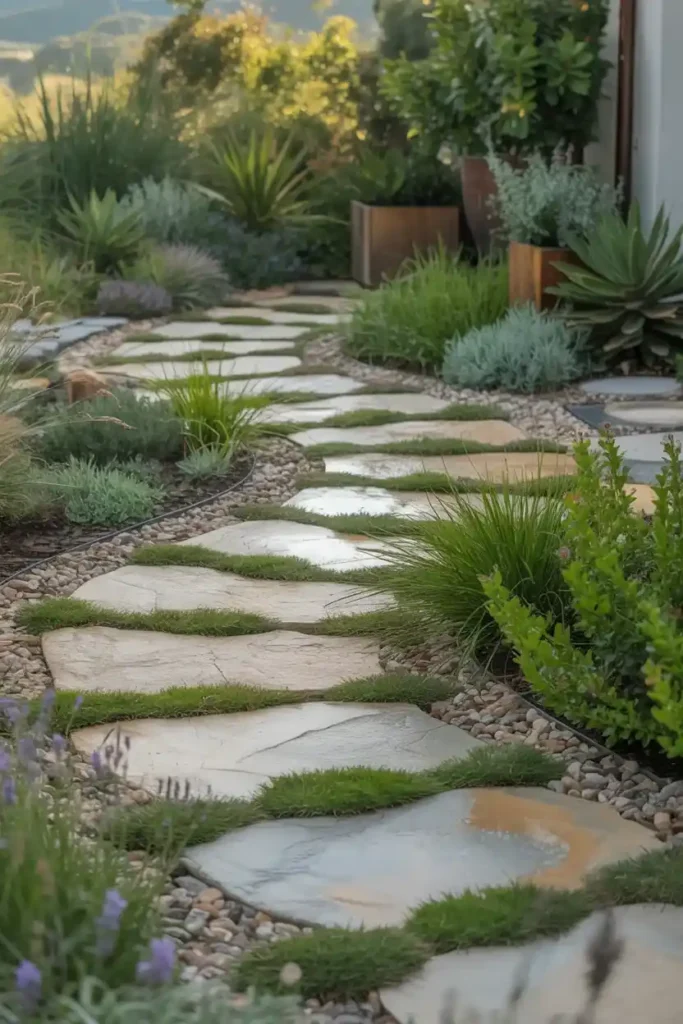
Concrete driveways and patios create runoff and heat up your yard. Permeable pavers allow rainwater to soak into the ground where it belongs. This replenishes groundwater and keeps the soil around your home moist for longer periods.
Grass or gravel fills the gaps between the pavers to create a softer and more organic look. This is a brilliant way to add hardscaping that works with the environment rather than against it.
Plus it looks significantly better than a slab of gray concrete.
8. Build Raised Beds with Hugelkultur
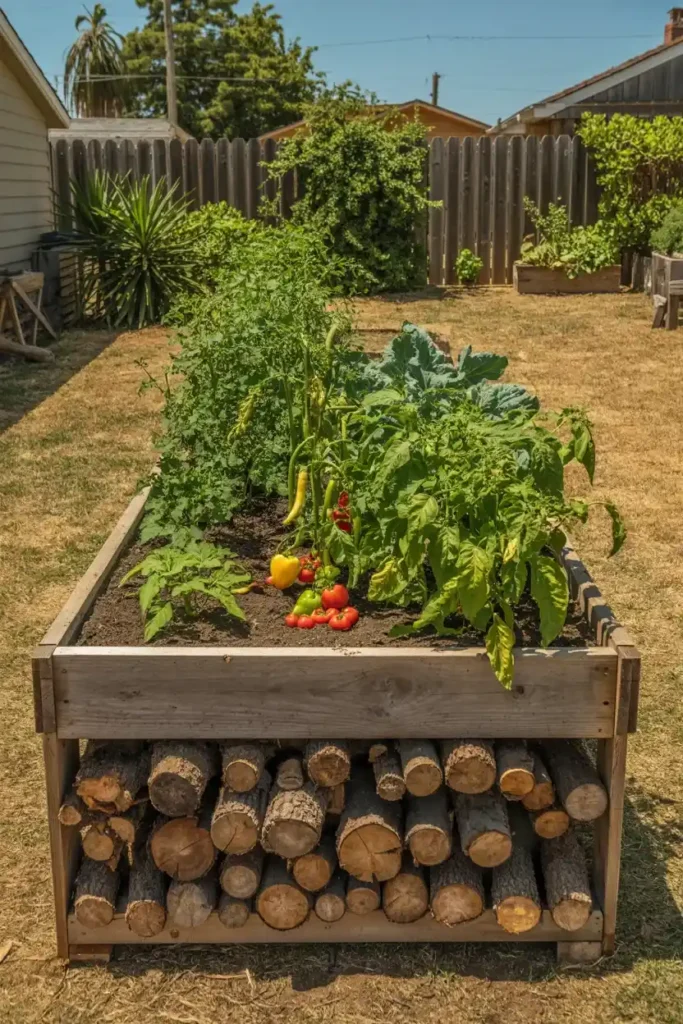
Hugelkultur is an ancient method where you fill the bottom of raised beds with rotting logs and branches.
As the wood decomposes, it acts like a sponge that holds moisture deep in the soil. This means you rarely need to water your raised beds even in the height of summer.
I tried this method for my vegetable garden and the results were shocking. My plants stayed green and productive while my neighbors were struggling with drought stress.
9. Plant a Pollinator Paradise
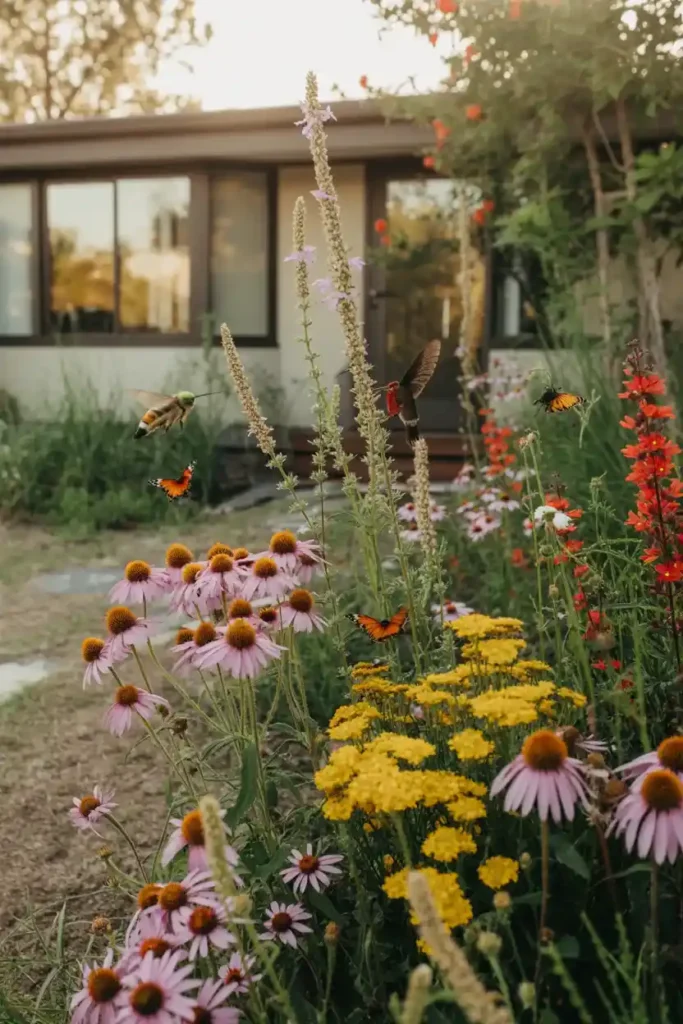
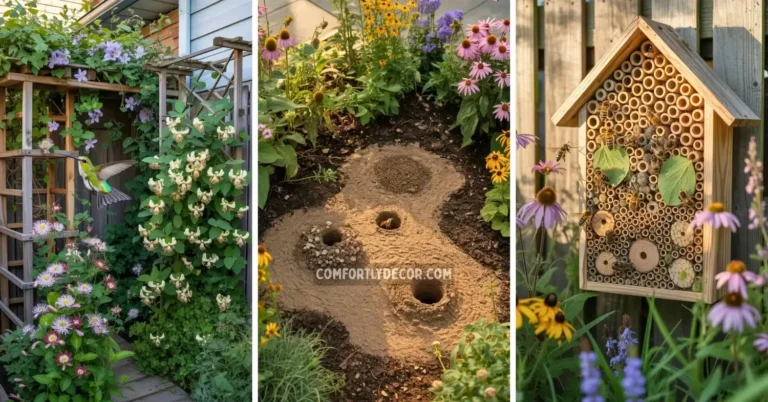
Drought tolerant garden ideas often overlap with wildlife friendly practices. Many water wise plants like coneflower, yarrow, and salvia are magnets for bees and butterflies.
You create a vibrant ecosystem right outside your window by choosing these species. Pollinators prefer native plants anyway so you are doing them a favor while saving water.
I love watching the hummingbirds visit my agastache every morning. It brings the garden to life in a way that a flat green lawn never could.
10. Install a Rain Barrel System
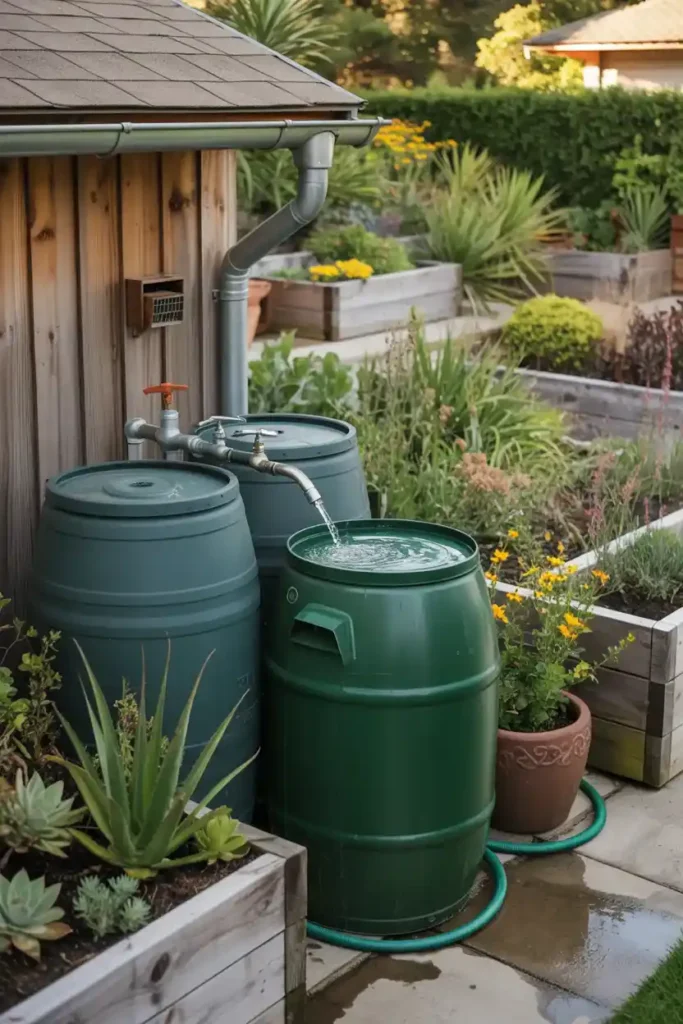
Free water falls from the sky so you might as well catch it. Rain barrels collect runoff from your roof gutters to use later for watering pots and garden beds.
A single storm can fill a fifty gallon barrel surprisingly fast. I daisy chained three barrels together behind my shed to maximize storage.
This water is free of chlorine and fluorides which makes it healthier for your plants than tap water. It is a total no brainer for any eco conscious gardener.
11. Use Ollas for Deep Watering
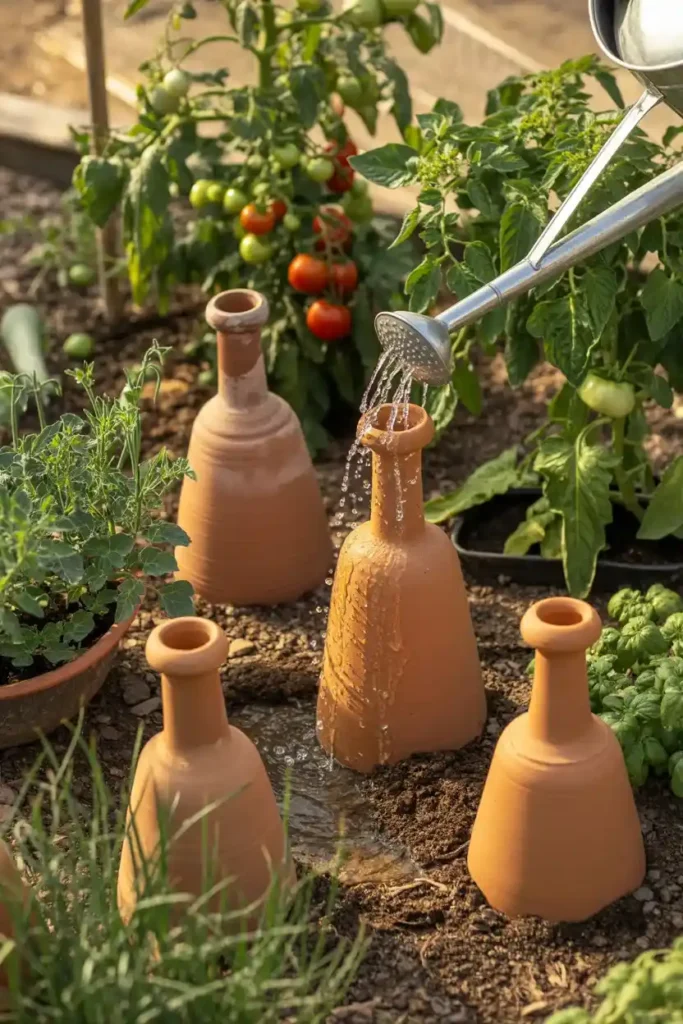
Ollas are unglazed clay pots that you bury in the soil next to your plants.
You fill them with water and the moisture slowly seeps out through the porous clay directly to the roots. This ancient irrigation technique is incredibly efficient because zero water is lost to evaporation.
I use them in my tomato containers and fill them only once a week. Your plants get exactly the moisture they need exactly when they need it.
12. Add Mulch Like You Mean It
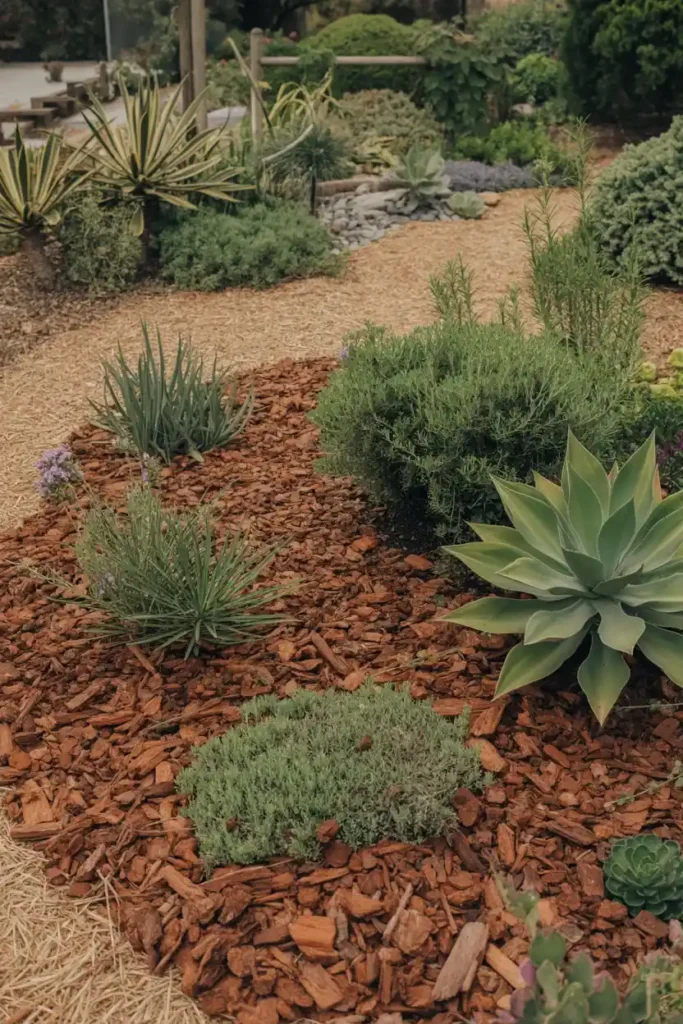
Mulch is the sunscreen of the garden world. A thick layer of organic mulch like wood chips or straw keeps the soil cool and prevents evaporation.
It also breaks down over time to improve soil quality. You should aim for a layer that is at least three to four inches deep.
I promise you will notice a massive difference in how long your soil stays moist. Bare soil is stressed soil so keep it covered up.
13. Incorporate Ornamental Grasses
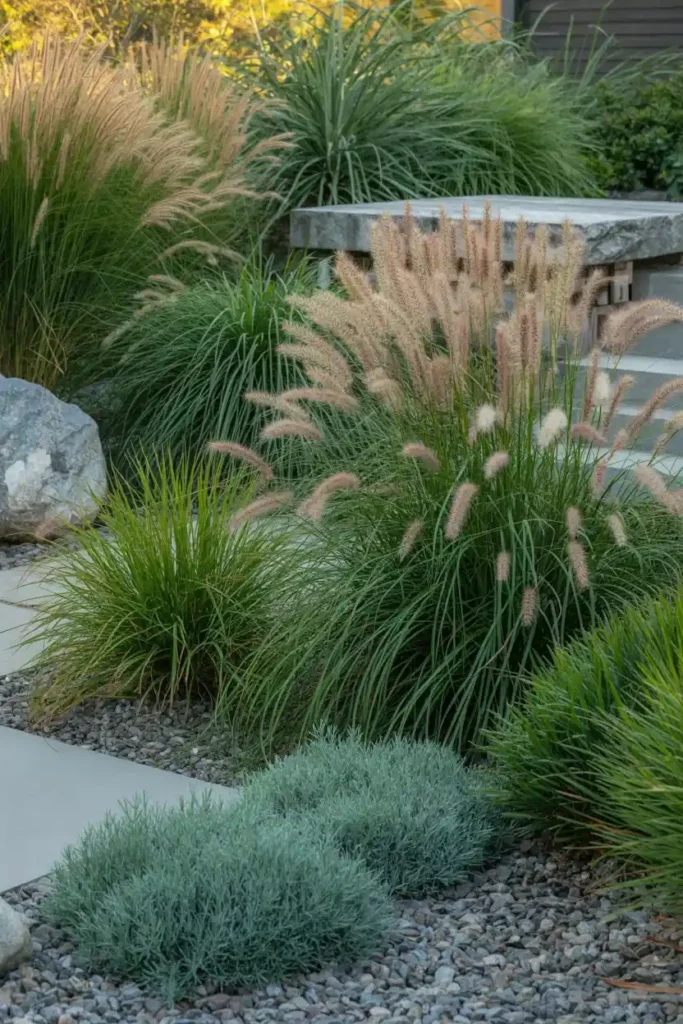
Ornamental grasses add movement, texture, and height to the landscape. Varieties like maiden grass, switchgrass, and blue fescue are incredibly tough and drought resistant.
They look beautiful when they sway in the wind and catch the golden hour light. I leave them standing through the winter for interest and then cut them back in early spring.
They provide a modern look that pairs perfectly with gravel and stone features.
14. Create Shade with Pergolas
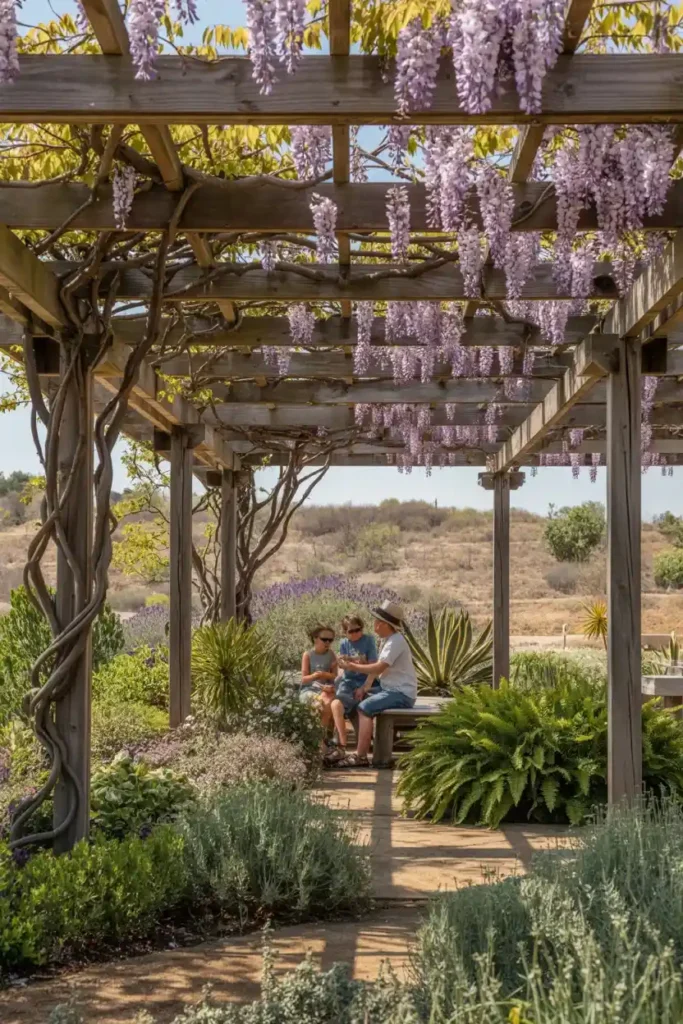
The sun is the enemy of soil moisture. You can reduce evaporation significantly by adding shade structures like pergolas or shade sails.
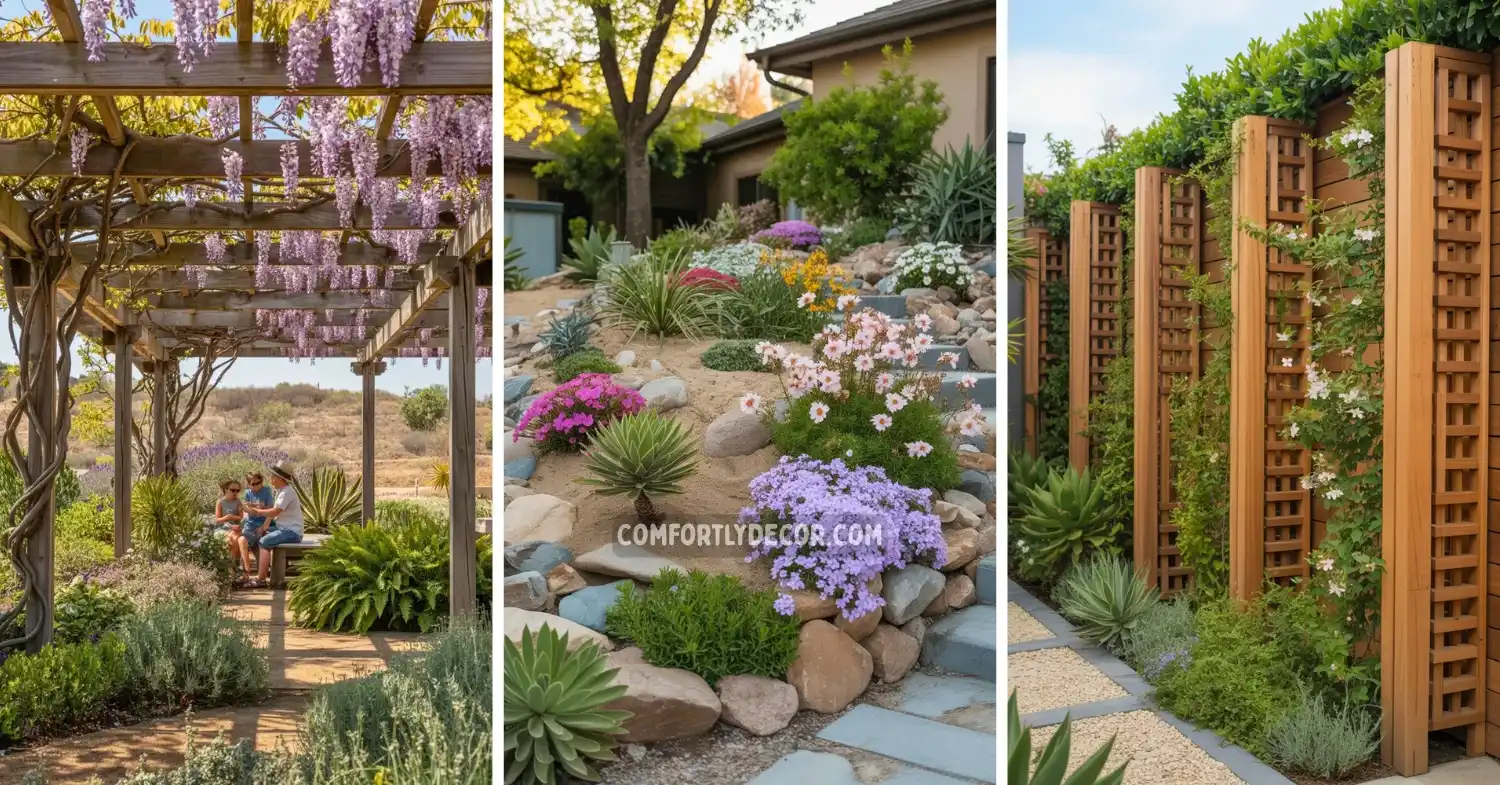
These structures create comfortable microclimates for both your plants and your family. I planted a wisteria vine to climb over my pergola for extra cooling power.
The shaded area stays ten degrees cooler than the rest of the yard. This allows me to grow plants that might otherwise fry in the midday sun.
15. Go Vertical with Succulent Walls
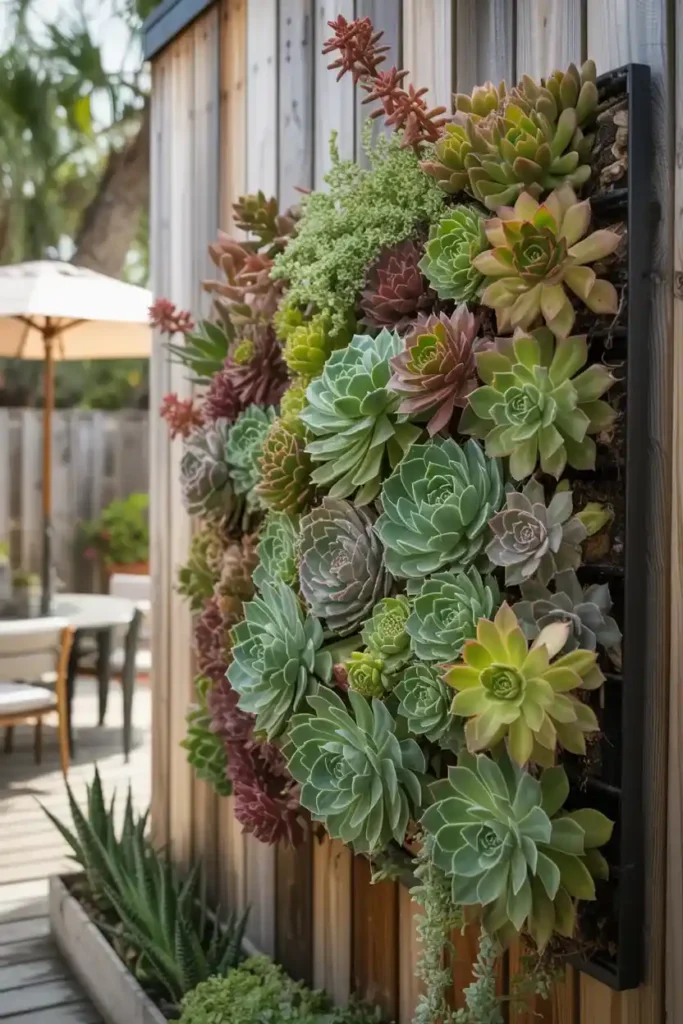
Vertical gardens are perfect for small spaces but they can dry out fast. Succulents are the solution.
A living wall filled with hens and chicks, sedums, and echeverias is basically art. These plants store water in their leaves so they can survive in shallow vertical planters.
I hung one on my patio privacy fence and it is always a conversation starter. It adds a huge punch of greenery without taking up any precious floor space.
16. Replace Hedges with Privacy Screens
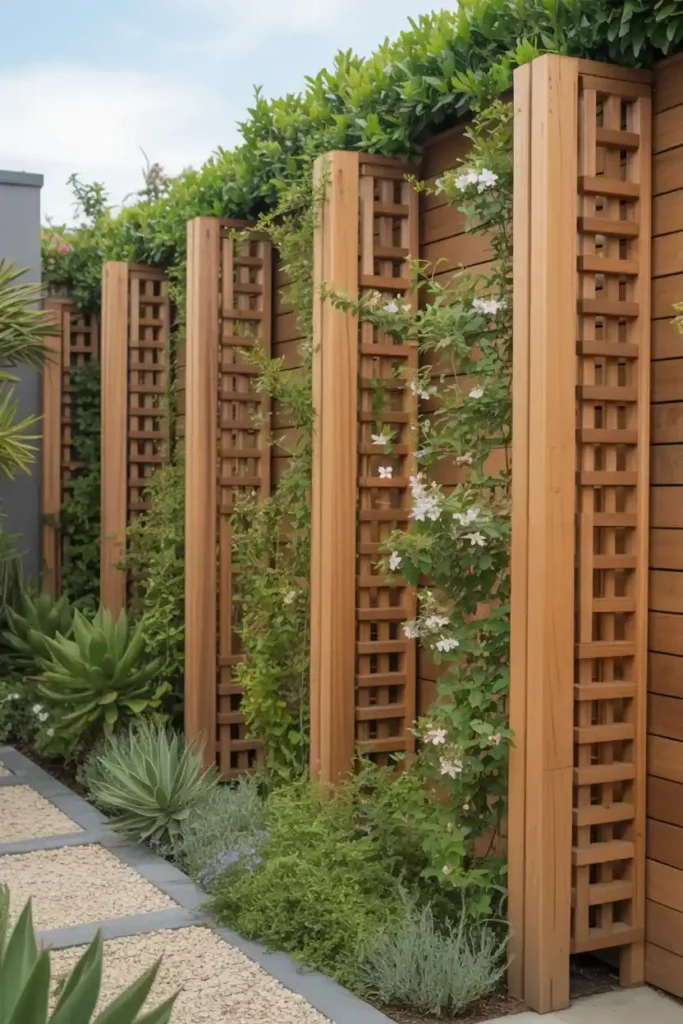
Living hedges require a lot of water and trimming to look good. You can achieve the same privacy with decorative metal or wood screens.
These hardscape elements provide instant screening and require zero water. You can soften the look by planting a few drought tolerant vines like jasmine or honeysuckle at the base.
This is a great way to define spaces in your garden without committing to the maintenance of a boxwood hedge.
17. Use Boulders as Focal Points
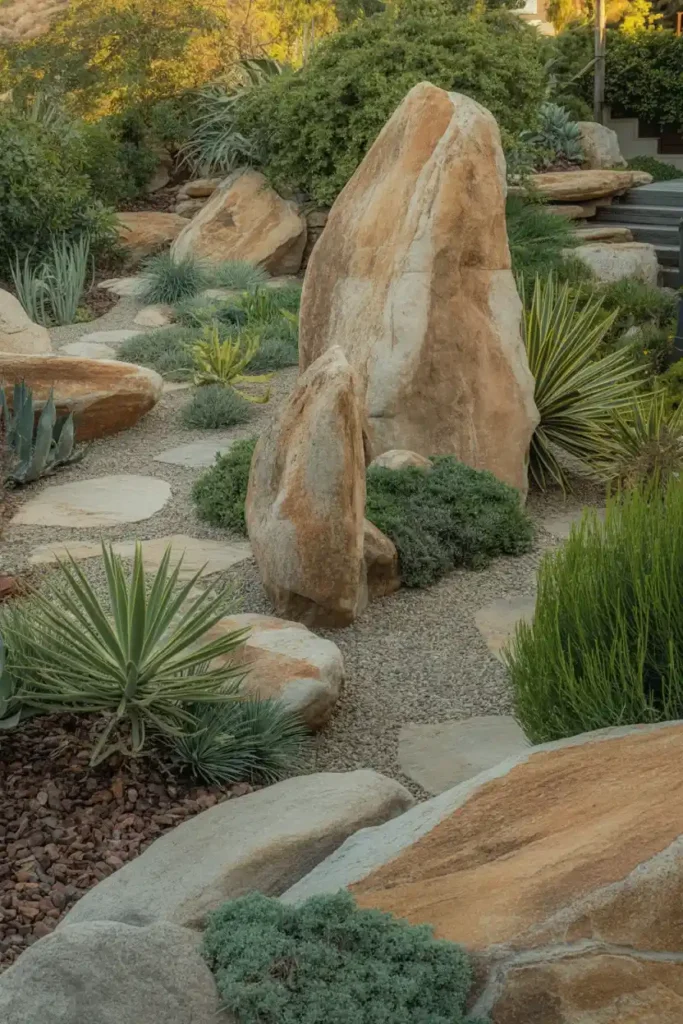
Rocks never die and they never need watering. Large boulders add visual weight and permanence to your landscape design.
You can use them to anchor a garden bed or create a natural seating area. I like to bury the bottom third of the boulder to make it look like it has been there forever.
Boulders absorb heat during the day and release it at night which creates warmth for nearby plants.
18. Choose Silver Foliage Plants
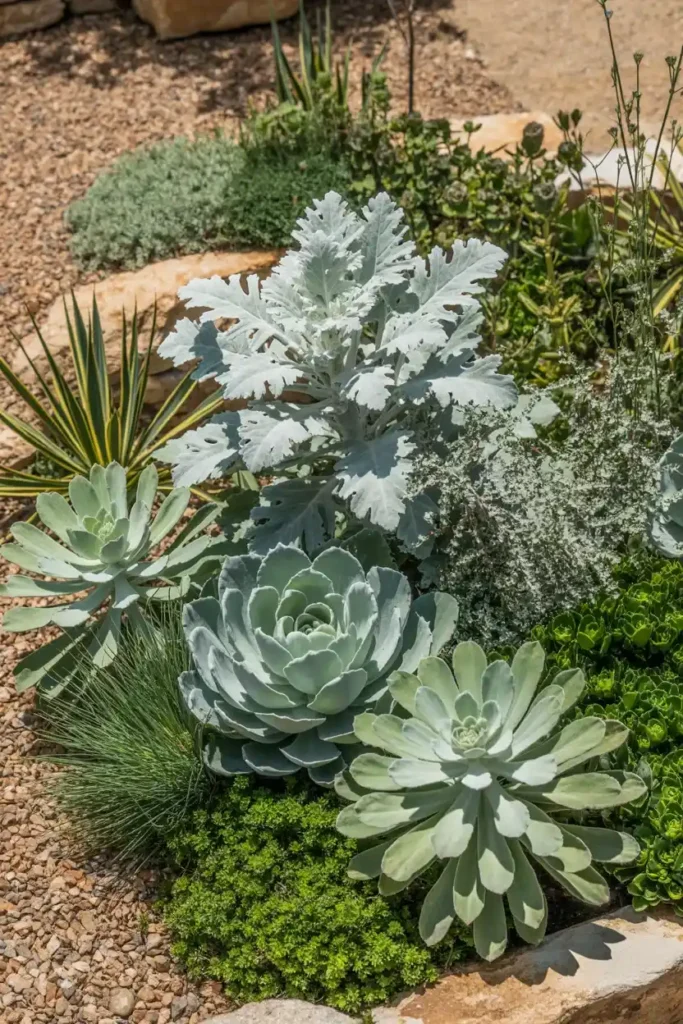
Plants with silver or gray leaves are usually adapted to withstand intense sunlight. The light color reflects solar radiation and the fuzzy texture often found on leaves helps trap moisture.
Dusty miller, lamb’s ear, and artemisia are classic examples. I mix these in with green foliage to add contrast and brightness to my garden beds.
They are tough as nails and look delicate and ethereal at the same time.
19. Install Artificial Turf Accents
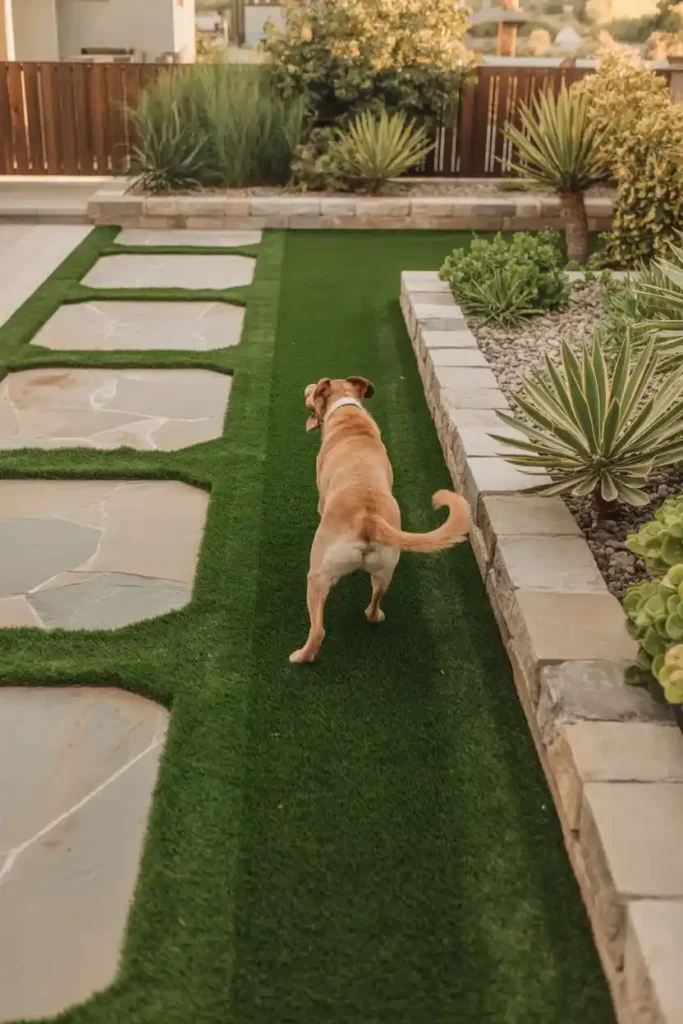
Hear me out on this one. Artificial turf has come a long way and looks very realistic now.
I am not suggesting you cover your whole yard in plastic. However, small accents of artificial turf between pavers or in high traffic dog runs can be very practical.
It stays green regardless of the weather and never needs mowing. FYI, high quality options drain well and are permeable so they do not create runoff issues.
20. Cultivate a Rock Garden
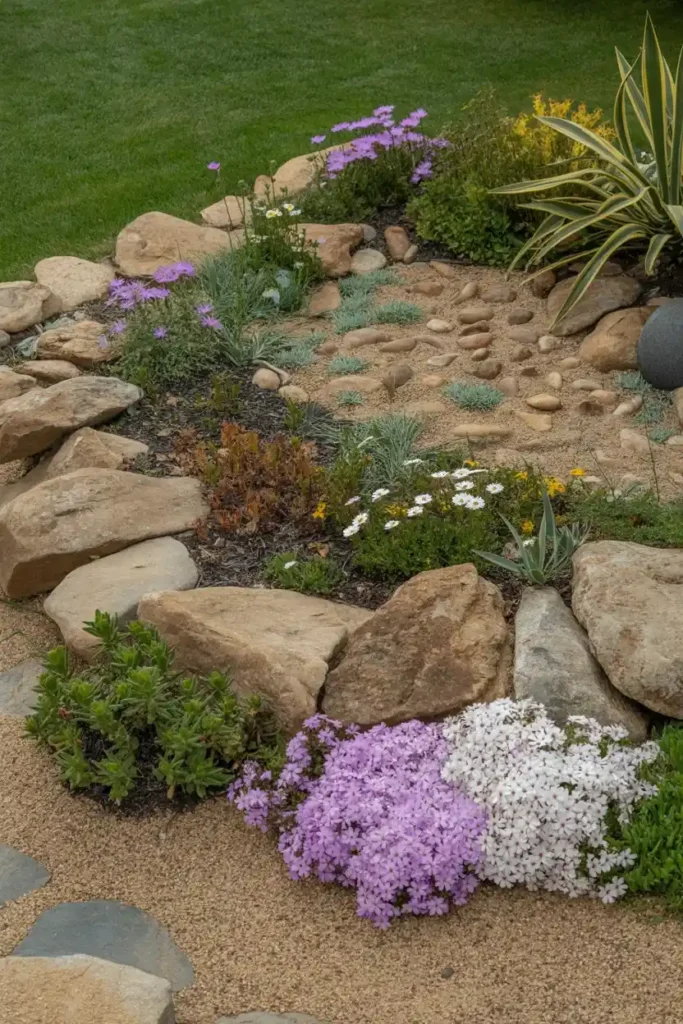
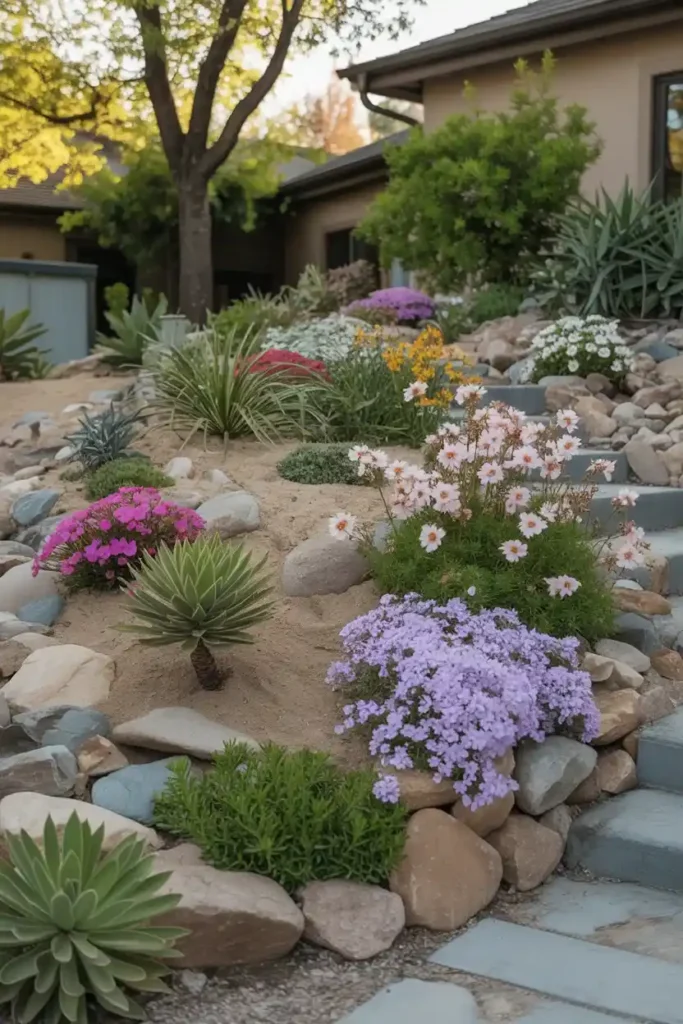
Rock gardens are designed specifically for alpine and desert plants that hate wet feet.
You build mounds of sandy soil and rocks to create sharp drainage. This is the perfect environment for lewisias, ice plants, and creeping phlox.
I built a small rockery in a corner of my yard that used to be a muddy mess. Now it is a colorful jewel box that bursts into bloom every spring with minimal effort from me.
Ultimate Guide to Planning Your Drought Tolerant Oasis
You have read the ideas and now you need to execute. Transforming your yard sounds daunting but it is just a series of steps.
Step 1: Assessment
You need to look at your yard honestly. Where does the sun hit the hardest? Where does water pool when it rains? I sketched a rough map of my yard to visualize these zones.
You cannot choose the right plants until you know what conditions you are working with.
Step 2: Soil Prep
Most drought tolerant plants hate heavy clay soil. You might need to amend your soil with compost or expanded shale to improve drainage.
Do not skip this step or your plants will rot. I spent a whole weekend tilling in amendments and my plants thanked me for it later.
Step 3: The Removal
You have to get rid of the grass. You can dig it out, solarize it with plastic, or use a sod cutter.
I rented a sod cutter and removed my front lawn in one afternoon. It was hard work but incredibly satisfying to see that blank canvas.
Step 4: Planting and Mulching
Place your plants according to your hydrozones. Dig holes twice as wide as the pot but no deeper. Water them in well and immediately cover the soil with mulch.
You will need to water regularly for the first season to establish roots. After that you can taper off and let nature take over.
FAQs
Why You Should Start Your Drought Tolerant Garden Today
You have absolutely nothing to lose by switching to a water wise landscape except for high bills and yard work. Embracing these drought tolerant garden ideas will give you a yard that works for you instead of the other way around. You create a habitat for wildlife and you save precious resources for the planet.
I challenge you to pick just one idea from this list and try it out this weekend. Plant a native shrub or spread some mulch. Small steps add up to big changes. Your future self will thank you when you are sipping a cold drink on your patio while everyone else is sweating over their lawn mowers.

I am Mindy Medford, a home décor, paint, and design specialist with over a decade of hands-on experience transforming ordinary spaces into cozy, personality-packed havens. Since 2013, I have been helping homeowners discover the art of beautiful yet practical design. I share my love for color, texture, and layout—making stylish interiors & exteriors feel achievable for everyone. Whether it’s picking the perfect paint shade or reimagining a small space, I’m here to guide and inspire.